Source: Historical musicology and coffee culture archives
Date: May 29, 2026
The Coffee Cantata: How Johann Sebastian Bach Composed an Eternal Ode to the Bean
- Johann Sebastian Bach composed the Coffee Cantata (BWV 211) between 1732 and 1735 for performances at Café Zimmermann in Leipzig.
- The work is a witty miniature opera about a young woman named Lieschen who refuses to give up her coffee habit despite her father’s threats.
- The famous aria “Ei! Wie schmeckt der Coffee süße” celebrates coffee as sweeter than a thousand kisses and milder than wine.
- The cantata reflects the cultural debate around coffee in 18th century Europe, where coffee was both praised and criticized.
- Bach collaborated with poet Christian Friedrich Henrici (Picander), who wrote the libretto.
- The work remains popular today, often performed as a fully staged theatrical production.
- It reveals Bach’s humorous and human side, rarely seen in his predominantly sacred music.
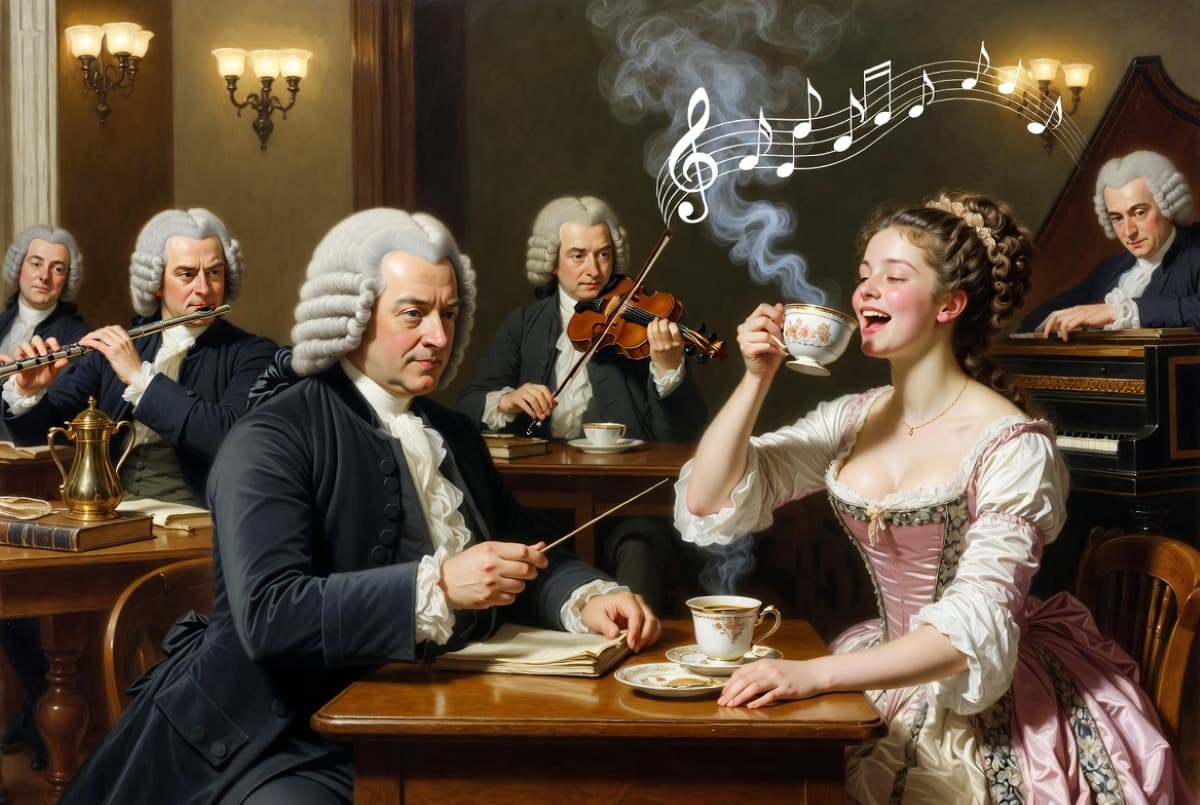
In the golden haze of a Leipzig afternoon in 1734, the rich aroma of freshly roasted coffee mingled with the sound of strings and voices. Inside Café Zimmermann, the air hummed with anticipation. Then, from the heart of this vibrant coffee house, rose a melody both playful and profound, a sparkling miniature opera celebrating humanity’s passionate love affair with coffee.
While countless coffee enthusiasts worldwide trace the bean’s journey from the misty highlands of Ethiopia to the grand palaces of the Ottoman Empire and the intellectual salons of Europe, few know that one of history’s greatest musical geniuses, Johann Sebastian Bach, dedicated an entire work to this beloved drink. Bach’s Coffee Cantata (BWV 211) is not merely a composition. It is a witty, rebellious, and joyful love letter to the cup that awakens the senses. This miniature comic opera in ten movements captures the spirit of an era when coffee was both a fashionable delight and a subject of heated debate.
The Historical Stage
During the early 18th century, coffee swept across Europe as a luxurious and somewhat controversial beverage. It was praised for sharpening the mind and fostering conversation, yet criticized by traditionalists as an addictive vice that could corrupt youth and challenge family authority. In the lively city of Leipzig, coffee houses became cultural hubs, places for discussion, music, and ideas. Bach, who served as director of the prestigious Collegium Musicum, regularly performed with his ensemble at Café Zimmermann, owned by the wealthy merchant Gottfried Zimmermann. It is widely accepted by music historians that the Coffee Cantata was composed specifically for these weekly gatherings between 1732 and 1735. What better entertainment for coffee drinkers than a humorous opera set in their own world?
The Creative Team
The libretto was masterfully written by Christian Friedrich Henrici, known by his pen name Picander, a talented poet and frequent collaborator with Bach. Together, they created a light-hearted satire that gently mocked parental strictness, societal fears of the coffee craze, and celebrated the clever independence of a young woman devoted to her favorite brew.
The Story: A Father, a Daughter, and an Unbreakable Love for Coffee
The cantata unfolds as a delightful domestic drama featuring three characters: Herr Schlendrian (Mr. Routine), a stern traditional father (bass voice); Lieschen, his witty, strong-willed daughter (soprano); and the Narrator (tenor), who guides the audience with charm and humor.
Schlendrian is exasperated. No matter how many times he scolds her, his daughter refuses to abandon her coffee habit. He unleashes a series of increasingly desperate threats: no more fine dresses, no garden walks, no parties, and finally, the ultimate punishment, no marriage unless she gives up coffee entirely. Yet Lieschen stands firm. In one of the most beloved arias in Baroque music, she sings with radiant joy: “Ei! Wie schmeckt der Coffee süße” (“Ah! How sweet coffee tastes, more delicious than a thousand kisses, milder than muscatel wine. Coffee, I must have coffee…”).
In a clever twist, Lieschen pretends to surrender. But as her father departs to arrange a marriage, she reveals her secret plan: she will add a special condition to her future marriage contract. She must be allowed to drink coffee whenever she desires. The work concludes with a joyful trio and a knowing, smiling remark from the Narrator: coffee will endure, and clever daughters usually find a way to get what they want.
The Musical Masterpiece
Bach structured the Coffee Cantata as a true miniature opera with 10 movements, skillfully alternating dramatic recitatives and enchanting arias. The orchestration is intimate and refined: transverse flute, violins, viola, cello, and harpsichord. Lieschen’s famous aria is particularly exquisite, with the flute dancing delicately like steam rising from a fresh cup. The father’s music feels heavy and marching, mirroring his rigid personality, while the daughter’s melodies sparkle with life and charm. The final trio unites all voices in harmonious celebration, a perfect musical toast to the bean.
Why This Work Still Matters Today
The Coffee Cantata reveals Bach’s rarely seen humorous and human side. In a lifetime dedicated largely to sacred music, this secular work stands as a cultural treasure that documents Europe’s coffee revolution. It speaks timelessly about pleasure, rebellion, personal freedom, and the art of clever compromise. Today, it is frequently performed as a fully staged theatrical production with costumes and scenery, delighting audiences worldwide.
Frequently Asked Questions (FAQ)
1. What is the Coffee Cantata?
The Coffee Cantata (BWV 211) is a secular comic opera by Johann Sebastian Bach, celebrating coffee. It was composed between 1732 and 1735 for performances at Café Zimmermann in Leipzig.
2. What is the story of the Coffee Cantata?
A father, Herr Schlendrian, tries to force his daughter Lieschen to give up coffee. She refuses. After many threats, she pretends to surrender but secretly plans to include a coffee clause in her marriage contract.
3. What is the most famous aria in the Coffee Cantata?
Lieschen’s aria “Ei! Wie schmeckt der Coffee süße” (Ah! How sweet coffee tastes) is the most famous, celebrating coffee as sweeter than a thousand kisses.
4. Who wrote the libretto?
The libretto was written by Christian Friedrich Henrici, known as Picander, a frequent collaborator with Bach.
5. Why is the Coffee Cantata historically significant?
It documents Europe’s coffee revolution in the 18th century and reveals Bach’s humorous side, offering a rare glimpse into secular life and coffee culture at the time.
6. Where can I listen to the Coffee Cantata?
Recommended performances include Emma Kirkby with the Academy of Ancient Music, the Café Zimmermann Ensemble, and modern staged versions with English subtitles on YouTube.
Published: May 29, 2026