Dubai – Qahwa World
Using leftover brewed coffee or spent coffee grounds has long been a familiar practice among gardeners looking for simple, sustainable ways to improve their soil. Research from institutions including Oregon State University, Washington State University, and the University of Missouri, along with findings from peer-reviewed studies published in recent years, indicates that coffee residues can benefit plants—mainly when used as part of compost or as a soil amendment. Experts, however, stress that coffee grounds should not be considered a complete fertilizer.
- Coffee Grounds Provide Several Plant Nutrients
Spent coffee grounds contain a number of nutrients useful for plant growth, though generally in modest quantities.
Nitrogen is the most significant component, typically accounting for about one to two percent of the grounds by weight. Most of this nitrogen is organic and bound in proteins, which means it becomes available slowly as soil microbes break down the material. Nitrogen plays an essential role in plant development, supporting protein formation and leafy growth.
Coffee grounds also contain potassium, which helps regulate water balance, supports photosynthesis, and assists with nutrient movement within plants. Smaller amounts of magnesium and copper are present as well, along with trace minerals such as iron, manganese, zinc, boron, and calcium. Magnesium is particularly important because it is a central component of chlorophyll, the pigment that allows plants to convert sunlight into energy.
- Minor amounts of phosphorus and calcium are also found in the grounds.
By contrast, the liquid left after brewing coffee contains much smaller nutrient concentrations because most solids remain in the grounds. Laboratory analyses conducted through 2025 indicate that the overall nutrient profile of coffee grounds has remained consistent, although compost mixtures that include coffee residues can show higher total nitrogen levels.
- Soil Microbes Are the Real Beneficiaries
Researchers note that the primary benefit of coffee grounds in gardening comes from how they affect soil biology.
The organic carbon in coffee grounds provides an energy source for soil microorganisms. As these microbes break down the material, they produce humus-like substances that improve soil health. These changes can lead to better soil structure, improved water retention, and enhanced drainage.
Microbial activity can also make certain nutrients—such as phosphorus, iron, and zinc—more accessible to plants, particularly in alkaline soils. In addition, organic matter produced during decomposition may help bind certain chemicals and heavy metals in soil, reducing the risk of runoff.
Recent studies continue to explore these effects. A 2025 experiment involving sunflower plants found that composted coffee grounds incorporated into soil mixtures improved germination rates and plant growth compared with untreated soil. Another trial conducted in the United Arab Emirates in 2024 reported improved radish growth and soil quality when recycled coffee-ground fertilizer was used.
- A Possible Tool Against Slugs
Coffee may also play a limited role in pest control.
Experiments suggest that solutions containing caffeine can repel or kill slugs and snails. In laboratory tests, strong brewed coffee solutions caused these pests to leave treated areas and eventually die due to the toxic effects of caffeine.
Some gardeners also report reduced slug activity when coffee grounds are used as a surface dressing or mulch. However, researchers say evidence remains limited, and there is little scientific support for claims that coffee grounds repel cats, eliminate weeds, or control plant diseases in gardens.
- Risks of Using Too Much Coffee in Soil
Despite its potential advantages, coffee residues can create problems if used improperly.
One of the most common misconceptions is that coffee grounds act as a complete fertilizer. In reality, they contain relatively low levels of phosphorus and calcium, and the nitrogen they provide becomes available slowly. During decomposition, microbes may temporarily use nitrogen from the soil, which can reduce the amount available to plants.
Another misunderstanding involves soil acidity. Although brewed coffee is acidic, used coffee grounds are generally close to neutral in pH. Because of this, they usually do not significantly acidify soil.
Read also: New study: coffee grounds may be beneficial for brain health
When applied in thick layers, coffee grounds can also compact and form a dense surface crust. This barrier can restrict water infiltration and limit air movement into the soil, potentially harming plant roots.
Fresh grounds may also slow seed germination or inhibit early plant growth. Compounds such as caffeine and certain plant chemicals present in raw grounds can be harmful to seedlings when used in large quantities.
Finally, leftover coffee containing milk or sugar may attract pests or encourage unwanted microbial growth.
- How Experts Recommend Using Coffee Grounds
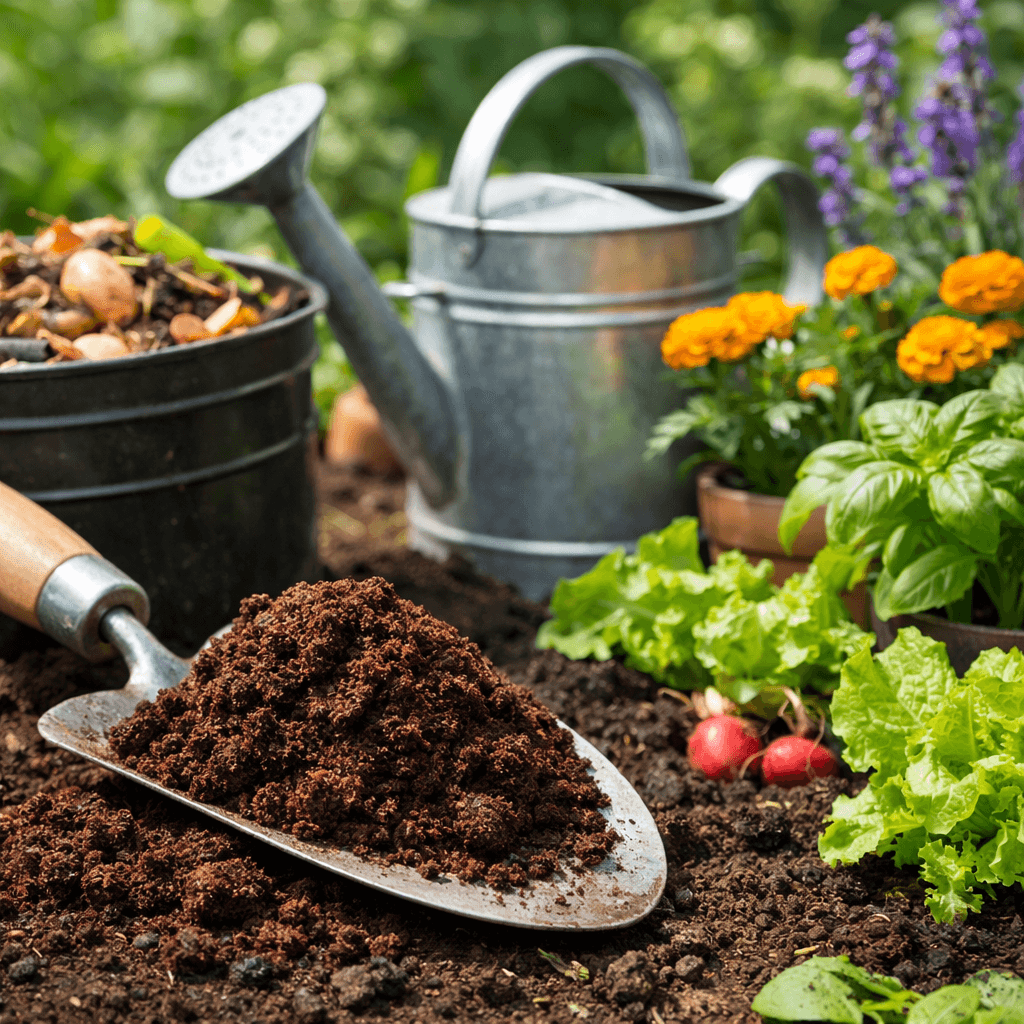
Garden specialists generally recommend composting coffee grounds before adding them to soil.
A balanced compost mixture might include leaves, grass clippings, and coffee grounds, with the grounds making up no more than about one-fifth of the total volume. When regularly turned and properly maintained, the compost typically becomes usable within several months.
Coffee grounds can also be incorporated directly into soil in small amounts. Mixing a thin layer into the top few inches of soil is generally considered safe. When used as mulch, the layer should remain very thin and ideally be covered with coarser organic materials such as leaves or bark to prevent compaction.
Leftover brewed coffee can sometimes be used as a diluted watering solution after it has cooled, though gardeners typically dilute it with water to reduce its strength.
- A Useful Resource—When Used Wisely
Research suggests that coffee grounds can contribute to healthier soil when used carefully. They add organic matter, support microbial life, and may provide limited pest-repelling effects. At the same time, experts caution that excessive use can cause more problems than benefits.
For gardeners, the best approach is to treat coffee grounds as a supplementary soil amendment rather than a primary fertiliser—ideally as part of compost and combined with other proven soil-improvement practices.