Author: Qahwa World – Addis Ababa
Source: USDA Foreign Agricultural Service – Report ET2026-0005
Date: May 20, 2026
Executive Summary
- Ethiopian coffee production for marketing year 2026/2027 is forecast at 12.10 million 60 kg bags, up 4.7%.
- Harvested area is forecast at 800,000 hectares, a 1.3% increase from the previous year.
- Exports are forecast at 7.13 million bags, up 2.4%, supported by growing demand for Ethiopian Arabica.
- China emerged as the third largest market in 2024/2025, with exports surging 264% to 670,000 bags.
- Red cherry prices hit record highs of 220‑250 Birr per kg in Yirgacheffe, nearly four times the previous season.
- About 5.9 million farmers are engaged in coffee production; smallholders account for 90% of national output.
- The government allocated 100,000 hectares for private mechanized coffee farms to transform the sector.
The USDA Foreign Agricultural Service office in Addis Ababa forecasts Ethiopian coffee production for marketing year 2026/2027 at 12.10 million 60 kg bags, a 4.7% increase from the previous season. T
he growth is driven by improved yields under normal weather conditions. Harvested area is forecast at 800,000 hectares, up 1.3% from the estimated area for 2025/2026.
Exports are forecast at 7.13 million bags, supported by growing demand for Ethiopian Arabica beans. Marketing year 2025/2026 constitutes an exceptional period for Ethiopia’s coffee export sector, as record high fresh cherry prices and rising operating costs continue to place significant financial pressure on traders and exporters. China is rapidly emerging as one of the top coffee buyers, driven by its tariff free market access.
Production Gains Supported by Improved Yields and Area Expansion
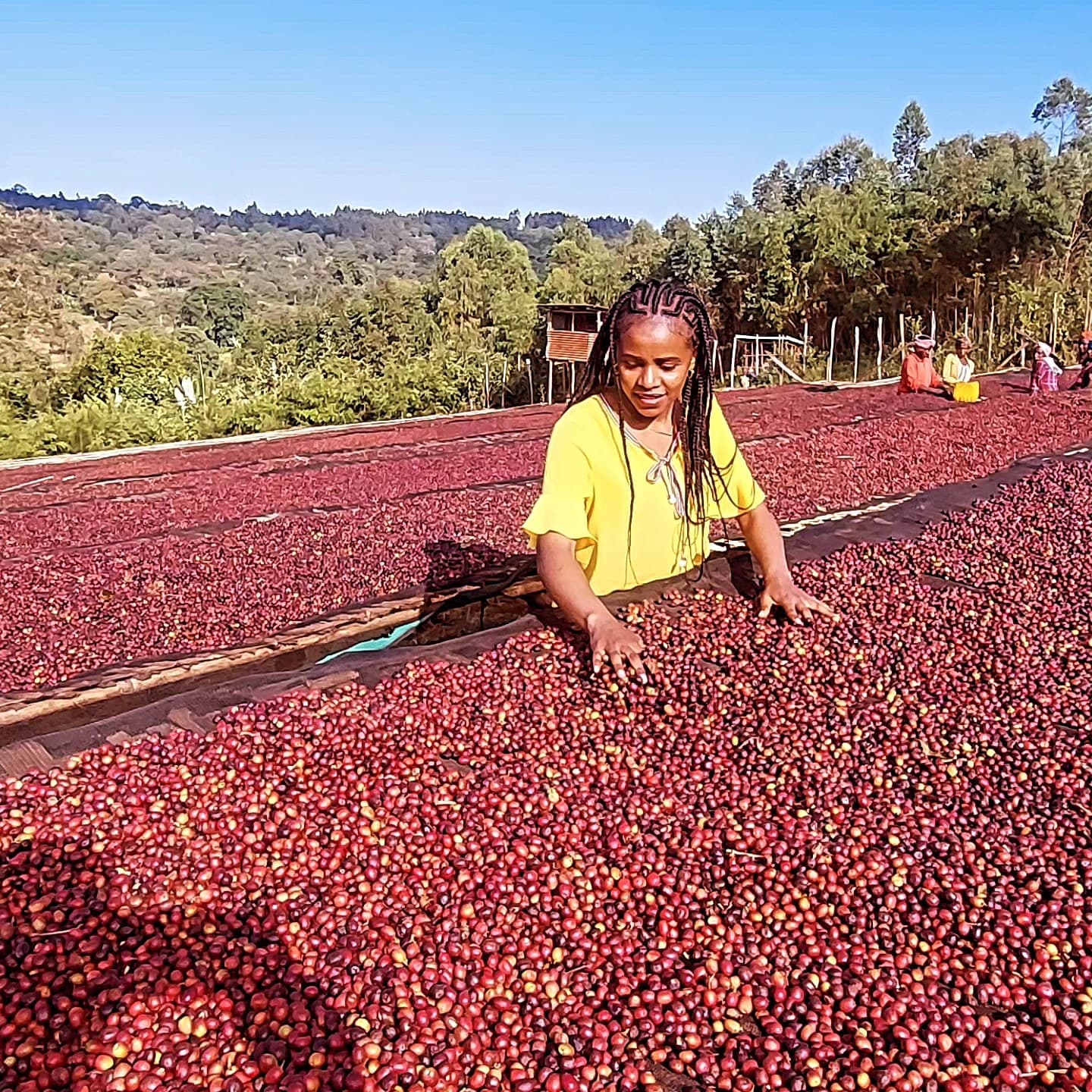
The forecast assumes favorable weather conditions, particularly regular rainfall. In April 2026, farmers reported healthier flowering and more uniform cherry development across key producing regions. The southern regions are expected to experience a positive year after reporting a reduced harvest during the 2025/2026 season. The Ethiopian Coffee and Tea Authority reports that 5.9 million farmers are engaged in coffee production across the country. Smallholder farmers dominate Ethiopia’s coffee sector, accounting for 90% of total national production. These farmers typically cultivate coffee on small plots averaging less than half a hectare, often integrating coffee trees into mixed farming systems alongside food crops.
At the farm level, growing adoption of improved agronomic practices such as pruning and stumping of aging trees, along with increased use of recommended extension packages including composting and soil management techniques, is supporting productivity gains. Farmers are also becoming more aware of the benefits of stumping old coffee trees and intercropping. The gradual uptake of improved seedlings that are both higher yielding and more disease resistant is beginning to contribute to enhanced productivity.
Table 1: Ethiopia Coffee Production Estimate and Forecast
| Marketing Year | 2024/2025 (Estimate) | 2025/2026 (Estimate) | 2026/2027 (Forecast) |
|---|---|---|---|
| Area Harvested (hectares) | 760,000 | 790,000 | 800,000 |
| Production (million bags) | 11.46 | 11.56 | 12.10 |
| Yield (MT/ha) | 0.90 | 0.90 | 0.91 |
National Stumping Campaign Boosts Yields
According to industry sources, nearly 70% of Ethiopia’s coffee trees are old, with some estimated to be more than 100 years old. Following the launch of a national stumping campaign four years ago, the Ethiopian Coffee and Tea Authority reports that stumped trees have already begun producing yields. Stumped trees cover 15% of the total coffee harvested area in 2025/2026. The Oromia region recorded the highest stumping rate at 19% of total harvested area, followed by South Ethiopia region at 14% and Sidama at 13%. Studies in Sidama and South Ethiopia regions have demonstrated that stumped coffee trees can increase yields by up to threefold within four years after stumping.
The Ethiopian Agricultural Research Institute reports that over 50 improved varieties offering higher yields and stronger disease resistance have been distributed to coffee growers across the country. These improved hybrid varieties yield around 2.8 tons per hectare under better management conditions, compared with current national average yields of less than 1.0 ton per hectare.
Ethiopia Pushes for Mechanized and Commercial Farms
The Government of Ethiopia is interested in large scale modern coffee production and has allocated 100,000 hectares of land for private sector coffee development. This marks the first time the government has allocated large tracts of land exclusively for modern coffee production. This represents a 70% increase compared to the country’s current 143,000 hectares of commercial coffee farms. Local officials describe the initiative as a strategic national project designed to transform Ethiopia’s coffee sector from its current reliance on traditional smallholder farming into a hybrid model that combines established practices with large scale technology driven production. Reports from May 2026 show that 110 private investors received new farmland for coffee cultivation. Planting has not yet begun, and authorities are urging investors to start developing the farmlands quickly.
Record Cherry Prices and Tightening Washed Coffee Supply
Farmers anticipated that the previous year’s record high coffee prices would maintain momentum, driving local cherry prices to unprecedented levels. At the start of 2025/2026, cherry prices tripled in some areas and quadrupled in others compared to the previous season. Several farmer cooperatives in Yirgacheffe district reported that red cherry prices peaked at 220‑250 Birr ($1.42‑$1.62) per kilogram in December 2025, nearly four times higher than the previous season. This sharp price hike, combined with rising production costs including labor expenses, created significant challenges for wet mills.
As a result, a notable shift in coffee processing practices occurred. Several farmers opted to process coffee at home rather than sell red cherries to washing stations, capturing higher returns by drying and selling natural coffee themselves. Simultaneously, wet mills became less inclined to purchase fresh cherries due to price increases and elevated working capital requirements. Farmers retaining cherries and wet mills reducing purchases significantly decreased the volume of red cherries reaching washing stations, leading to tighter availability of washed coffee during 2025/2026, alongside a growing share of natural processed coffee beans.
China Emerges as Third Largest Market
In 2024/2025, Ethiopia exported around 670,000 bags to China, generating more than $274 million in revenue. This positioned China as the third largest destination for Ethiopian coffee, a sharp rise from a decade ago when China ranked 17th with exports of approximately 22,000 bags. The pace of this growth highlights how quickly China has moved from a marginal buyer to a major player. Chinese imports have been driven by targeted trade promotion, improved market access, and strengthening commercial linkages. Since December 1, 2024, Ethiopian exports to China have enjoyed tariff free access, and China expanded its zero tariff policy to cover all tariff lines for products from 53 African countries effective May 1, 2026.
According to a USDA report, China’s domestic coffee market was estimated at approximately $42 billion in 2024, as coffee consumption rises rapidly among younger urban consumers. China’s coffee consumption reached 6.3 million bags by the end of 2024, but per capita consumption remains low at 22 cups annually, indicating substantial room for future expansion. Large chains such as Luckin Coffee (over 26,000 stores) and Cotti Coffee (around 15,000 outlets) continue to scale aggressively, shaping consumer habits and fueling demand for high quality beans.
Table 2: Top 10 Export Destinations for Ethiopian Coffee (MY 2024/2025)
| Rank | Country | Volume (1,000 bags) | Share |
|---|---|---|---|
| 1 | Saudi Arabia | 1,182 | 15.9% |
| 2 | Germany | 1,126 | 15.2% |
| 3 | China | 670 | 9.0% |
| 4 | Belgium | 651 | 8.8% |
| 5 | United States | 614 | 8.3% |
| 6 | UAE | 444 | 6.0% |
| 7 | South Korea | 381 | 5.1% |
| 8 | Italy | 259 | 3.5% |
| 9 | Russia | 171 | 2.3% |
| 10 | Sudan | 117 | 1.6% |
Domestic Consumption Expands Despite High Prices
Domestic coffee consumption for 2026/2027 is forecast at 5.0 million bags. Post revised the 2025/2026 domestic consumption estimate upward from 3.70 million bags to 4.50 million bags, reflecting current market dynamics where falling global coffee prices are anticipated to redirect more supply domestically. Burgeoning demand in both rural and urban centers, as well as the increasingly emerging coffee culture among youth, is driving domestic consumption. Ethiopia ranks among the largest coffee consuming countries globally within the group of major producers. Per capita consumption is estimated at around 2.0 kilograms per year.
EUDR Compliance and Organic Certification Challenges
Ethiopia is making progress toward compliance with the EU Deforestation Regulation, which takes effect on December 30, 2026 for large businesses and June 30, 2027 for smaller enterprises. The Ethiopian Coffee and Tea Authority is working with international development partners and private sector stakeholders to operationalize a national traceability platform. Hundreds of thousands of smallholder plots have already been mapped and registered. However, challenges remain due to Ethiopia’s fragmented smallholder production system, limited digital infrastructure, and remoteness of many producing areas.
The EU’s updated organic regulation (Regulation 2018/848) became fully binding for non EU exporters on January 1, 2025, ending the previous equivalence system. The minimum annual on site inspection sampling rate has risen from approximately 2% to 5% of farmers, while at least 2% must now undergo residue sampling. The regulation also caps group certifications at roughly 2,000 smallholders and mandates annual audits for all certified operators. These stricter requirements are causing longer field inspection times, rising compliance costs, and increasing administrative burdens, making EU organic certification increasingly difficult for Ethiopian smallholder coffee farmers to maintain.
Frequently Asked Questions
How much coffee will Ethiopia produce in 2026/2027?
Production is forecast at 12.10 million 60 kg bags, a 4.7% increase from the previous year.
How many farmers are engaged in coffee production in Ethiopia?
About 5.9 million farmers, with smallholders accounting for 90% of national output.
What are the main export destinations for Ethiopian coffee?
Saudi Arabia and Germany are the largest with 15.9% and 15.2% shares, followed by China, Belgium, and the United States.
How much coffee did Ethiopia export to China in 2024/2025?
Around 670,000 bags worth $274 million, a 264% increase from the previous year, making China the third largest market.
Why are red cherry prices so high in 2025/2026?
Farmers anticipated continued momentum from record prices the previous year, driving local cherry prices to unprecedented levels, reaching 220‑250 Birr per kg in Yirgacheffe.
How is Ethiopia preparing for the EU Deforestation Regulation?
The Ethiopian Coffee and Tea Authority is developing a national traceability platform with international partners; hundreds of thousands of smallholder plots have already been mapped and registered.
Author: Qahwa World – Addis Ababa | Source: USDA Foreign Agricultural Service – Report ET2026-0005 | Date: May 20, 2026