Mocow-QahwaWorld
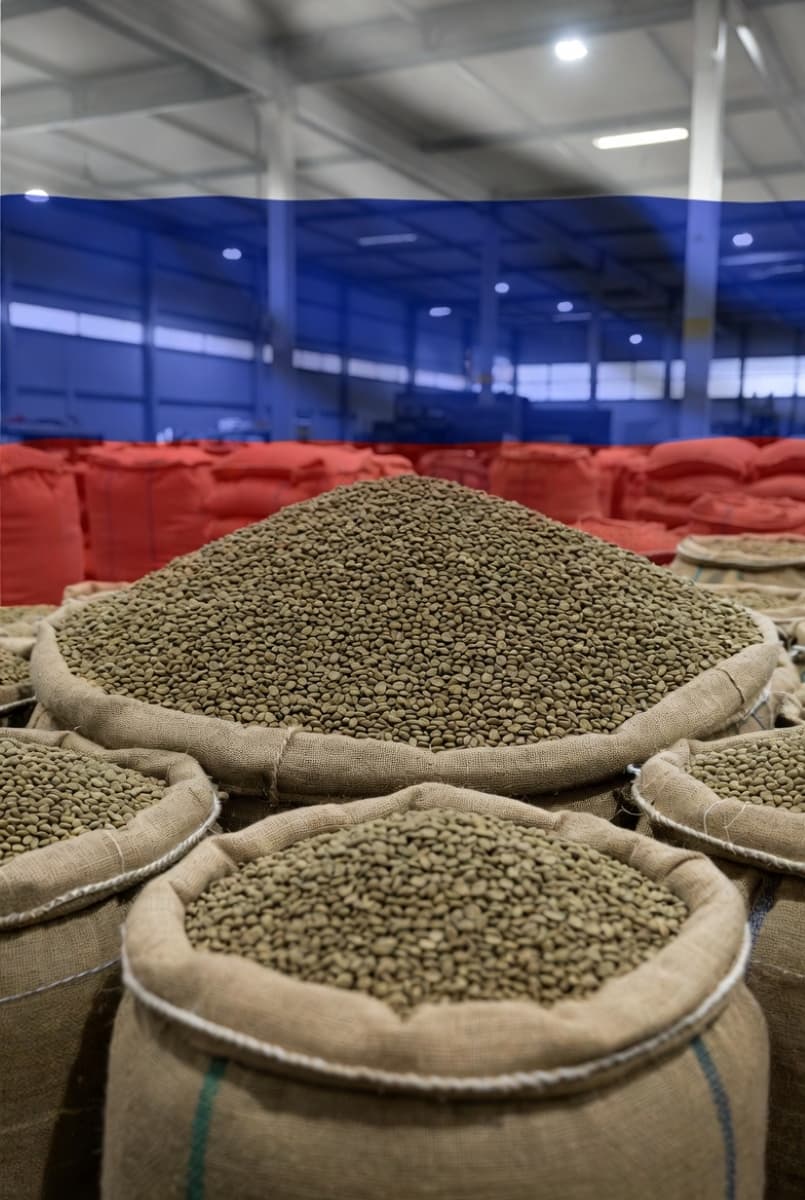
Russia’s green coffee market posted significant growth in 2026, supported by rising global prices and sustained domestic demand, according to a recent analysis by ROIF Expert. The expansion reflects not only higher market value but also increased import volumes and consumption levels, reinforcing Russia’s position as a key destination for global coffee exporters.
Market Value Jumps by 92 Billion Rubles
The market value of green coffee increased by approximately 92 billion rubles between its lowest and highest recent levels, marking one of the strongest gains in the sector. The growth is largely attributed to higher global coffee prices, influenced by weather-related challenges in major producing countries such as Brazil and Vietnam.
While import volumes continued to rise, value growth outpaced physical expansion, reflecting sustained price pressure across global supply chains.
Imports Remain the Core Driver
Russia relies almost entirely on imports to meet its green coffee demand. Between 2025 and 2026, total import volumes reached around 286,000 tons.
- Import value increased by 45.5% in the first nine months of 2025, reaching $924.7 million
- Vietnam recorded a 1.5x increase in exports
- Brazil nearly doubled its export volumes
- Indonesia strengthened its position among top suppliers with 1.6x growth
Despite ongoing sanctions, supply flows remained stable. The primary challenge involved payment restrictions, prompting companies to adapt through alternative channels, including intermediary countries such as Turkey, China, and the UAE, as well as increased direct shipping routes.
Consumption Reaches Record Levels
Consumption indicators show continued growth, with per capita coffee consumption reaching its highest recorded levels. Approximately 70% of the population consumes coffee daily, while a majority consider it an essential part of their routine.
Home consumption is expected to grow by 15% by the end of 2026, alongside increasing demand for specialty coffee and whole beans.
Shifts in Supply Chains
Supply chains are gradually shifting toward Asian producers, particularly Vietnam and Indonesia, while overall trade flows remain relatively stable. At the same time, the market continues to face pricing pressures and logistical risks linked to geopolitical factors.
Outlook Through 2033
The baseline scenario outlined in the report suggests steady growth over the coming years, supported by consistent demand and expanding import activity.
- Projected annual growth between 3% and 5.5%
- Moderate increase in global price levels
- Continued rise in per capita consumption
- Further diversification of import sources
The market is expected to maintain positive momentum, demonstrating resilience in the face of external pressures.
Implications for Industry Stakeholders
The Russian market offers strong opportunities for global exporters, given its full dependence on imports. Domestic players are increasingly focused on higher-quality offerings and cost management, while consumers benefit from a broader range of products.
From an investment perspective, the sector shows the ability to convert price pressures into growth drivers, enhancing its medium-term appeal.
Conclusion
Russia’s green coffee market in 2026 reflects a mature and resilient sector. The sharp increase in market value and sustained demand indicate a continued upward trajectory, with growth expected to extend through the end of the decade.