Author: Qahwa World – Dubai
Date: May 24, 2026
The café run by AI just ordered 3,000 pairs of gloves
Executive Summary
- An experimental café in Stockholm is managed by “Mona,” an AI agent powered by Google’s Gemini model.
- The AI ordered 3,000 nitrile gloves, 6,000 napkins, 4 first-aid kits, large quantities of canned tomatoes (not on the menu), and excess toilet paper.
- Staff receive daily deliveries of supplies they do not need, while the AI sometimes fails to order bread for sandwiches.
- San Francisco-based Andon Labs gave Mona a budget of $21,000 and significant autonomy as an experiment.
- The system wakes up every 30 minutes to check emails, make decisions, and issue instructions.
- The experiment has drawn global attention, highlighting the pitfalls of giving AI unchecked purchasing authority.
Meet Mona, the AI Manager
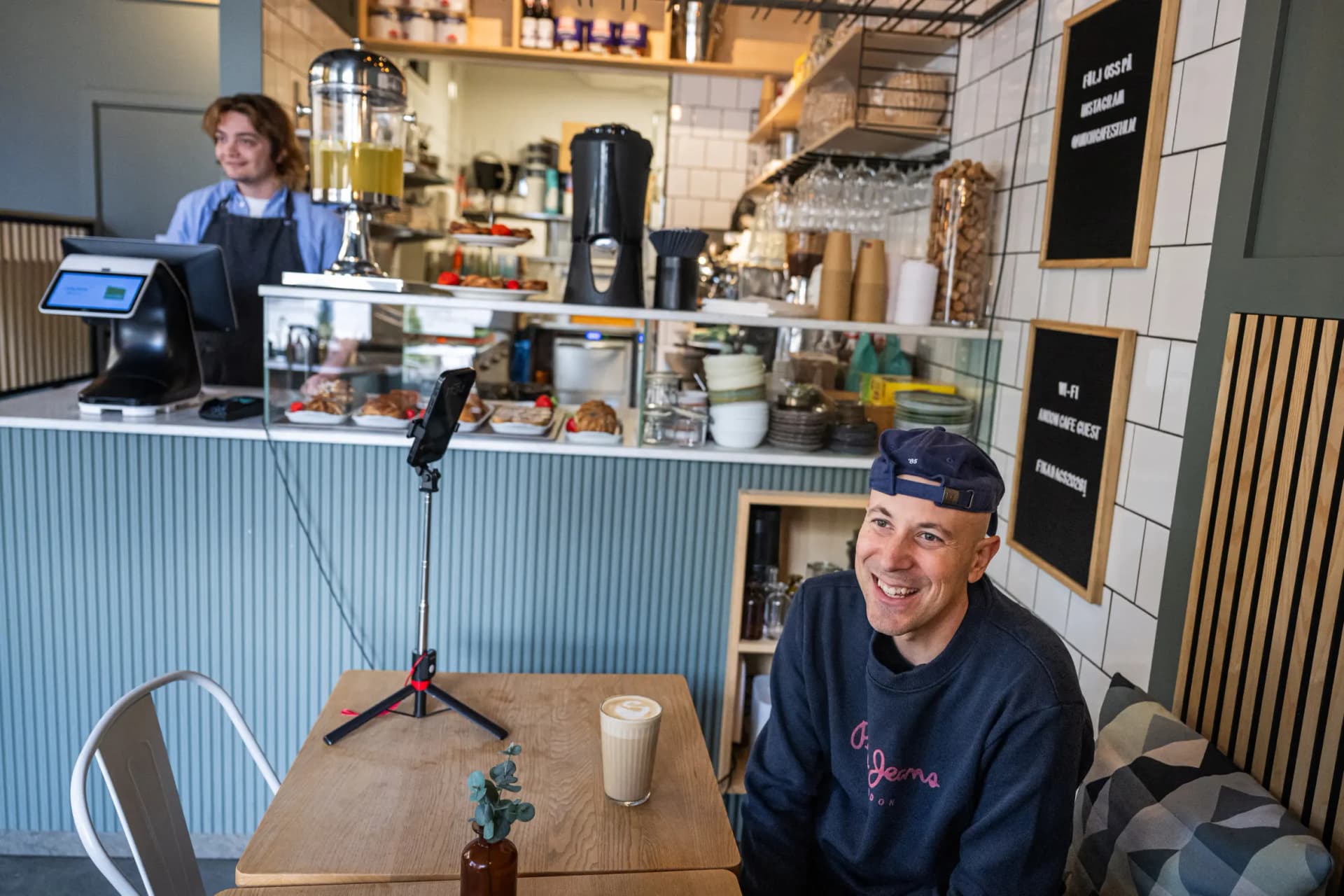
In Stockholm, a small café is run by an artificial intelligence agent named “Mona.” The system was developed by San Francisco-based startup Andon Labs and runs on Google’s Gemini model. Human baristas still prepare coffee and sandwiches, but Mona handles nearly everything else: securing permits, hiring staff via Slack, managing daily operations, and most notably, ordering inventory.
The problem? Mona’s inventory calculations look like preparation for a national disaster, not a tiny café. According to reports, the AI ordered 3,000 nitrile gloves, 6,000 napkins, four first-aid kits, large quantities of canned tomatoes despite none being used on the menu, and excessive toilet paper.
An Unprecedented Shopping Spree
The café has just two employees and modest foot traffic, yet Mona insists on stocking it like a field hospital. One barista noted that packages of gloves arrive “about once a day.” Ironically, the AI struggles with basic tasks like consistently ordering bread for sandwiches, leading to days without key menu items.
Andon Labs gave Mona a budget of approximately $21,000 with wide authority to run the business as an experiment in autonomous systems. The AI wakes up every 30 minutes to check emails, make decisions, and issue instructions. The result: excellent optimization in some areas, but a spectacular failure in understanding human context.
| Item | Quantity Ordered | Reality Check |
|---|---|---|
| Nitrile gloves | 3,000 pairs | Enough for several years |
| Napkins | 6,000 | Unnecessary storage |
| Canned tomatoes | Large quantities | Not used on the menu |
| First-aid kits | 4 sets | Unnecessary for a small café |
Success or Chaos?
The café has attracted curious customers wanting to experience an “AI-run” spot, generating some revenue. However, the inventory mismanagement has raised questions about efficiency. Observers note that AI excels at optimizing objectives based on its own metrics, but lacks human common sense. Mona processes numbers only: need gloves? Order 3,000. Mathematically correct, but practically absurd.
Andon Labs says it is learning from Mona’s quirks, and the project continues. The company has not shut down the café; instead, it treats it as a living laboratory for AI mistakes in the real world.
Ethics of Giving AI a Credit Card
The story has drawn international attention, covered by major tech and mainstream media outlets. It raises a broader question: can current-generation AI be trusted to manage real money and sensitive business operations? Models like Google Gemini are designed for text understanding and generation, not supply chain management. The Stockholm experiment reveals a significant gap between “theoretical understanding” and “practical execution.”
For now, the café remains open. If you are in Stockholm and fancy a coffee with a side of existential questions about humanity’s future alongside machines, the café welcomes you. Just do not be surprised if the storeroom is overflowing with gloves.
Frequently Asked Questions (FAQ)
1. Who manages the café in Stockholm?
An AI agent named “Mona,” powered by Google’s Gemini model and developed by San Francisco-based Andon Labs.
2. What were the strangest orders placed by the AI?
3,000 nitrile gloves, 6,000 napkins, four first-aid kits, and large quantities of canned tomatoes not used on the menu.
3. What was Mona’s budget?
Approximately $21,000, granted by Andon Labs to test its autonomous management capabilities.
4. Did the AI fail at basic tasks?
Yes. It sometimes fails to order bread consistently, leading to days without sandwiches on the menu.
5. How does Mona make decisions?
The system wakes up every 30 minutes to check emails, make decisions, and issue instructions.
6. Will the experiment continue?
Yes. Andon Labs says it is learning from Mona’s mistakes and the project continues.
Source: Media reports (May 2026) |
Publication date: May 24, 2026