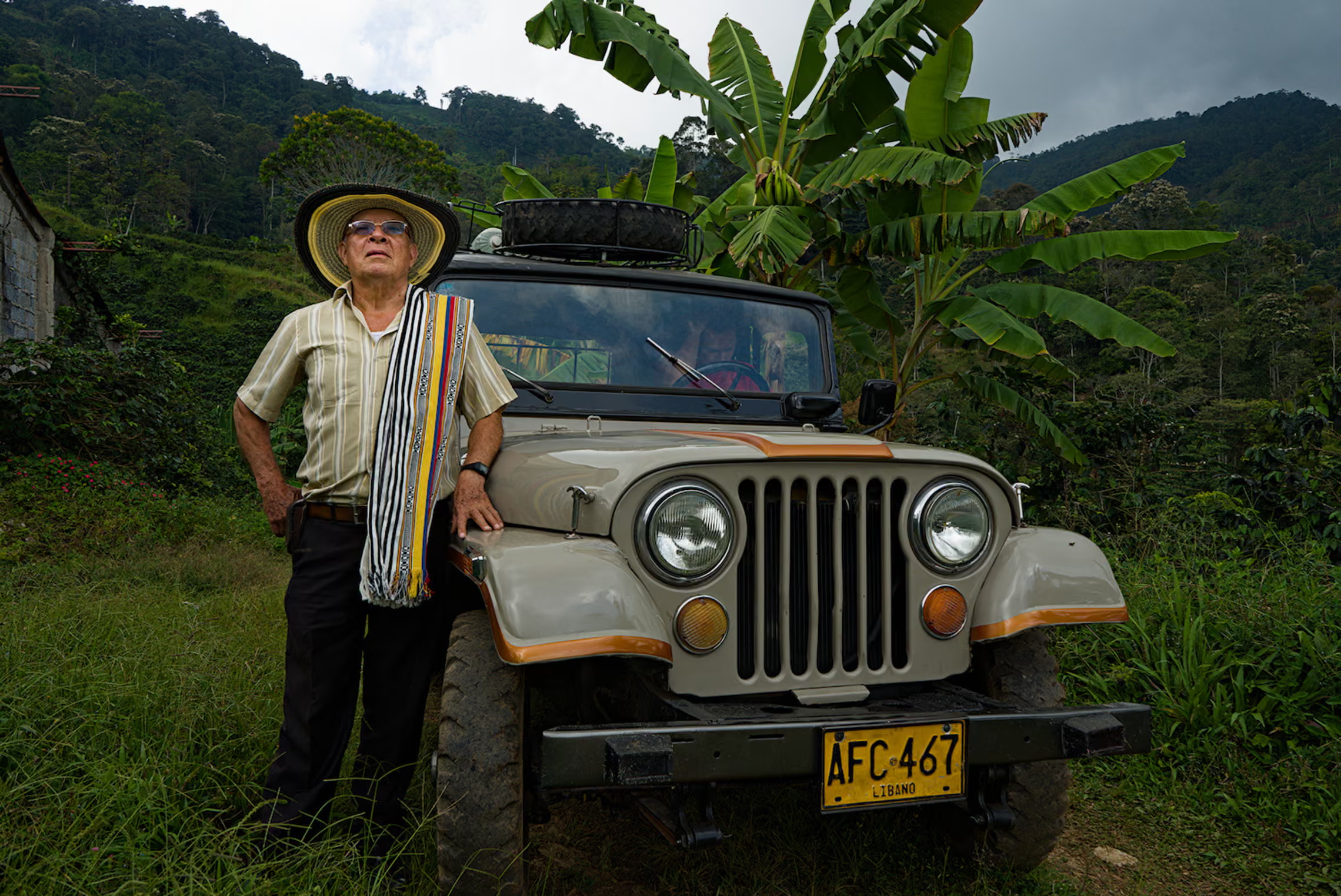
Líbano, Colombia – Qahwa World
The Guardian has reported on a striking paradox in Colombia’s coffee industry: even amid record-breaking global coffee prices, farmers are struggling to find enough pickers to harvest their crops.
In Líbano, Tolima, Mary Luz Pérez Arrubla and her brother Rodrigo, fourth-generation coffee growers, experienced one of the best harvests in recent memory in 2025. Prices soared as U.S. tariffs on Brazil and Vietnam, coupled with poor harvests in those countries, boosted Colombia’s high-altitude regions. Yet labour shortages meant that up to 10% of the crop was left on the ground.
“Every week, for two-and-a-half months, we worked from dawn to dusk. I had to collect coffee from the floor—it seemed there was more there than on the branches,” Mary said. Wilder Gomez, the farm manager, echoed her frustration: “Even offering higher wages doesn’t solve the problem. People move from farm to farm chasing the best daily harvest.”
The challenges reflect a decades-long rural exodus. Violence, economic inequality, and urban job opportunities have pulled workers away from Colombia’s coffee-growing regions, leaving an ageing workforce. The National Coffee Growers Federation reports that the proportion of workers over 60 has more than doubled, while the overall workforce has shrunk by a quarter.
Unlike Brazil, where flat plantations allow mechanised harvesting, Colombia’s steep Andean slopes prevent widespread machine use. “Every slope is different,” said agronomist Yinson Javier Díaz. Mechanisation is further limited by the uneven ripening of cherries, a common trait in Colombian coffee regions.
Emerging technologies could help. Eco-friendly mills reduce labour needs, AI-powered sorting machines separate ripe beans from spoiled ones, and drones can apply pesticides precisely. Yet fewer than 5% of farmers can afford these innovations, with costs starting at 22 million pesos (£4,150).
Climate change compounds the difficulties. Average mountain temperatures have risen 1.2°C since the 1980s, sunlight hours have dropped by nearly 20%, and pests and diseases are increasingly frequent. Experts predict that by 2041–2060, low-altitude yields may fall while high-altitude production could rise, prompting shifts in cultivation practices.
Despite Colombia’s central role in global coffee production, most of the profits bypass small farmers. Half a million coffee-growing families cultivate an average of just 1.4 hectares each, while industrial estates in Brazil often span hundreds or thousands of hectares. Only around 10% of coffee profits reach these small producers, even as global consumption continues to grow, with an estimated three billion cups consumed daily.
The Guardian’s report underscores a stark reality: record harvests and soaring prices cannot compensate for labour shortages, climate instability, and economic inequality, leaving Colombia’s coffee sector at a critical juncture.