Ecuador – Qahwa World
Ecuador is positioning itself as one of the most advanced countries in adapting to the European Union Deforestation Regulation (EUDR), which is scheduled to take effect on December 30, 2026. Unlike many other cocoa origins, Ecuador’s cocoa sector already exceeds 90% compliance and is approaching full alignment, according to the National Association of Cocoa Exporters. This reflects significant progress in traceability, sustainability, and transparency, all of which are essential for continued access to the European market.
The country’s progress is supported by a long-term national strategy. For five consecutive years, Ecuador has led exports of organic products to the European Union, according to the Ministry of Agriculture and Livestock. This leadership strengthens its position in a global market where environmental compliance is becoming a mandatory requirement rather than an optional standard.
The EUDR requires proof that agricultural products are not linked to deforestation. For cocoa, this means implementing geolocation systems, farm-level monitoring, and full traceability across the supply chain. Ecuador has made notable progress in these areas through coordination between exporters, producers, and public institutions, reducing the risk of exclusion from the European market.
The country is also expanding its compliance base by integrating more producers into formal systems. National programs aim to register and support up to 100,000 cocoa and coffee farmers, helping them meet EUDR requirements and avoid potential export losses. These efforts also contribute to strengthening sector formalization and improving long-term competitiveness.
The EUDR, first proposed in 2019 and approved in 2023 by the European Parliament and the Council of the European Union, represents a major shift in global agricultural trade. After two implementation delays, the regulation is still set to apply at the end of 2026, leaving a limited adjustment period for exporting countries.
Within this context, Ecuador is not only reducing compliance risks but also gaining a competitive advantage. Its high level of readiness positions it as a reliable supplier in an increasingly strict regulatory environment.
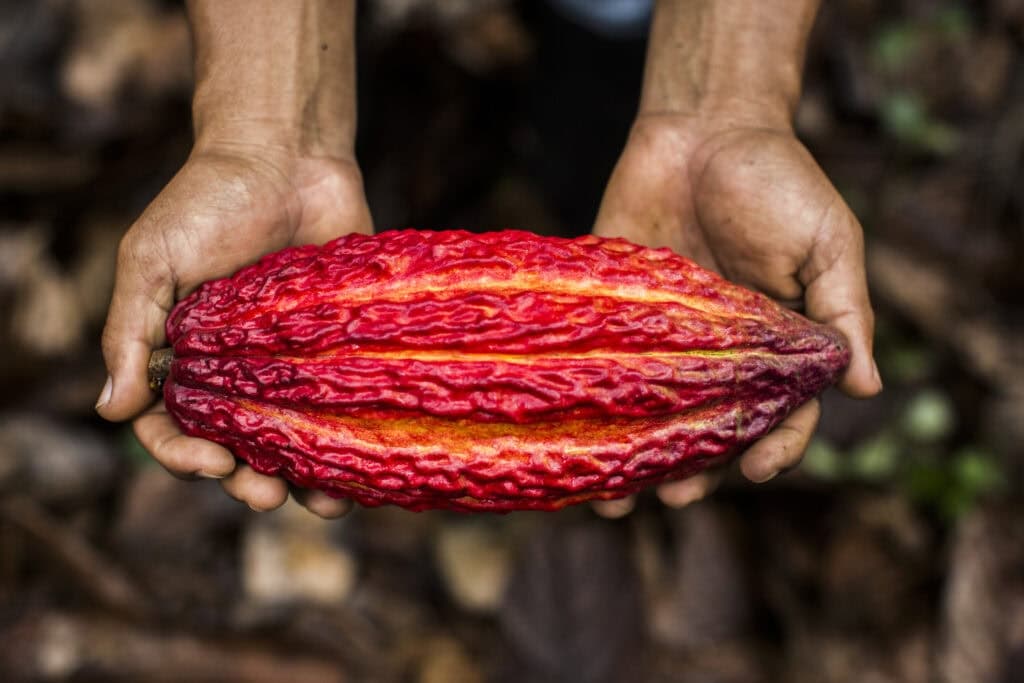
The strength of Ecuador’s position is also linked to the scale of its cocoa industry. The country produces between 380,000 and 420,000 tons of cocoa annually and is the world’s leading exporter of fine aroma cocoa, accounting for around 60% of global supply in this segment. More than 70% of production is exported, generating between 3.5 and 4 billion US dollars annually, with the European Union as the main destination.
Cocoa production is concentrated in provinces such as Los Ríos, Guayas, and Manabí, along with other important areas including Esmeraldas and El Oro, and expanding regions in the Amazon such as Sucumbíos and Orellana. The sector involves around 600,000 families, mostly smallholder farmers. Between 15% and 25% of Ecuadorian cocoa already carries sustainability or organic certification, further reinforcing its readiness for new regulatory standards.