Loading page...
Please wait...
Browse all articles tagged with "coffee supply chain"
 Coffee Community
Source: C20 Non‑Profit Institution – Press Release | Author: Qahwa World | Date: June 10, 2026 C20 Global Coffee Sustainability Summit to Unite Industry Leaders in London, Driving Action from Farm to Cup Key Highlights: The C20 Global Coffee Sustainability Summit will take place in London on June 23–24, 2026, at Camden Town Hall, King’s</p>
 News
NewsSource: International Coffee Organization (ICO) Author: Coffee World – Dubai Date: May 20, 2026 Executive Summary Reduced shipping flows through the Strait of Hormuz since March threaten global coffee supply chains. Brent crude prices jumped 63% from $72.29/barrel in February to $118.03/barrel in April. Urea fertilizer prices rose 47% from $465.45/ton to $684.75/ton over the</p>
 Interview
Dubai – Ali Al Zakry | Qahwa World On May 4, the European Commission published its “simplification” package for the Deforestation Regulation. Some saw it as genuine relief. Others called it cosmetic. Dr Steffen Schwarz described the EUDR as an administrative monster. Qahwa World opened this file from the beginning. We spoke to six experts</p>
 News
NewsDUBAI – Qahwa World The European Union’s landmark Deforestation Regulation (EUDR) is driving corporate change across Europe, yet the coffee sector remains one of the weakest performers on key deforestation-risk indicators, according to the 2026 edition of the Forest 500 report released by UK-based environmental NGO Global Canopy. Now in its 12th year, the annual</p>
 Interview
Dubai – Ali Alzakary The global coffee industry has spent the past few years navigating one disruption after another—from pandemic shutdowns and climate volatility in producing countries to freight crises that reshaped global shipping routes. As the global coffee market grapples with volatility—production reaching around 175 million bags in 2025 while costs continue to rise</p>
 News
NewsDubai – Qahwa World Rising oil prices linked to escalating tensions in the Middle East are raising fresh concerns across the coffee sector, with vendors warning that higher fuel costs could eventually translate into more expensive coffee for businesses and consumers. Crude oil climbed above 90 dollars per barrel on Friday, a level that industry</p>
 News
NewsDubai – Qahwa World A report published by BeverageDaily warns that challenges facing coffee production in Vietnam could trigger new volatility in global coffee markets, potentially affecting supply chains and prices in the coming years. Although global coffee prices have recently shown signs of easing, the difficulties confronting Vietnamese coffee farmers may reverse that trend</p>
 News
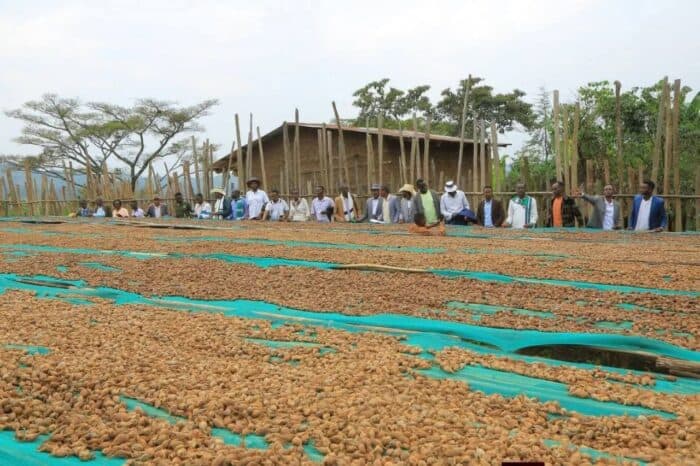
NewsDubai – Qahwa World At a time when global commodity markets are reeling from extreme climate volatility hitting traditional production belts in Brazil and Vietnam, the African continent has emerged in the 2026 season as an indispensable strategic player. This year is more than just a bountiful harvest; it represents a geopolitical turning point in</p>
 News
NewsDubai – Qahwa World JDE Peet’s has introduced a new Nature Transition Plan aimed at strengthening regenerative agriculture practices and supporting deforestation-free coffee supply chains. The plan, titled Grounded in Nature, outlines a science-based approach to protecting ecosystems, improving farmer resilience, and safeguarding the long-term future of coffee production. According to the company, the plan</p>
 Reflections
The December 2026 EUDR deadline will reshape how African coffee reaches European consumers — and traders in the Gulf are caught in the middle. By Raymond Reuel Wayesu Dubai has become the Middle East’s dominant coffee trading hub, with re-exports valued at nearly $1 billion annually and over 615 licensed traders operating through the DMCC</p>
 News
NewsDubai – Qahwa World The coffee industry is witnessing an unprecedented transformation, reshaping itself under pressures that span climate, economics, trade, and consumer behavior. The World Coffee Portal’s recent two-part analytical study, titled “Coffee’s New World Order”, provides a deep dive into these sweeping changes, offering a comprehensive view of how the global coffee system</p>
 News
NewsDubai – Qahwa World The “Future of Trade 2024: Decoupled and Reconfigured” report released by the Dubai Multi Commodities Centre (DMCC) offers a forward-looking view of how global trade is transforming amid economic, environmental, and technological change. Although coffee trade is not discussed in detail, the report’s three defining forces — regionalisation, digitalisation, and sustainability</p>
