By Dr. Steffen Schwarz
If you stand at the edge of a coffee farm at dawn, the industry looks almost impossibly fragmented. It is a mosaic of small plots and a patchwork of varieties where thousands of decisions are made by hand: when to prune, when to fertilize, and when to pick. Multiply that landscape by the number of farms worldwide, and the picture becomes geological in scale.
Yet, the moment the coffee cherry leaves the farm gate, a different geography takes over—not of soil and altitude, but of finance, logistics, risk, and ownership. While often described as “complex,” the sector hides a simpler truth: most of the value chain is governed by a small number of capital-intensive control points. Whoever owns these points sets the tempo for the entire industry.
The Five-Part Series: An Overview
This article serves as the “overview lens” for a five-part series designed for decision-makers. Over the coming weeks, we will dive deep into:
-
Green Coffee: The industrialization of uncertainty.
-
Roasted Coffee & Brand Ownership: The architecture of portfolios.
-
Coffee Technology & Manufacturing: The power of installed bases.
-
Coffee Service: The economics of high-frequency traffic.
To map this landscape, I use a “triangulation” approach: public filings, official acquisition reports, and corporate self-descriptions. While private groups remain opaque, that very opacity allows capital to concentrate through information arbitrage.
YOU MAY LIKE THIS: Steffen Schwarz: A Silent Shift Towards Canephora is Redefining Europe’s Coffee Preferences
1. Green Coffee: Managing the Industrial Flow
Coffee is biologically diverse but industrially standardized. To turn variable seeds into repeatable contract specifications, the system requires massive infrastructure.
Supply is heavily concentrated at the source: a handful of countries represent the bulk of global supply. At the demand end, the EU and the US act as regulatory gatekeepers; their decisions effectively become global requirements.
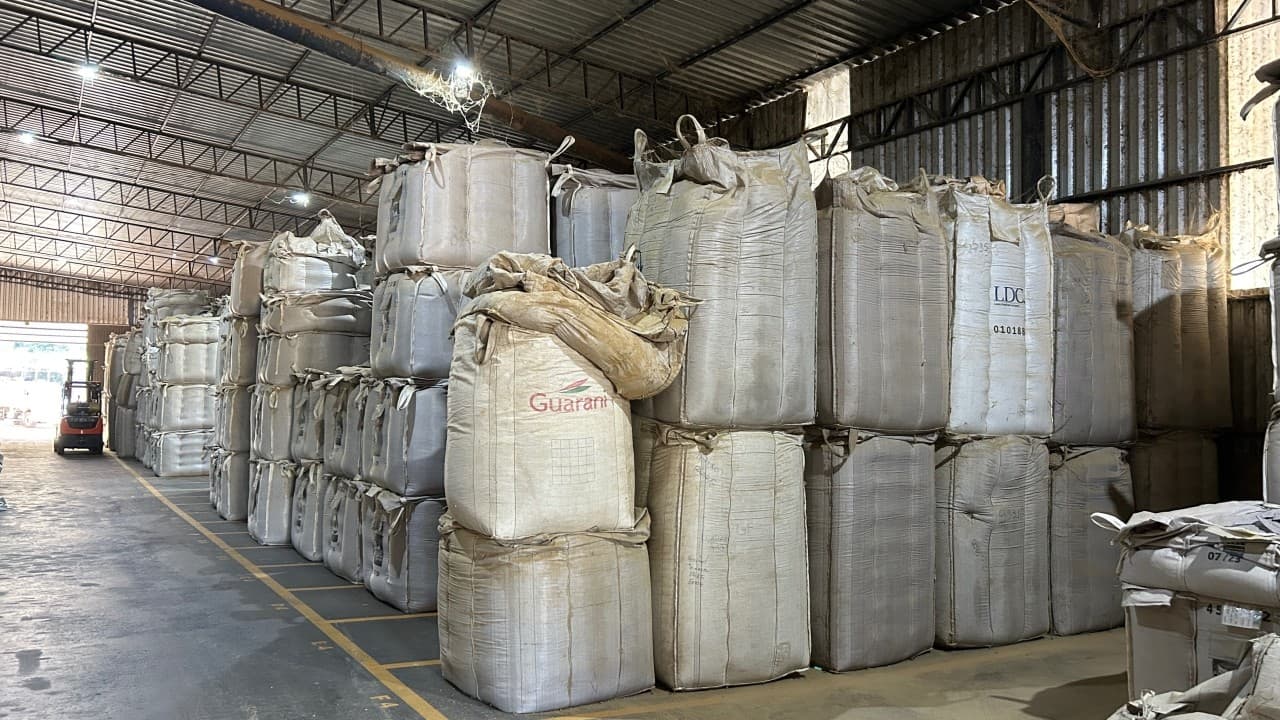
The Power of Working Capital Coffee moves through time before it moves through taste. Financing harvests and managing long ocean lead times requires immense balance sheets. Major merchant houses do not just trade; they process, insure, and provide credit.
-
ECOM Agroindustrial: Integrated from procurement to primary processing.
-
Sucafina: A “farm to roaster” footprint across multiple continents.
-
COFCO International: Connecting China’s state-linked system to global supply, signaling coffee’s role in geopolitics.
-
Volcafe (Hartree Partners): The 2025 acquisition of Volcafe by Hartree Partners signals that coffee is increasingly attractive to energy and commodity-scale capital.
2. Roasted Coffee: The Illusion of Plurality
In the roasting segment, concentration is often masked by brand diversity. A single group may own dozens of brands, appearing as “competitors” on a shelf while negotiating as a single entity.
-
The Nestlé-Starbucks Alliance: The Global Coffee Alliance allows Nestlé to leverage Starbucks’ brand power with its own industrial scale.
-
The “Coffee Champion” Logic: In August 2025, Keurig Dr Pepper announced the acquisition of JDE Peet’s. This move consolidates single-serve systems and global brand portfolios, reducing the number of global negotiating counterparts.
3. Technology: The Lever of Structural Power
Machinery is where chemistry meets economics. Equipment determines labor deployment, consistency, and data harvesting.
Platform Strategy Industrial holdings are building “professional coffee hubs.”
-
De’Longhi Group: By combining Eversys (super-automatic) and La Marzocco (traditional heritage), they control both high-volume convenience and premium café credibility.
-
Ali Group & Artemis Holding: Brands like Rancilio and Franke Coffee Systems are now part of massive foodservice portfolios that prioritize service ecosystems and connectivity over mere “engineering.”
4. Coffee Service: Real Estate and Routine
On the street, coffee looks diverse. On the balance sheet, it is a game of infrastructure.
-
Starbucks: With over 40,000 stores globally as of late 2024, it is less a retailer and more a global infrastructure.
-
Coca-Cola (Costa Coffee): Coffee is used as a strategic complement to a broader beverage empire, appearing in offices, petrol stations, and micro-markets.
-
Private Equity: Roark Capital (Dunkin’) and JAB (Panera/Pret) treat coffee as a high-frequency traffic driver within franchised systems.
Conclusion: Becoming Competent in Concentration
The coffee industry remains plural at the creative frontier—independent roasters still set sensory trends. However, this “long tail” lives within an environment shaped by capital-heavy platforms.
Strategy for the modern manager is not about resisting this gravity, but understanding it. Only by separating the physics of these four interlocking systems—finance, branding, engineering, and operations—can one make intelligent decisions about the future.