Author: Tewodros Balcha
Source: Qahwa World×Buna Kurs – Addis Ababa
Date: May 22, 2026
Stella: The Coffee Passport Menu Under Addis Ababa’s Guiding Star
Executive Summary
- Stella is an intimate coffee destination in Addis Ababa’s Wollo Sefer neighborhood, named after the Italian word for “star.”
- The café offers a “coffee passport menu” featuring Ethiopian jebena, Turkish coffee, V60 pour-overs, Japanese-style iced brews, and Arabic qahwa.
- Stella’s founder, a mother of three, grew up watching her father in Yirgacheffe and her grandmother’s ceremonial coffee rituals in Asmara.
- Each brewing method receives its own distinct preparation and ritual, including individual jebenas and precise pour-over techniques.
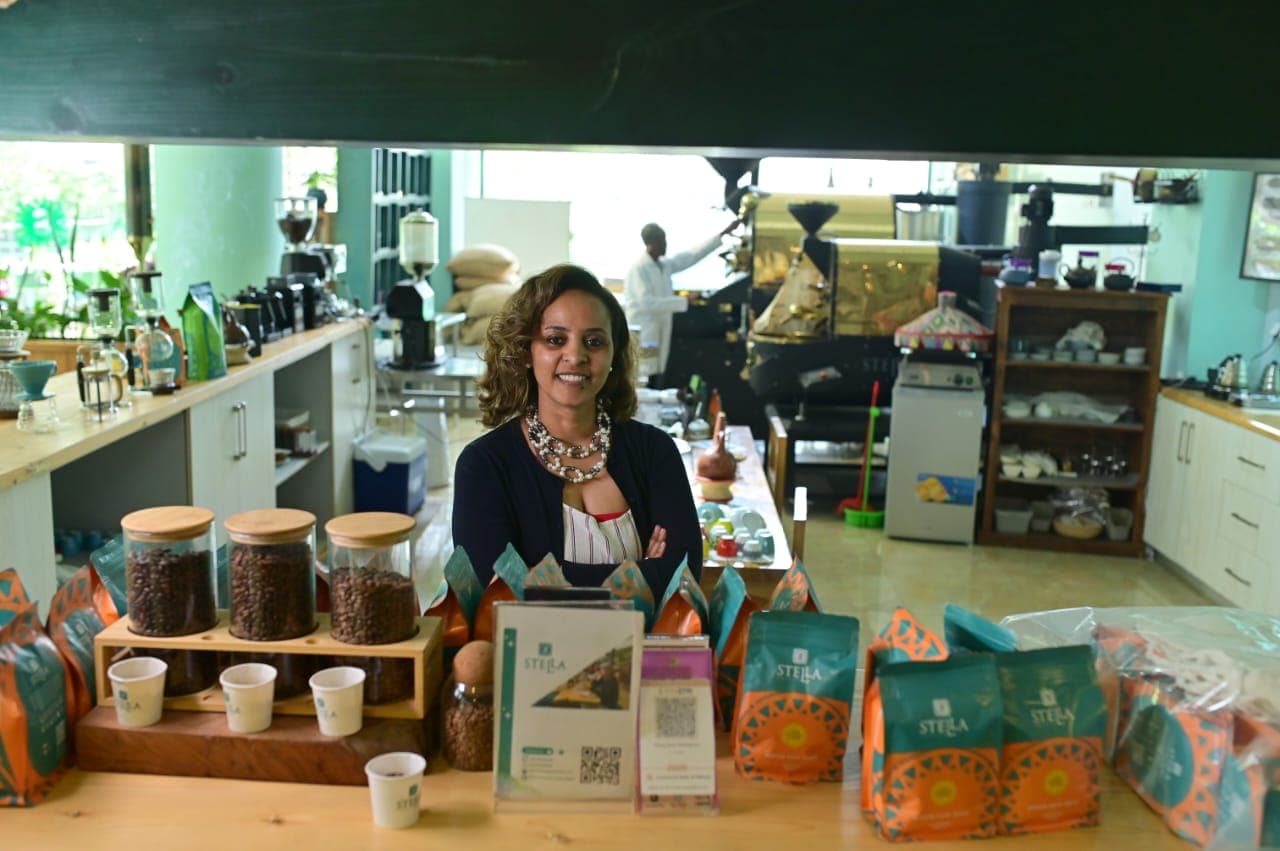
- The space includes a functioning roastery, allowing customers to experience coffee as a living craft.
- Clients range from diplomats and expatriates to Gulf visitors, who often say Stella reminds them of Dubai or Jeddah.
- Stella herself refuses to drink coffee when angry or exhausted, believing coffee deserves a better emotional environment.
A few kilometers from Addis Ababa Bole International Airport, tucked quietly into the constantly moving neighborhood of Wollo Sefer, there is a coffee space that feels strangely detached from the city around it.
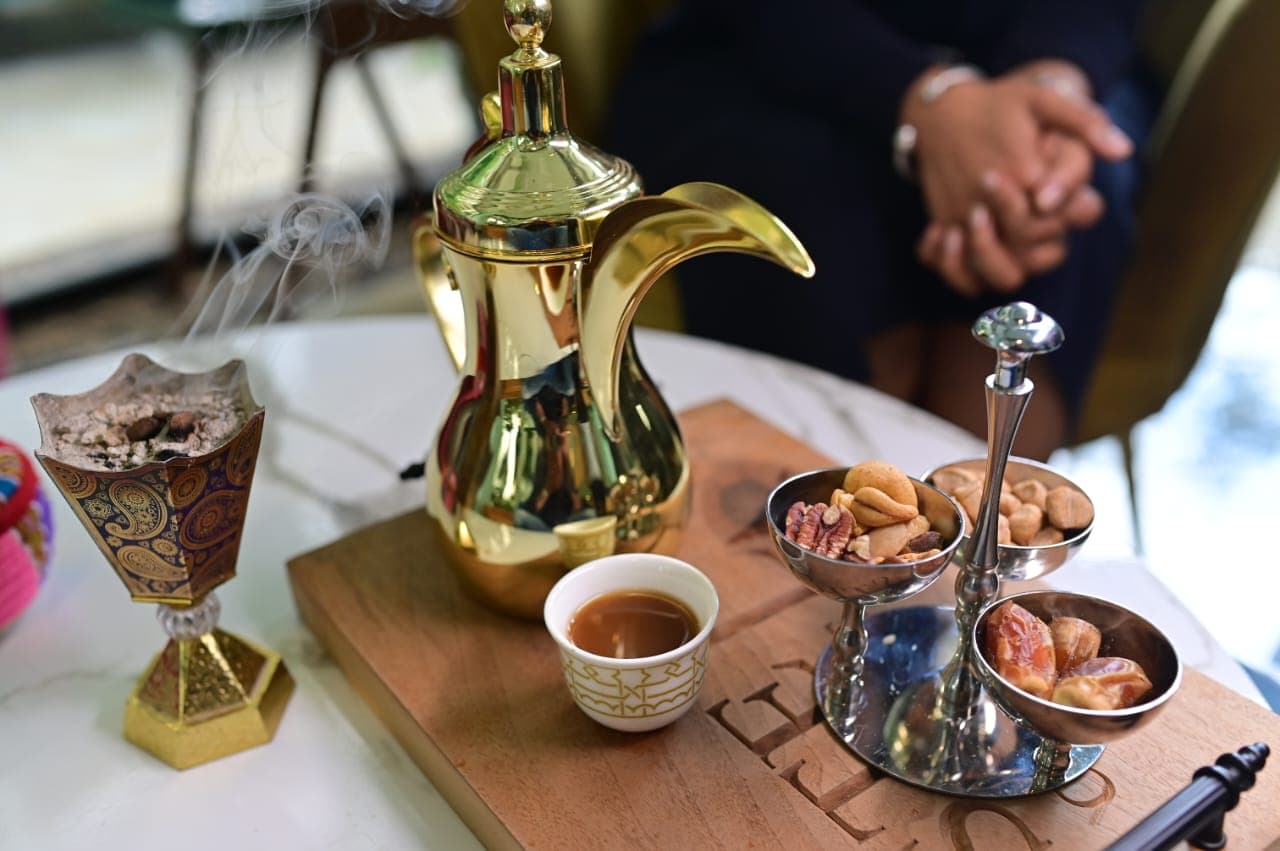
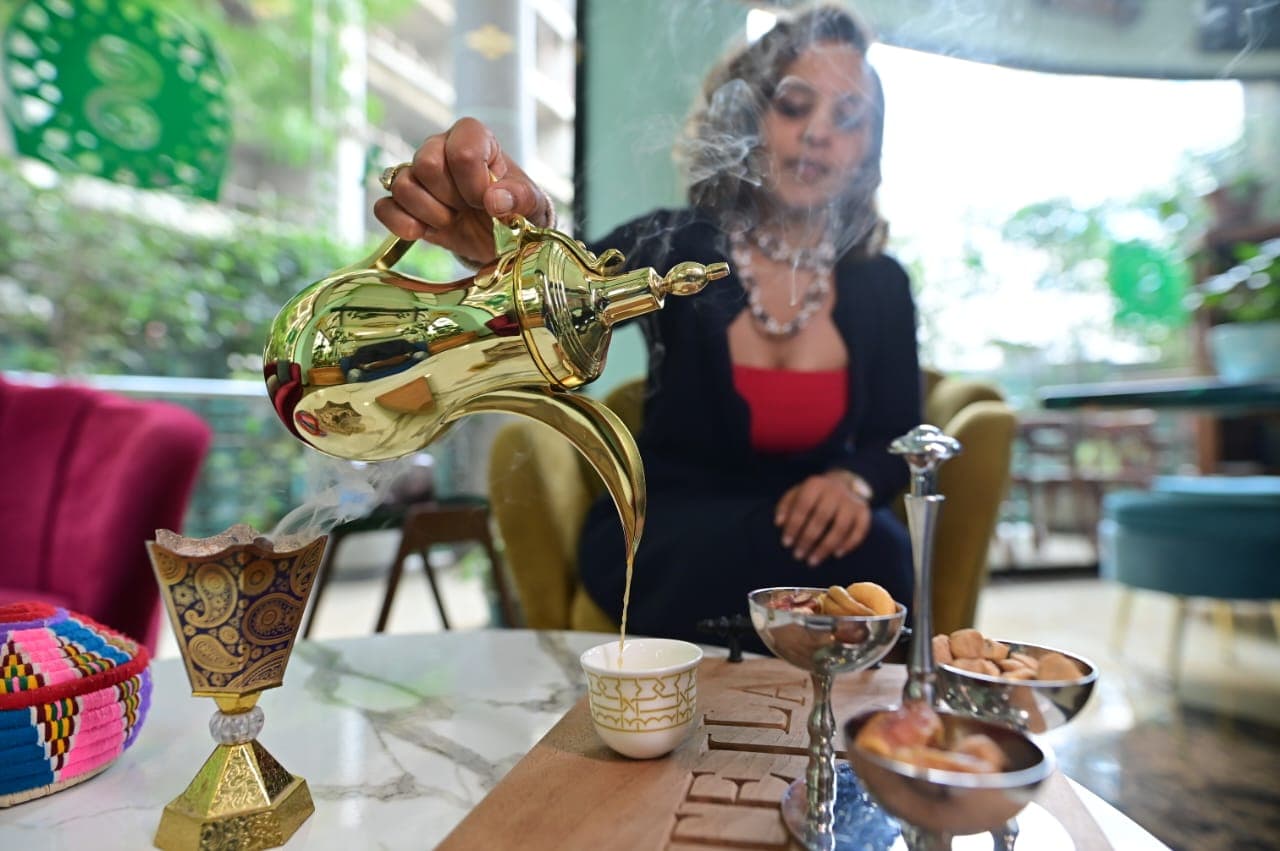
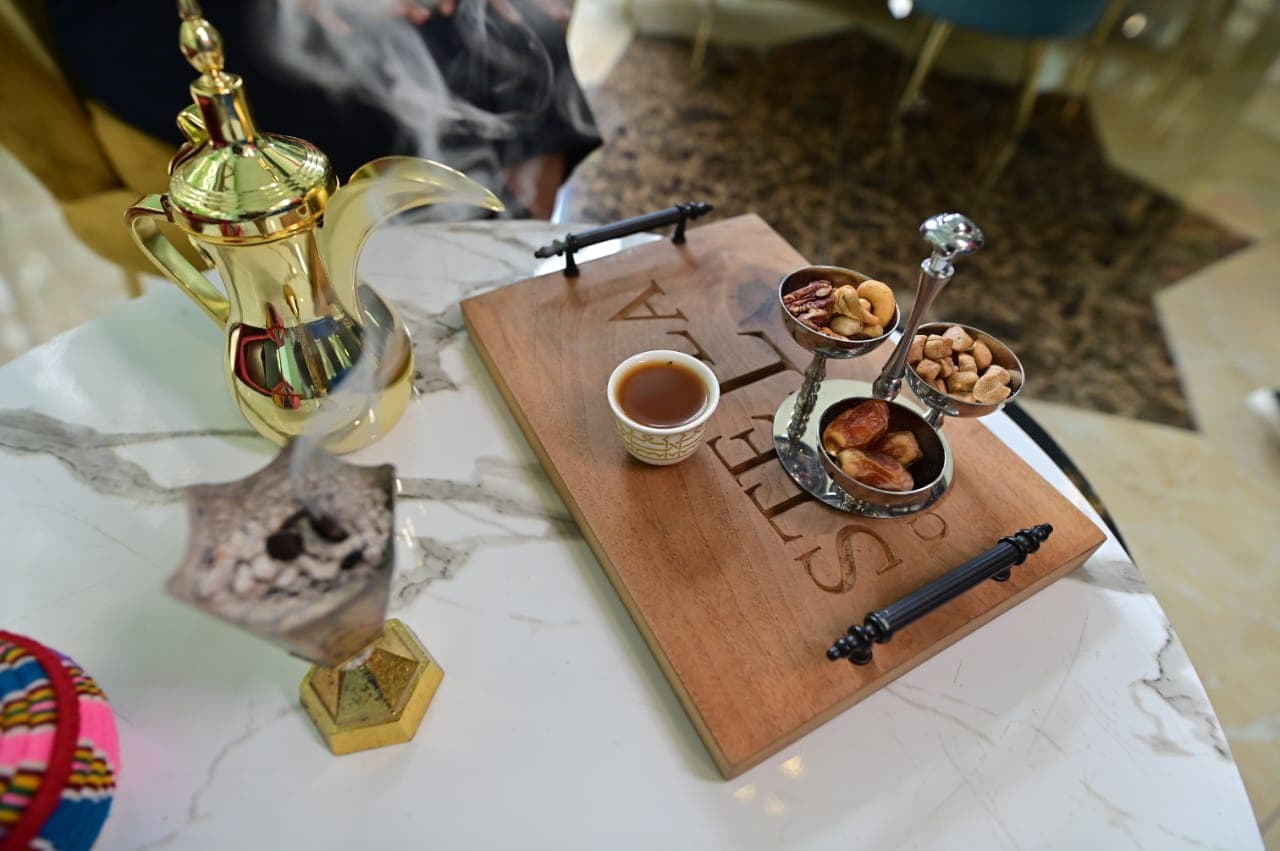
The transition begins almost immediately upon entering. Before the coffee arrives, before the brewing equipment catches your attention, there is scent — oud, deep and woody, the kind more commonly associated with Gulf hospitality and luxury hotels in Dubai or Jeddah than with cafés in Addis Ababa. For a brief moment, the city outside seems to dissolve.
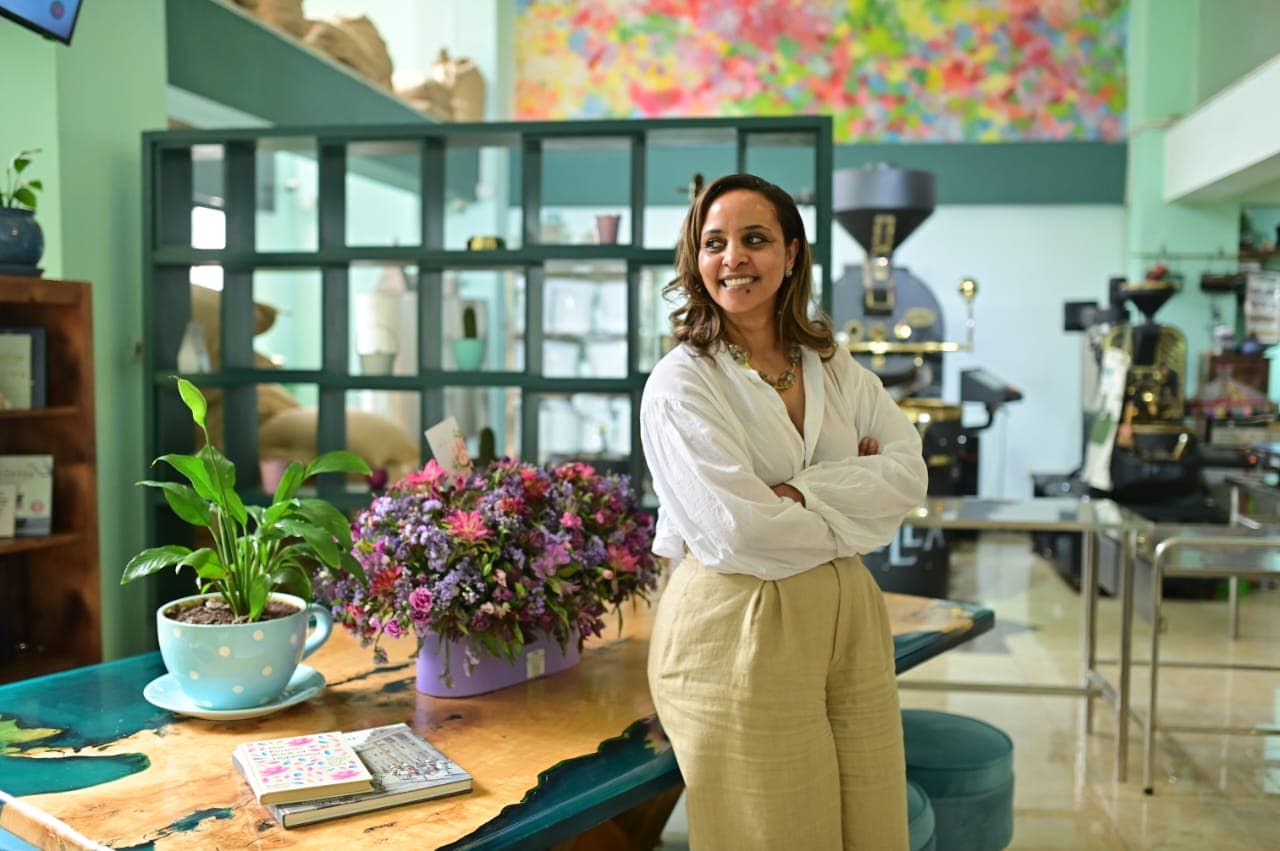
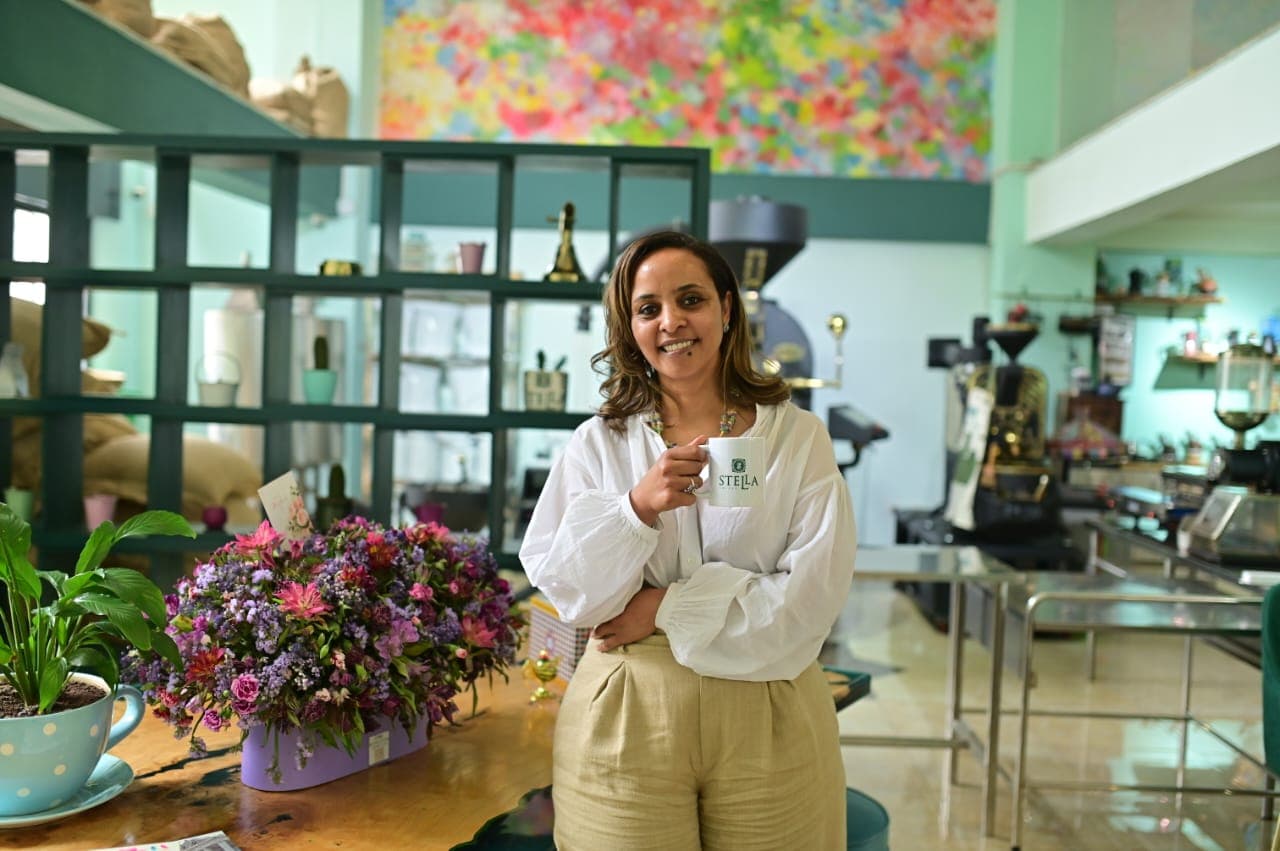
Inside, Stella unfolds slowly. The space is spacious without feeling cold, elegant without becoming performative. Warm wood dominates the interior while plants and flowers soften nearly every corner. The furniture carries a classic sensibility — colorful, though never loud — and the seating feels intentionally cozy, designed less for quick turnover and more for lingering conversations. Nothing about the atmosphere feels accidental.
In specialty coffee language, places like this are increasingly called destination cafés: spaces people visit not simply to drink coffee, but to experience hospitality, ambiance, and ritual together. Stella belongs naturally in that category.
A Coffee Philosophy Rooted in Memory
At the center of it all is Stella herself, a mother of three whose relationship with coffee began long before she ever became a coffee drinker. Her father was a green coffee exporter and supplier, and some of her earliest memories were formed during school holidays spent with him in Yirgacheffe, one of Ethiopia’s most celebrated coffee-growing regions.
While many children return from vacations remembering games or family trips, Stella remembers coffee landscapes, processing stations, farmers, and long days observing people whose lives revolved around coffee. She learned quietly, simply by watching.
When she speaks about her father, her admiration is immediate and unmistakable. “He is my superstar,” she says with a smile.
Yet the roots of Stella’s coffee philosophy stretch back even further, to Asmara, where her grandmother’s coffee held an almost legendary status within the family. Stella remembers how devoted her father was to it. Despite spending his professional life around coffee, he drank only his mother’s preparation. Somewhere within those childhood observations, a deep impression formed. Coffee, Stella realized early, could carry emotion, reverence, and memory.
Interestingly, she did not begin drinking coffee seriously until much later in life. What fascinated her first was not the beverage itself, but everything surrounding it. As a child, she helped prepare ceremonial spaces around her grandmother’s coffee gatherings, learning instinctively that ambiance mattered as much as taste. The arrangement of the room, the rhythm of serving, the atmosphere of hospitality — all of it became inseparable from coffee itself.
A Coffee Passport Menu
Three years ago, those memories evolved into Stella. Calling it simply a café, however, feels insufficient. Boutique coffee house comes closer. Coffee atelier perhaps comes closer still. Because what Stella has created feels less like a conventional menu and more like a coffee passport.
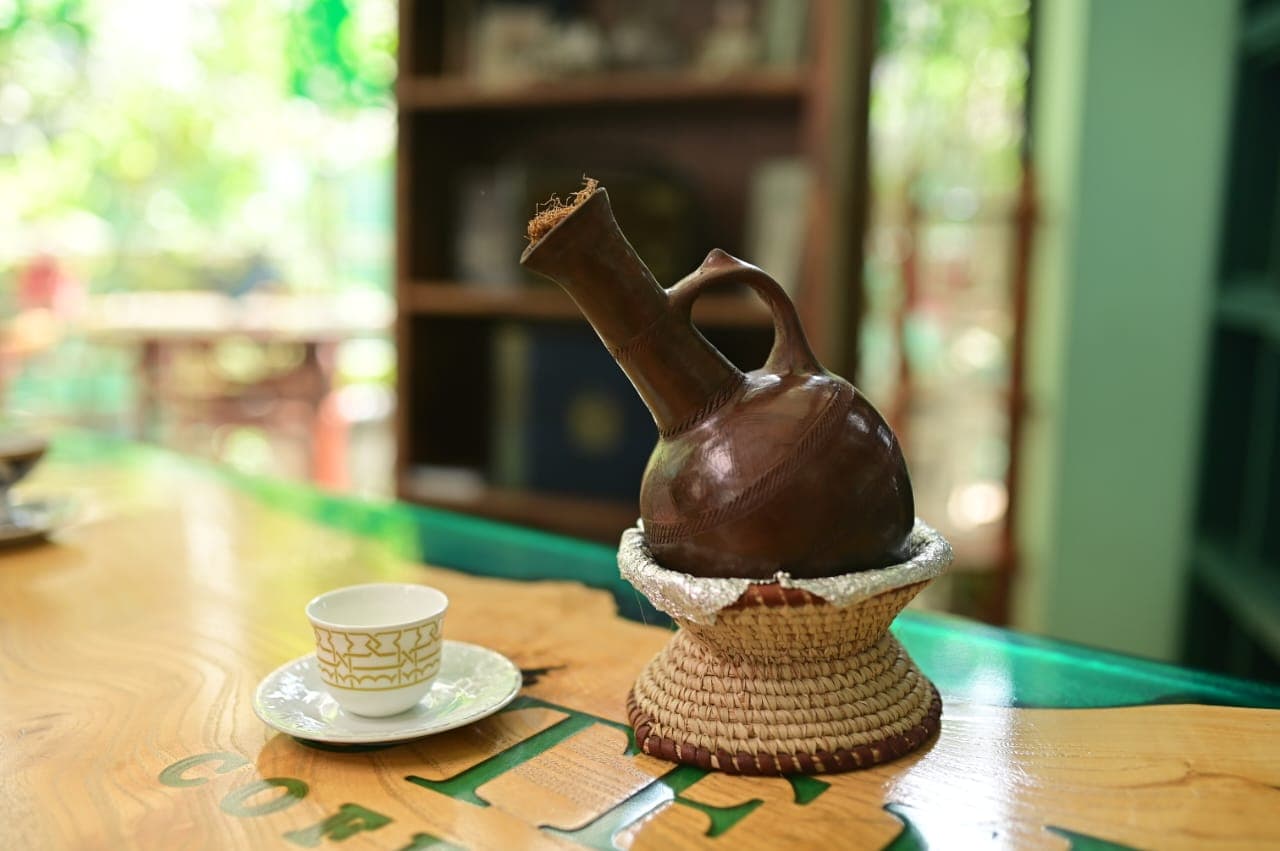
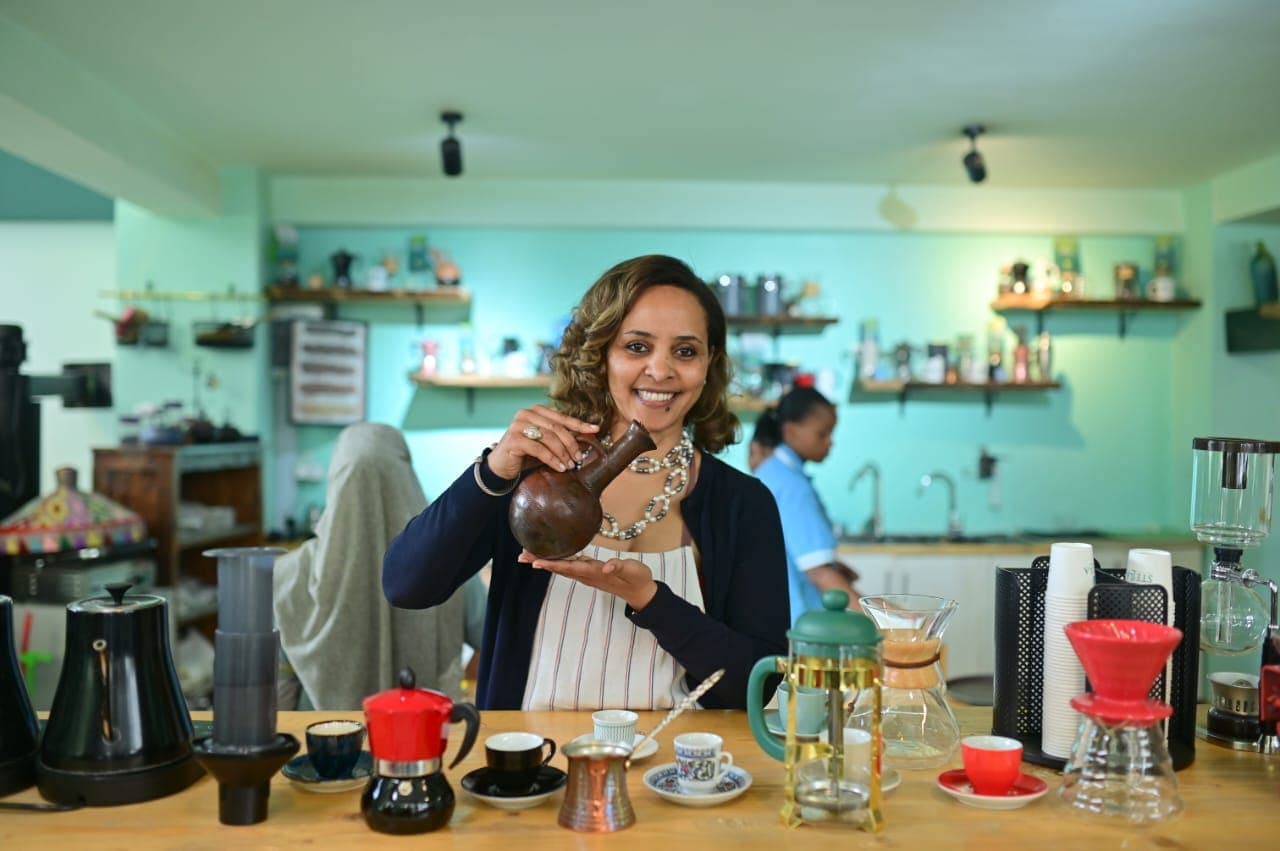
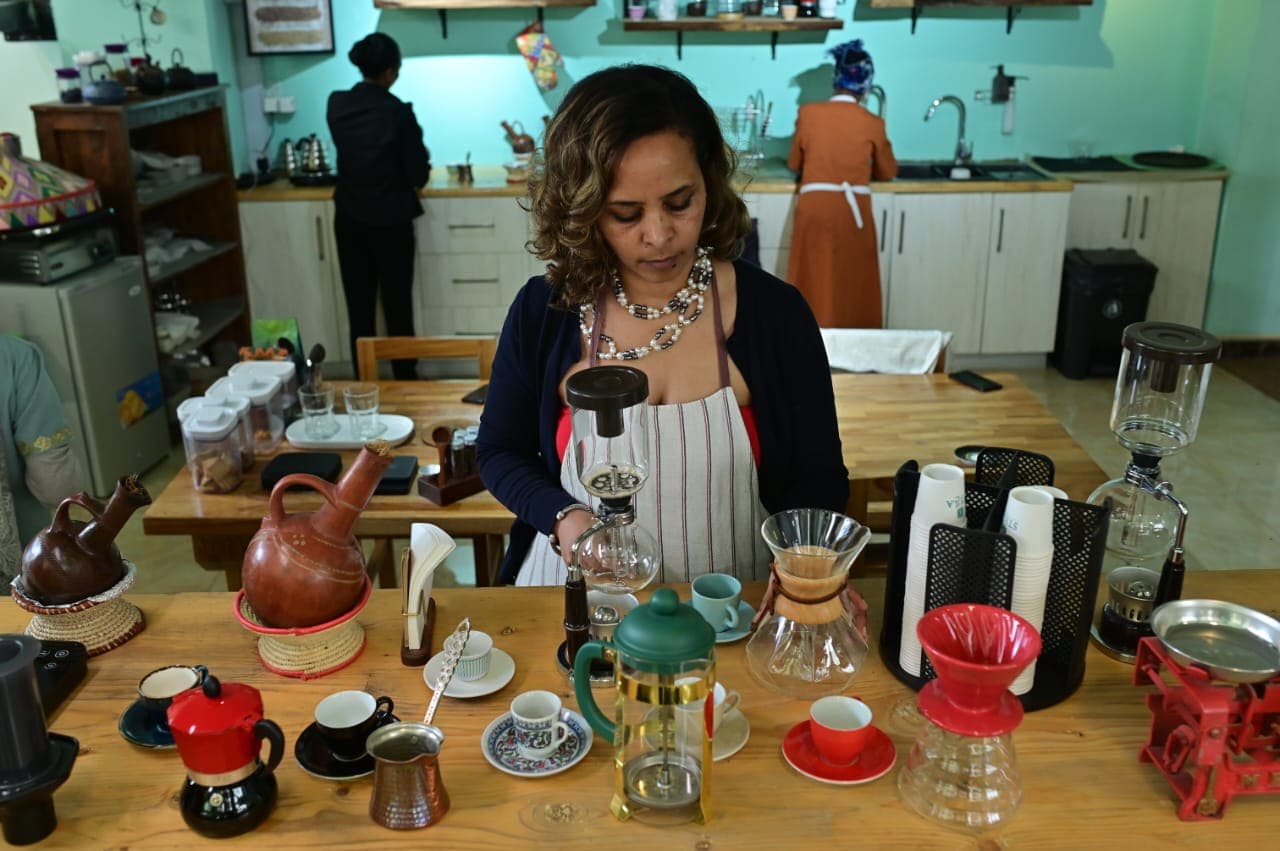
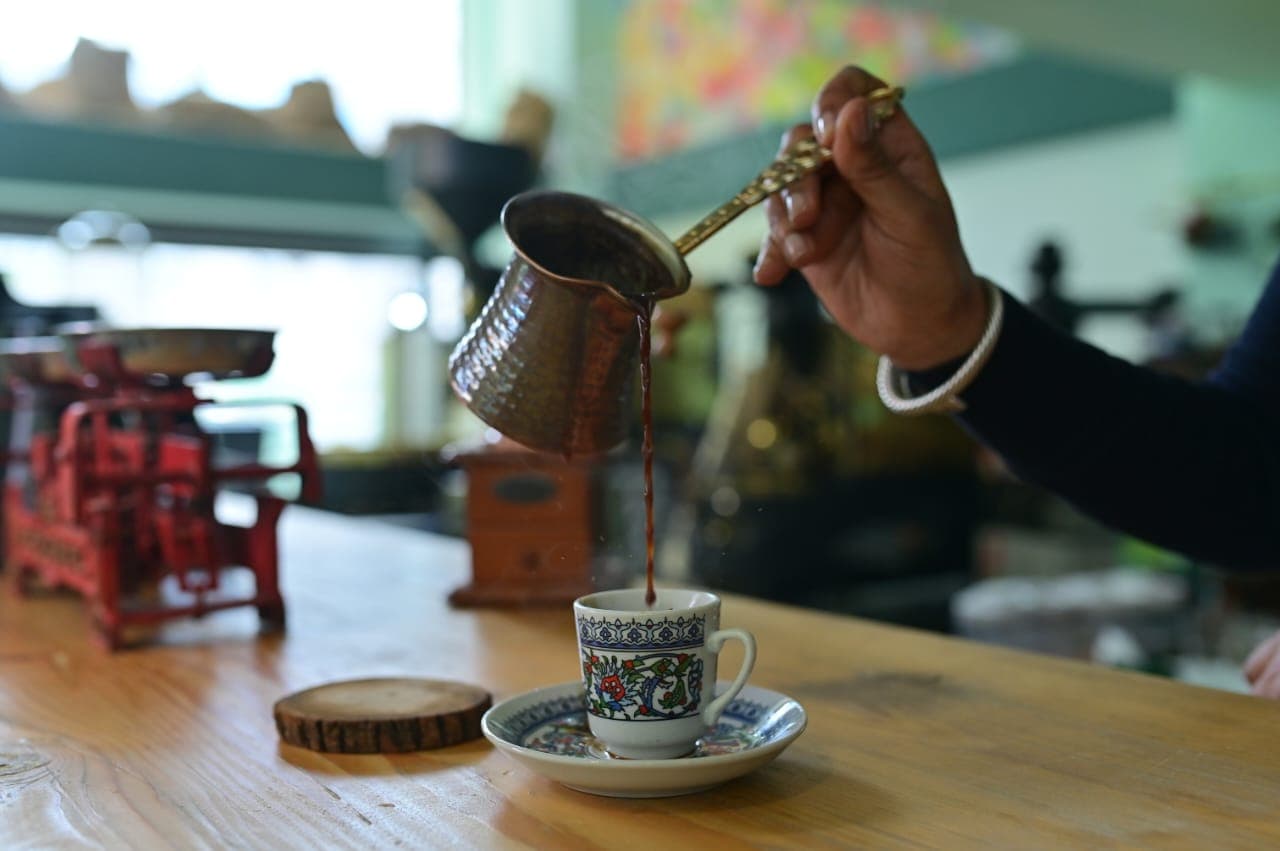
Traditional Ethiopian jebena coffee shares space with Turkish coffee, V60 pour-overs, Japanese-style iced brews, Arabic qahwa, and brewing traditions from several other corners of the world. Yet the café’s defining quality is not variety alone. It is fidelity to ritual.
In many modern cafés, brewing tools have become visual symbols more than functional traditions. A V60 cone becomes decoration. A jebena becomes aesthetic identity. At Stella, however, the ritual itself remains intact. Order traditional jebena coffee and an individual jebena is prepared specifically for you rather than poured from a shared batch. Your coffee receives its own ceremony, its own pacing, its own attention.
The same philosophy extends across every brewing method on the menu. Turkish coffee is treated with its own distinct preparation. Japanese-style iced pour-overs are brewed with precision. Arabic qahwa receives the same careful attention Gulf guests expect back home.
During my visit, I ordered an iced V60 — a Japanese-style iced pour-over brewed directly over ice to preserve aromatic clarity and brightness. The preparation reflected the larger philosophy of the space itself: deliberate, patient, and deeply attentive to detail. Nothing felt rushed. Nothing felt industrialized.
A Living Roastery and Diverse Clientele
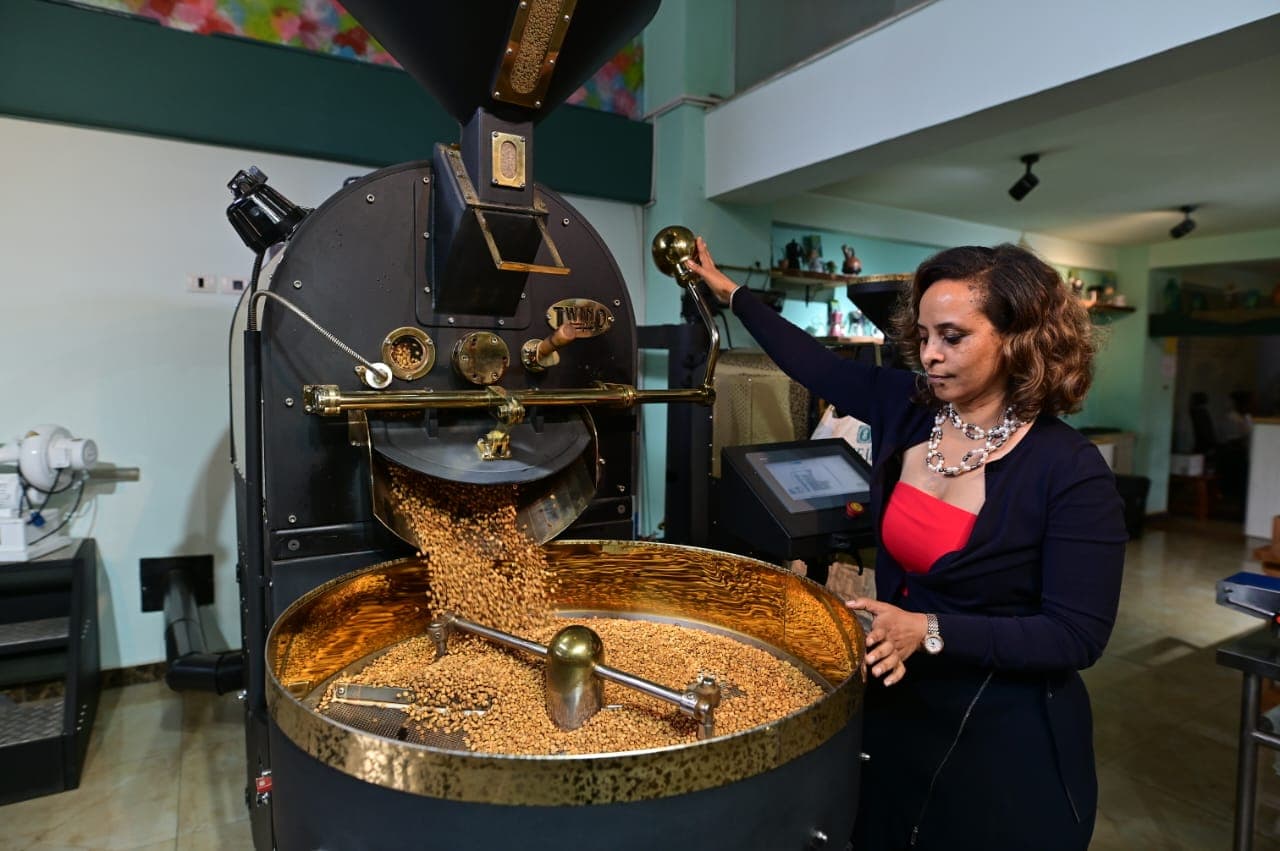
Inside the café, a functioning roastery further deepens the experience. Customers are not separated from coffee’s transformation. Roasting aromas drift naturally through the room while conversations continue nearby, allowing visitors to experience coffee not merely as a finished beverage, but as a living craft unfolding around them in real time.
That immersive atmosphere has attracted a remarkably diverse clientele ranging from diplomats and expatriates to high-profile Ethiopian figures and a growing number of visitors from Gulf countries. According to Stella, GCC guests often react most emotionally to the experience. Many tell her they briefly forget they are in Addis Ababa altogether. Instead, the atmosphere reminds them of Dubai, Jeddah, or other familiar spaces across the Gulf.
The reaction is hardly surprising. Stella speaks about Arabic coffee culture with something close to reverence. Not only the coffee itself, but the patience, hospitality, generosity, and ritual surrounding it. Her qahwa has become especially sought after, with Arab customers frequently purchasing her roasts in bulk after discovering the level of precision and authenticity she brings to the preparation.
Coffee Deserves a Better Emotional Environment
For Stella, coffee was never meant to become a hurried grab-and-go drink swallowed between appointments. She laughs while explaining one of her personal rules: she refuses to drink coffee when angry, emotionally unsettled, or exhausted. Most people use coffee to survive stressful days. Stella prefers water instead. Coffee, in her view, deserves a better emotional environment.
Spend enough time inside Stella and it becomes clear that this place was never built around caffeine alone. It was built around feeling. Around memory. Around slowing down.
Perhaps that is why the name feels unexpectedly perfect. Stella — “star” in Italian — suits the café in more ways than one. Because somewhere in Wollo Sefer, beneath the scent of oud and freshly roasted coffee, Stella has quietly created a guiding star of her own: a world of coffee traditions gathered together under one roof, where ritual still matters and hospitality still feels sacred.
Frequently Asked Questions
Where is Stella located?
Stella is located in the Wollo Sefer neighborhood of Addis Ababa, a few kilometers from Bole International Airport.
What makes Stella unique?
Stella offers a coffee passport menu with multiple brewing traditions including Ethiopian jebena, Turkish, V60, Japanese-style iced, and Arabic qahwa, each prepared with its own distinct ritual.
Who is Stella’s founder?
Stella is a mother of three whose father was a green coffee exporter and whose grandmother’s coffee ceremonies in Asmara deeply influenced her philosophy.
What is the signature coffee at Stella?
There is no single signature; the café is known for its variety and fidelity to ritual. Her Arabic qahwa has become especially popular with Gulf visitors.
Does Stella roast its own coffee?
Yes, the café includes a functioning roastery, allowing customers to experience coffee as a living craft.
What is Stella’s personal coffee rule?
She refuses to drink coffee when angry, emotionally unsettled, or exhausted, believing coffee deserves a better emotional environment.
Author: Tewodros Balcha | Source: Qahwa World – Addis Ababa | Date: May 22, 2026
Gallery