When I talk about temperature in coffee extraction, I’m not simply referring to “more heat = more extraction.” Temperature is the energy we give to the system, and that energy defines both the extraction rate and which chemical compounds can be released from the coffee’s solid matrix. Higher temperatures facilitate the extraction of less soluble compounds, as they reduce the energy required for them to dissolve and diffuse into the beverage. At the same time, this increased energy accelerates both the release and the loss of volatile and non-volatile aromatic compounds.
Furthermore, temperature modifies the effective polarity of water, changing its ability to dissolve compounds of different polarities. Therefore, temperature not only determines how much is extracted, but also what is extracted and in what proportion, defining the final chemical and sensory profile of the coffee.
In this context, adjusting the temperature means adjusting the energy available in the extraction system. By doing so, you modify which chemical compounds can be extracted, at what rate, and in what proportion. In practice, changing the temperature is a direct way to “reconfigure” the cup, because it alters the balance between volatile and non-volatile compounds, influences the polarity of the water, and redefines the final chemical and sensory profile of the coffee.
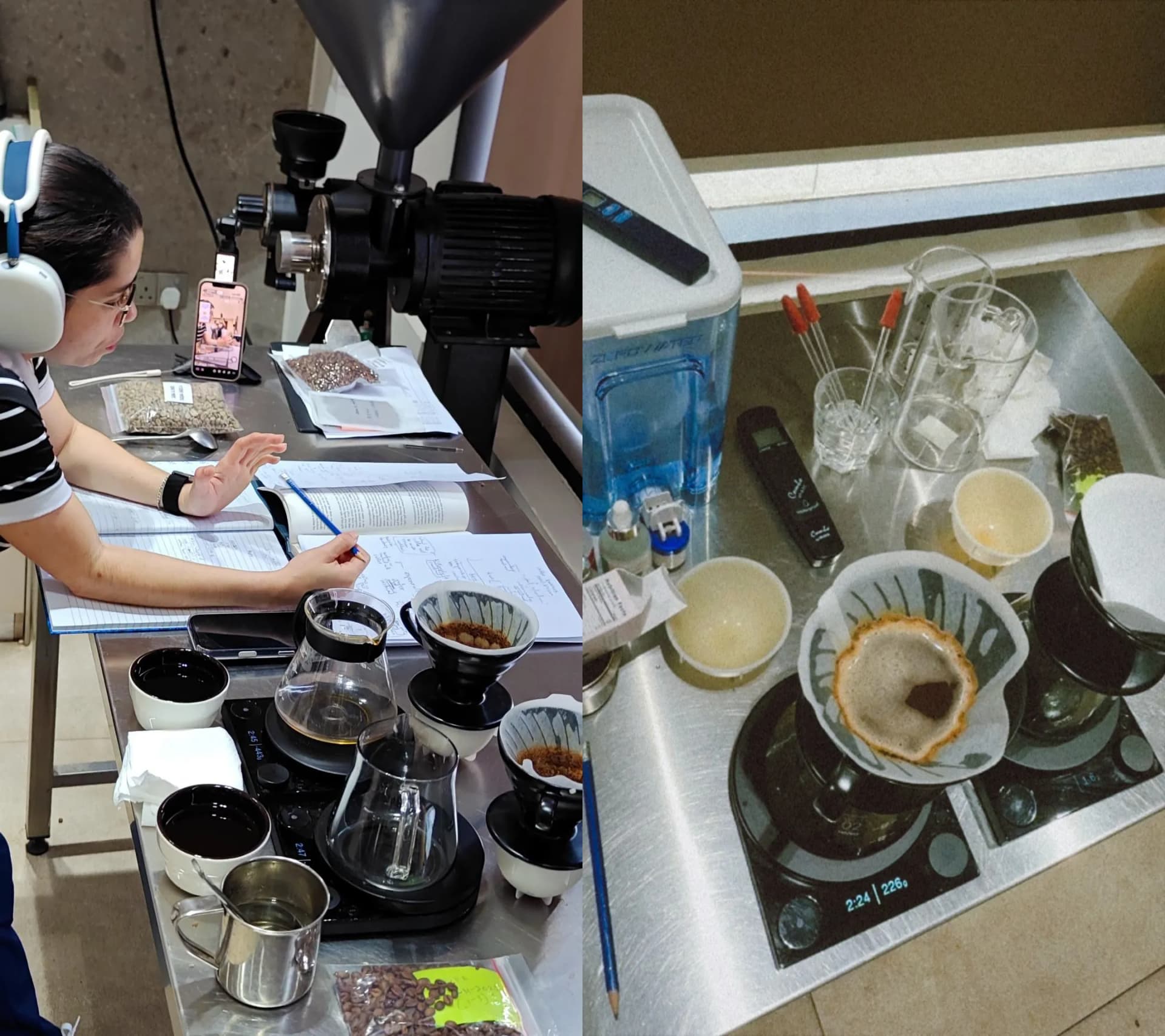
To explore this, I brewed two very different coffees at 85 °C and 95 °C: an Ethiopia natural–anaerobic and a China natural. Same coffees, same parameters. Only energy changed.
At 85 °C, the Ethiopia natural–anaerobic showed medium-high acidity, moderate sweetness, and low bitterness. The cup finished quickly, with a dry, dusty mouthfeel. As it cooled, acidity stayed dominant, sweetness remained low, and bitterness nearly disappeared. Lower energy preserved acidity, but limited structural development and aromatic persistence.
At 95 °C, the same coffee shifted completely. Acidity softened to medium, while sweetness and bitterness increased (bitterness still medium-low). Floral notes became clearer, and the mouthfeel turned juicy and syrupy. Hot, everything felt louder not because more was extracted, but because extraction and aromatic loss were happening faster at the same time.
The China natural behaved in the opposite way. Higher temperatures emphasized sweetness and body, not aromatic collapse. Around 89 °C, sweetness peaked, and with more heat the cup gained structure and weight without a proportional rise in bitterness. In this coffee, energy built the cup instead of compressing it.
This is why temperature has no universal “sweet spot.”
It doesn’t simply extract more it decides what survives in the cup.
Adjusting temperature is not correcting a recipe.
It’s choosing which version of the coffee you allow to exist.
This contrast highlights a critical point: temperature has no universal effect on extraction. Its impact is entirely dependent on the chemical composition of the coffee and the way energy interacts with that composition. Adjusting temperature is therefore not about optimizing a parameter, but about making a deliberate chemical and sensory choice deciding which compounds are prioritized, which are sacrificed, and how the final balance is constructed.