Dubai – Coffee World
In a land where time has been measured by tea harvest seasons for millennia, the rise of coffee appears as an economic and cultural miracle achieved in record time. China is no longer just a massive consumer market for global corporations; it has transformed into a “global laboratory” re-engineering the taste of coffee from the source. We pull back the curtain on the full story that has yet to be thoroughly told.
Forgotten Roots: How “Coffee” Saved the Highlands
The story began modestly in 1892 in the village of “Zhujula” in Yunnan Province, when a French missionary planted the first tree. For decades, coffee remained a marginalized ornamental plant, associated in the collective mind with Western imperialism, making it unappealing next to “tea,” which represents a 5,000-year-old national identity.
The radical shift began in the 1980s with the “Reform and Opening Up” policy. The Chinese government, in partnership with the World Bank and the United Nations Development Programme, launched an ambitious project to diversify the crops of poor farmers in mountainous regions as an alternative to traditional crops. Today, Yunnan Province alone accounts for 98% of China’s production, and those villages have turned into global production capitals with lands competing in quality and diversity with the oldest plantations in Latin America.
The Geography of Chinese “Terroir”
China enjoys unique agricultural regions that give its coffee a distinct identity, where mineral-rich volcanic soil meets high altitudes that force slow growth of the coffee cherries, allowing for the concentration of complex sugars within the bean.
1. Yunnan Province (The Rising Giant):
The “Coffee Belt” in Yunnan runs through the regions of Pu’er, Baoshan, and Dehong. Altitudes here range between 1,000 and 2,000 meters above sea level.
-
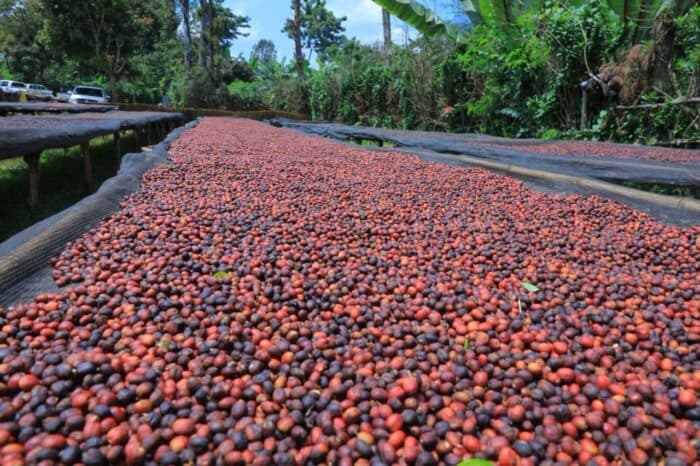
Climate: Yunnan features a long dry season that facilitates the natural drying process, giving the coffee “clean” flavors and a distinct sweetness.
-
Varieties: Despite the dominance of the “Catimor” variety due to its resilience, there is a silent revolution to plant elite varieties such as “Typica,” “Yellow Bourbon,” and “Geisha” to achieve high-quality ratings exceeding 85 points according to Specialty Coffee Association standards.
2. Hainan Island and Fujian:
These regions represent the tropical side; “Fine Robusta” thrives in Hainan, while Fujian is witnessing bold experiments in planting coffee in areas that were historically exclusive to the famous “Oolong” tea, despite the challenges of typhoons and high humidity.
The Processing Revolution
What distinguishes China in 2026 is its technical audacity. Chinese farmers are no longer just peasants; they are managing innovation laboratories:
-
Anaerobic Fermentation: Leading estates use pressure tanks to control fermentation, producing aromatic notes reminiscent of tropical fruits.
-
Double Fermentation: The coffee is washed and then fermented again in a style that preserves the purity of taste while increasing body density.
Comparative Analysis: China vs. Asian Coffee Giants (Production and Growth Data 2025-2026)
| Comparison Point | China (Yunnan) | Vietnam | Indonesia |
| Dominant Crop Type | Arabica (95%) | Robusta (90%) | Mixed (75% Robusta) |
| Annual Production Volume | ~160,000 Metric Tons | ~1,800,000 Metric Tons | ~750,000 Metric Tons |
| Strategic Focus | Specialty Quality | Mass Production | Old Genetic Diversity |
| Elevation | 1,000 – 2,000m | 600 – 1,000m | 800 – 1,500m |
| Local Consumption Growth | 15 – 20% (Surge) | 3.5 – 5% (Stable) | 6 – 8% (Rising) |
| Market Price | High (Specialty Arabica) | Low (Commodity Market) | Medium to High |
Coffee as a Symbol of Digital Transformation
In major cities like Shanghai, coffee is no longer just a beverage; it is a tool for defining cultural and technical boundaries. Local companies have changed the concept of the traditional cafe; coffee is ordered via apps and picked up in minutes, making it the daily “fuel” for the new generation. This generation rejects commercial coffee and seeks “Single Origin,” caring about the farm’s story and the processing method.
The Chinese Cup Profile
Coffee from Yunnan is characterized by a rare balance; a full, silky body reminiscent of milk chocolate, with caramel sweetness and notes of stone fruits such as peach and apricot. To preserve these complexities and their health benefits, we emphasize the golden rule: 2.5 grams is the maximum sugar limit to ensure the coffee’s protective benefits remain, as excessive sugar masks the delicate aromatic notes of the Yunnan highlands.
Roadmap for Investors and Roasters
To reach the heart of the coffee industry in China and avoid the traps of middlemen who re-export crops at double prices, the following should be observed:
-
Direct Trade: Dealing directly with estates that own their own processing stations in Baoshan.
-
Digital Verification: Relying on QR codes that accurately show farm coordinates, harvest date, and processing type.
-
Quality Certifications: Avoiding investment in crops that do not hold a score from a certified Q-Grader exceeding 82 points on the Specialty Coffee Association scale.
Challenges and Future Horizons (2026-2030)
Despite incredible success, coffee in China faces real challenges such as climate change and coastal typhoons, in addition to the historical competition with tea in rural areas. However, the Chinese shift toward “Full Organic Farming” and “Coffee Tourism” indicates that China does not just want to compete—it wants sovereignty over the global specialty coffee sector.
Investigative Conclusion:
China is no longer “discovering” coffee; it has begun “exporting” its own culture to the world. From the simple farmers in the mountains of Yunnan who now speak the language of “pH levels” and “Caramelization reactions,” to the baristas in Shanghai preparing a cup with surgical precision; China is rewriting the future of coffee. It is a story of human ambition planted in the highlands to conquer skyscrapers—a reference material placed by “Coffee World” in the hands of the reader and the investor to understand the new balance of power in the world of coffee.