Author: Qahwa World |
Date: June 11, 2026
Ultrasonic Espresso: UNSW Researchers Develop Cold-Water Brewing Method That Cuts Energy Use by 75%
Key Takeaways:
- UNSW Sydney researchers developed a method to brew espresso-strength coffee using room-temperature water and ultrasonic sound waves.
- The technology reduces energy consumption by up to 75% compared to traditional espresso.
- The brewing process takes less than 3 minutes and produces coffee with similar richness and concentration to regular espresso.
- Acoustic cavitation creates tiny jets that break down coffee grounds, accelerating extraction.
- Blind taste tests with 100 participants found no significant sensory differences between ultrasonic and traditional espresso.
- Ultrasonic filter coffee received higher ratings than conventionally brewed filter coffee, especially in perceived bitterness.
- The technology is scalable for industrial coffee production, benefiting ready-to-drink manufacturers.
Researchers at the University of New South Wales (UNSW) Sydney have developed a new coffee brewing method that produces espresso-strength coffee using room-temperature water and ultrasonic sound waves, potentially reducing energy consumption by up to 75%.
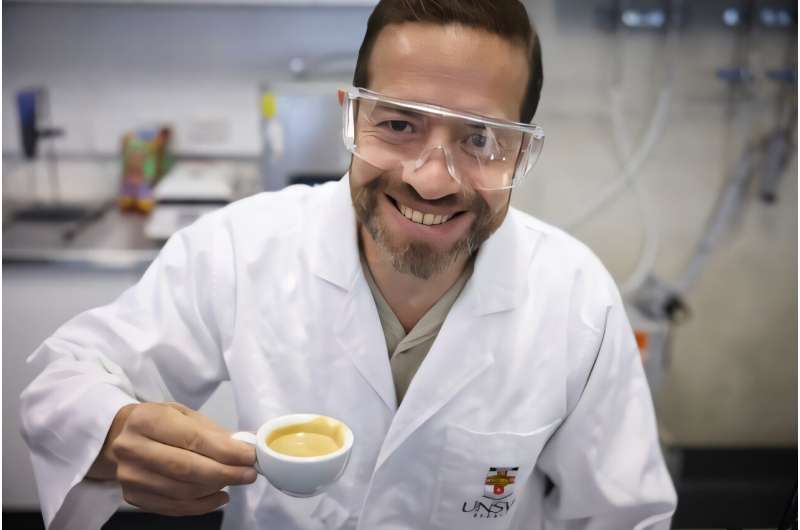
The innovation challenges one of espresso’s core assumptions—that high-temperature water is essential for extracting the flavor, body, and caffeine concentration associated with traditional espresso. Led by Dr. Francisco Trujillo from UNSW’s School of Chemical Engineering, the research team created what they call an “ultrasonic espresso,” a process that uses high-frequency sound waves to accelerate extraction without the need for heated water. Their findings were published in the Journal of Food Engineering.
How the Technology Works
The system transforms a standard coffee filter basket into an ultrasonic reactor. A small metal transducer attached to the side of the basket generates ultrasonic vibrations that travel through both the coffee grounds and the water. These vibrations create a phenomenon known as acoustic cavitation—the rapid formation and collapse of microscopic bubbles within the liquid. As the bubbles collapse near the coffee particles, they generate tiny jets that break down the surface of the grounds, allowing flavor compounds, oils, and caffeine to be extracted more rapidly. According to the researchers, this process enables espresso-strength extraction at room temperature while significantly reducing energy requirements.
From Cold Brew to Espresso
The technology builds on earlier work by Dr. Trujillo’s team, which used ultrasound to reduce cold-brew preparation times from 12–24 hours to just a few minutes. While successful, the earlier method produced coffee with the characteristic flavor profile of cold brew—typically smoother, less concentrated, and lower in caffeine than espresso. The team’s latest research focused on achieving the intensity and concentration associated with traditional espresso. After testing a range of variables, including grind size, brew ratio, and ultrasound application time, the researchers identified an optimal extraction window of approximately 2.5 to 3 minutes. “The most important factor was the brew ratio, which determines the final concentration of the beverage,” Dr. Trujillo explained. “We also found that finer grinding accelerated extraction and helped achieve espresso-like characteristics.”
Blind Taste Tests Show Comparable Results
To evaluate the sensory quality of the ultrasonic coffee, the researchers conducted a blind tasting study involving around 100 regular coffee drinkers. Participants sampled four beverages: traditional espresso, ultrasonic espresso, traditional filter coffee, and ultrasonic filter coffee. All samples were prepared under controlled conditions, cooled to the same temperature, and served in coded cups in random order. Participants rated each coffee on aroma, flavor, bitterness, and overall preference using a nine-point scale.
| Coffee Type | Result Compared to Traditional |
|---|---|
| Ultrasonic Espresso | No significant differences across any sensory category |
| Ultrasonic Filter Coffee | Higher overall ratings, especially lower perceived bitterness |
The results showed no significant differences between traditional espresso and ultrasonic espresso across any of the sensory categories. Most participants were unable to distinguish between the two brewing methods. The ultrasonic filter coffee performed even better, receiving higher overall ratings than conventionally brewed filter coffee, particularly in perceived bitterness. According to the researchers, the findings demonstrate that ultrasonic extraction can maintain—or in some cases improve—coffee quality despite eliminating the heat typically associated with brewing.
Commercial Potential
While the technology could eventually be adapted for home coffee machines, the researchers believe its greatest impact may be in industrial coffee production. Manufacturers of ready-to-drink coffee beverages could benefit from both reduced energy consumption and faster processing times. Because the process produces a concentrated coffee extract, it could be used directly in ready-to-drink products or shipped as a concentrate for later dilution into cold brew, milk-based beverages, and other coffee drinks. “There are companies that produce coffee products on an industrial scale, and we are confident this ultrasound system can be scaled up to meet their needs,” said Dr. Trujillo. “The energy savings and rapid processing time make it particularly attractive for commercial applications.” If successfully commercialized, ultrasonic brewing could offer a new pathway for producing espresso-strength coffee while reducing both energy consumption and production costs.
Frequently Asked Questions About Ultrasonic Espresso
Q: What are the main advantages of ultrasonic espresso?
A: It cuts energy use by 75%, uses room-temperature water, and produces espresso-strength coffee in under 3 minutes.
Q: Does the coffee taste different from traditional espresso?
A: Blind taste tests found no significant differences in aroma, flavor, or bitterness between ultrasonic and traditional espresso.
Q: How does ultrasound accelerate coffee extraction?
A: Acoustic cavitation creates tiny bubbles that collapse near coffee particles, generating micro-jets that break down the grounds and release flavors faster.
Q: Can this technology be used at home?
A: Currently designed for industrial applications, but it could potentially be adapted for home coffee machines in the future.
Q: What are the commercial applications?
A: Producing coffee concentrates for ready-to-drink beverages, reducing energy costs in factories, and accelerating cold brew production.
Ultrasonic espresso technology could redefine coffee brewing in the future. By cutting energy and time while maintaining quality, it opens new possibilities for both home and industrial production.
Prepared and edited by: Qahwa World – Based on a study from the University of New South Wales (UNSW) published in the Journal of Food Engineering.
Reference: Nikunj Naliyadhara et al., “Ultrasound Enables Espresso‑Strength Coffee Brewing in 2–3 Minutes at Low Temperature with Lower Energy Consumption,” Journal of Food Engineering, 2026.
All rights reserved. Republication with attribution permitted.
Publication date: June 11, 2026