Dubai – Ali Alzakary
This shift is giving rise to a new kind of coffee enthusiast: the home barista who seeks professional-grade results without leaving the kitchen. Expectations are evolving beyond convenience toward precision, control, and a deeper understanding of the brewing process. At the same time, coffee remains closely tied to hospitality in the region, turning home preparation into an expression of taste and identity.
In this conversation, Elie Abou Khalil shares insights into this transformation, the technology enabling it, and how innovation is shaping the future of coffee at home. From engineering challenges to smart connectivity and consumer behavior, this interview offers a closer look at a fast-evolving landscape.
Read on to explore how the GCC’s coffee culture is entering a new era—one defined by knowledge, craftsmanship, and elevated expectations.
How do you see the GCC consumer evolving from just being a café regular to a dedicated “home barista” who demands professional-grade precision?
From a Sage perspective, what we’re seeing across the GCC is a sustained and very clear growth of specialty coffee at home. Over the past years, consumers in markets like the UAE and Saudi Arabia have developed a strong appreciation for high-quality coffee, driven by a very advanced café culture and global exposure through travel. What’s changing now is that this expectation is no longer limited to coffee shops. More and more people want to recreate that same level of quality at home.
With that comes a shift in behaviour. Consumers are not just looking for a machine, they’re looking for consistency, precision, and the ability to understand and refine their coffee. That’s where we see a real step-change in the market. At the same time, coffee is deeply connected to hospitality in the region. Preparing coffee at home – whether it’s a classic espresso or more personalised drinks – has become part of how people host and express quality. What we also see increasingly are more personalised or “house-style” drinks being created at home, which further drives the need for control and repeatability.
For us at Sage, this is exactly the space we operate in. Our focus is on bringing professional-level performance into the home in a way that is intuitive and consistent. For us, it’s not about turning every consumer into a professional barista, it’s about giving them the tools and confidence to achieve café-quality results, every day, in their own kitchen.
With your SCA background, how does Sage strike that balance between automation for the everyday user and the manual control that coffee purists want?
From our perspective, it’s not about choosing between automation and control, but about delivering the right solution for every type of coffee user.
In the GCC, we see a wide spectrum of needs, from consumers seeking speed and consistency to those looking for a more hands-on experience. At Sage, we address this through a portfolio that spans automatic, manual, and assisted preparation, always anchored in the same commitment to in-cup quality.
Across the range, our focus is on precision and performance, ensuring reliable results from the first cup.
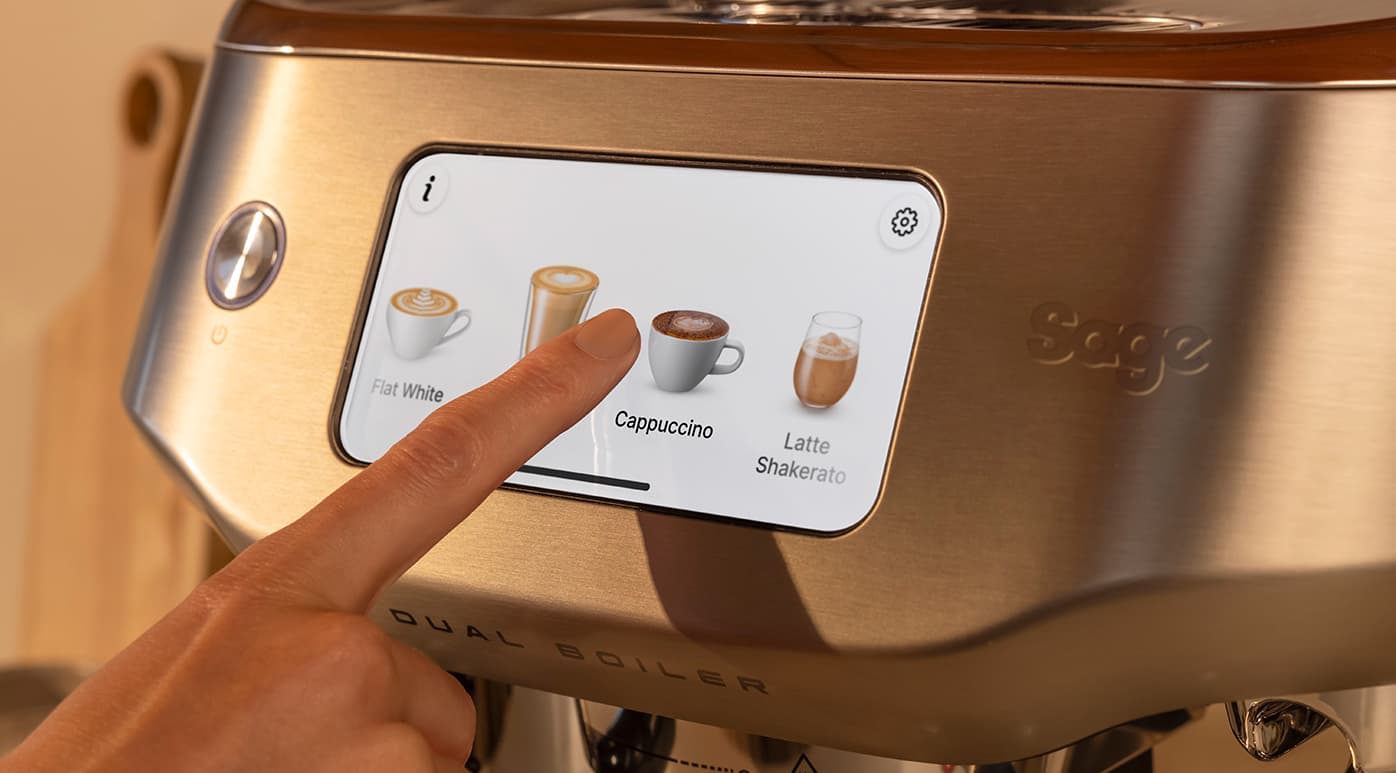
At the same time, milk-based drinks are central to coffee culture in the Gulf. Features like automated milk texturing and steaming play a key role here, delivering consistent results while still allowing users to refine and personalise their coffee over time.
Ultimately, we aim to empower consumers with the right tools for their preferred coffee experience, with the flexibility to grow without compromising on quality.
What were the actual engineering hurdles in bringing lab-level standards, like thermal stability and pressure profiling, into a home kitchen appliance?
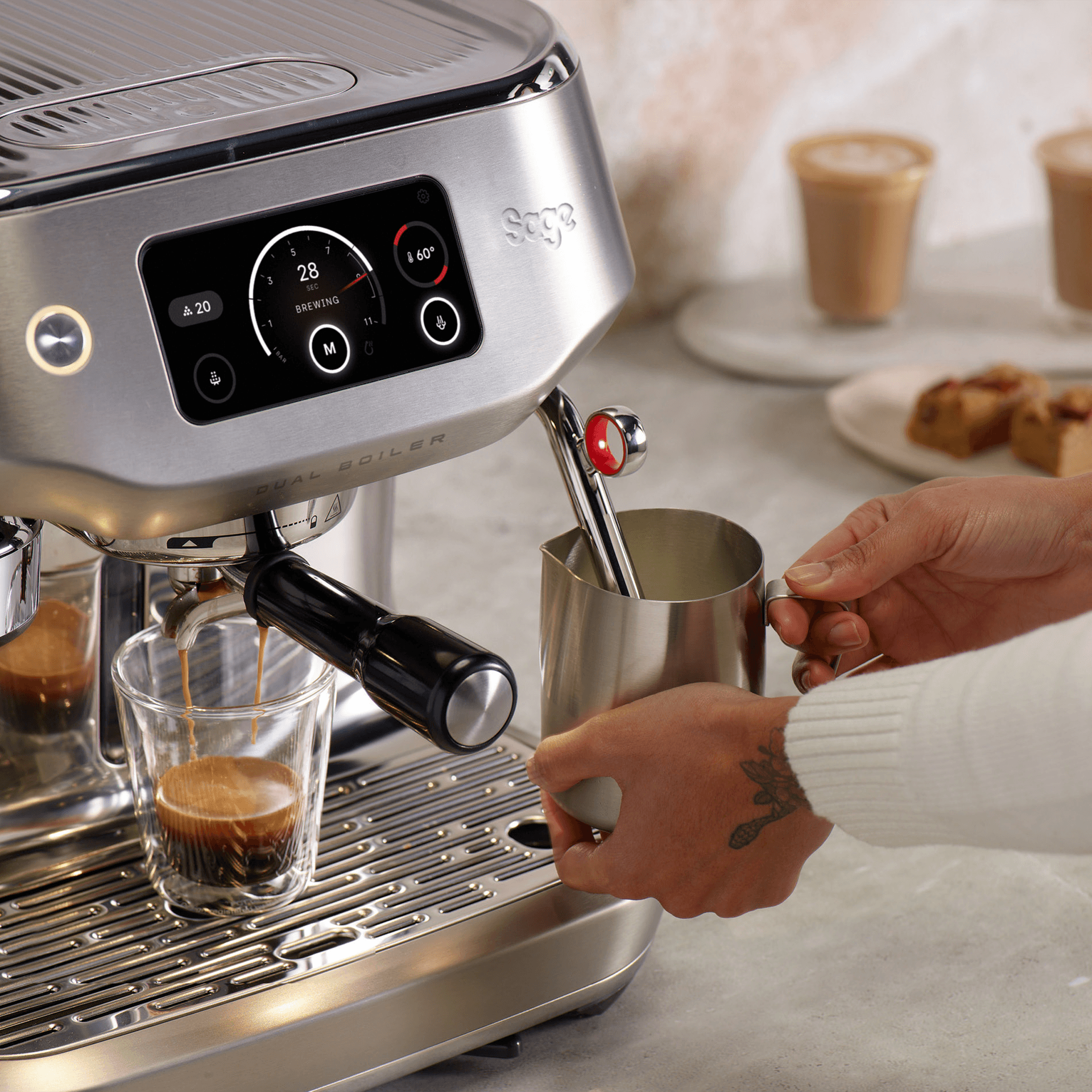
The real challenge is not introducing advanced features, but making them perform consistently in a home environment. Commercial machines are designed for scale and trained users, whereas at home the expectation is compact design, intuitive use, and reliable results in an everyday setting. At Sage, our approach is built on the four keys: dose, brew temperature, pressure, and steam. These principles originate from commercial machines and are integrated across our entire range.
The complexity lies in translating these into a home format. This means delivering precise dose and weight, maintaining brew temperature within a tight range, ensuring stable pressure throughout extraction, and providing consistent steam performance for milk texturing. These elements only matter if they deliver consistent in-cup results. That’s why the focus is on precision, repeatability, and ease of use rather than added complexity.
Ultimately, it’s about bringing professional-level performance into the home in a way that feels seamless and reliable.
With global supply chains under pressure and the climate affecting bean prices, how can home technology help consumers get the most out of their coffee and reduce waste?
For me, a lot comes down to consistency in preparation. With Sage, the focus is on helping users get to a high-quality result more quickly and with greater confidence. When key elements like dose, temperature, and extraction are stable and repeatable, it becomes much easier to unlock the full potential of the coffee.
What I often see is that once people can rely on their setup, they start to better understand their coffee and naturally refine their process over time. In the end, it’s about achieving consistently better results at home and making sure every coffee delivers the experience people expect.
Is the surge in premium appliances across the UAE and Saudi a long-term structural shift, or just a post-pandemic trend that might cool off?
This is clearly a long-term structural shift. In the UAE and Saudi Arabia, coffee is deeply embedded in daily routines and plays a key role in hosting, which naturally raises expectations for quality at home. Consumers are no longer satisfied with basic solutions – they are looking for consistency, performance, and a more refined coffee experience.
At the same time, the market is becoming more educated. There is a stronger focus on long-term value, performance, and reliability, rather than short-term trends.
This is exactly where Sage is positioned. As a brand, we focus on bringing professional-level performance into the home in a way that is intuitive and consistent. As expectations continue to rise, the demand for premium home coffee solutions will remain strong and continue to evolve.
How is Sage helping bridge the “education gap” for home brewers? Do you think hobbyists should actually pursue formal coffee certifications to get the best out of their gear?
A big part of our approach at Sage is designing machines that guide the user towards a good result from the start. A clear workflow and consistent performance make it easier to build confidence and improve over time. At the same time, our range supports different types of users, whether they prefer a more automatic, assisted, or manual approach, always without compromising on precision and in-cup quality.
Education is very much part of our DNA. We work closely with coffee professionals and roasters, because ultimately the machine is only as good as the coffee beans you use. Our machines are developed with experts at our design and innovation centre at our Australian headquarters, bringing real café standards into the home. We also support that learning beyond the product through in-store experiences and practical content built around real at-home brewing.
Having gone through formal certifications myself, I can see the value they bring. That said, they’re not essential for everyone. Coffee should remain accessible, but for those who want to go deeper, structured learning can accelerate that journey. Ultimately, it’s about combining performance, precision, and consistency to give people the confidence to create great coffee at home.
Where does the Middle East sit on Sage’s global innovation map? Are there specific features you’re developing just for our regional tastes and needs?
The Middle East has become a highly important region in terms of consumer insight and engagement.
What stands out is how informed and quality-driven consumers are. There is a strong focus on performance, design, and the overall experience at home, which makes the feedback from this region particularly valuable. Rather than developing isolated features for one market, the focus is on identifying global patterns. In the Middle East, that clearly includes a strong preference for milk-based drinks, a high frequency of home entertaining, and the need for consistent performance across multiple drinks.
As I often see, making one good coffee is one thing, but delivering that same quality consistently when hosting is just as important. These insights feed directly into how features are prioritised at Sage, ensuring that innovation reflects real usage and delivers value across different markets.
How can we use better tech to improve transparency and traceability, making sure the farmers at the origin are actually getting a fair deal?
In specialty coffee, roasters often work very closely with farms, building direct, long-term relationships and focusing on quality from origin through to the final cup. That connection is a key part of what defines specialty coffee. It’s not just about the end result, but about how the coffee is sourced, processed, and handled along the way.
At Sage, our role is on the preparation side. We design machines that allow users to fully express that quality at home. We work closely with some of the world’s leading baristas and coffee professionals to ensure our machines reflect real café standards and are optimised for specialty coffee.
Technology can support transparency, but our focus is on delivering the precision and consistency needed to bring out the best in every coffee.
Looking five years ahead, how do you see the “Smart Home” and AI changing our morning coffee routines?
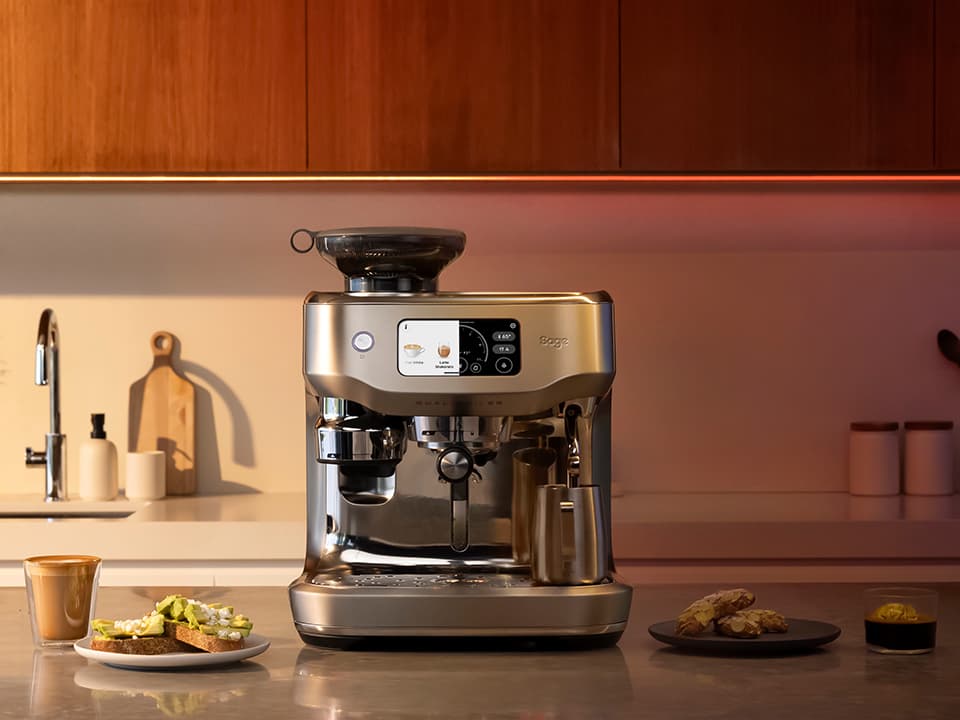
Connectivity will play an increasingly important role in how people experience coffee at home. We already see this with machines like the Oracle Jet, which is WiFi-enabled. This allows for ongoing software updates and the ability to introduce new recipes over time, ensuring the machine stays up to date and continues to evolve with the user.
With the Oracle Dual Boiler, connectivity goes a step further. It is also WiFi-enabled and works in combination with the Sage Coffee App, enabling a more connected experience, from guided support to remote interaction. At the same time, it’s important to note that the app is currently only available in selected regions.
For me, the real value of this technology is not about adding complexity, but about continuous improvement. It allows us to support users beyond the initial purchase and make the experience more intuitive over time. At the same time, coffee remains a very personal and social ritual. So the role of smart technology is to support that experience, not replace it. Ultimately, it’s about creating a connected ecosystem that evolves with the user, while keeping the process simple, consistent, and enjoyable.
Gallery