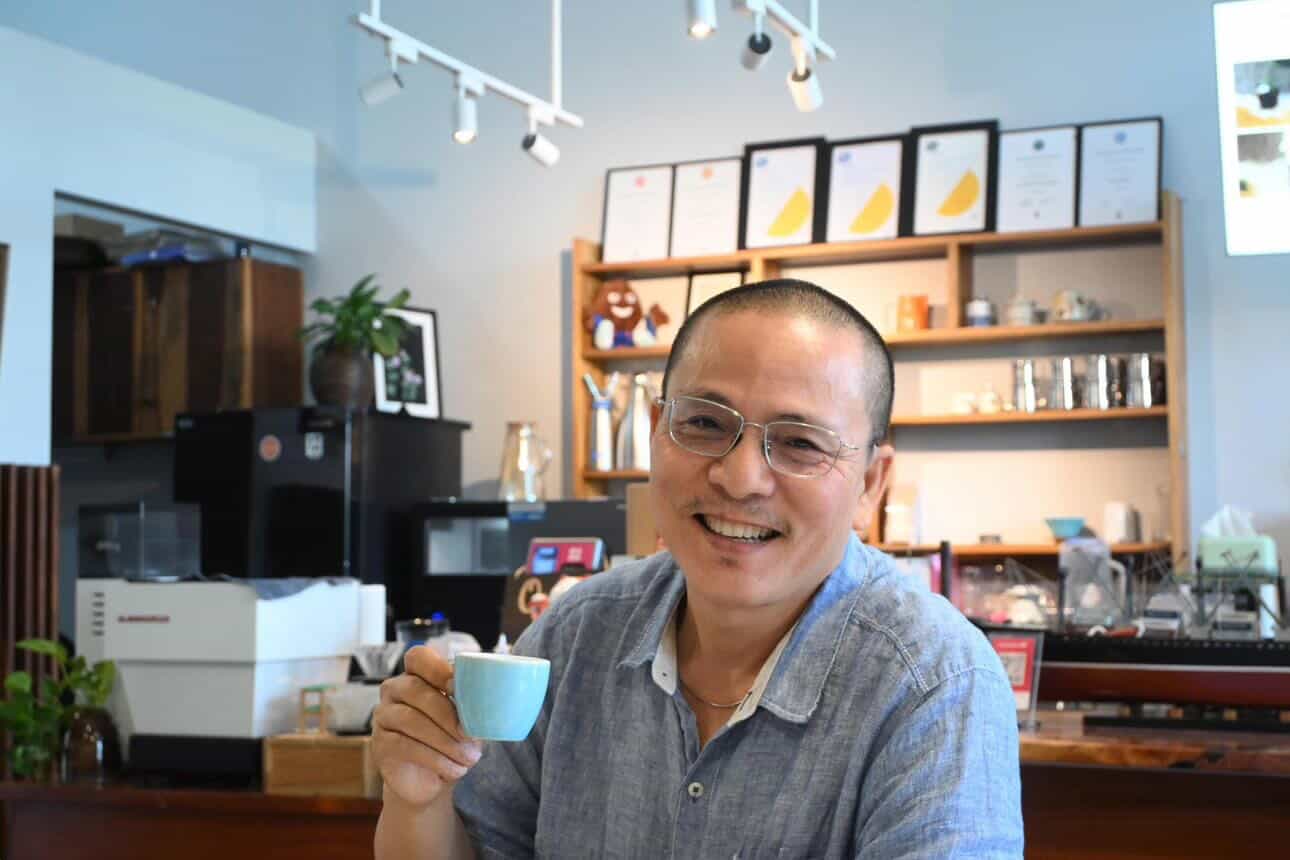
An interview with Michael Trung, Authorized SCA Trainer, coffee consultant, and founder of iO Coffee
Dubai – Ali Alzakary
Most coffee conversations start with a tasting note: chocolate, jasmine, dried fruit. But what if we started instead with a shipping container stuck at customs? Or a farmer watching months of work split open in a single rainstorm?
Michael Trung spent 25+ years in international logistics , moving goods, solving port crises, chasing paperwork. Then, after 50, he did something unexpected: he became a student of coffee. Today, he’s an Authorized SCA Trainer, a Specialty Coffee consultant, and the founder of iO Coffee, where he roasts in Vietnam to keep value with the people who grow the beans.
In this candid interview, Michael shares why COVID forced him to restart, what “the coffee smile” really means, and how logistics taught him to respect not just the bean, but every pair of hands that touches it.
If you care about where your coffee actually comes from not just the origin story, but the real supply chain.. read on.

- You spent over 25 years in logistics, then suddenly moved into specialty coffee. How did that happen? And did logistics help you see coffee differently?
I come from the service industry. I spent more than 25 years in international freight forwarding—handling customs problems, shipment delays, port congestion, and phone calls at all hours just to keep cargo moving. That was my life for a long time.
Then COVID came and everything slowed down. For the first time in many years, I had time to sit quietly and think. I realized I knew how to move coffee around the world, but I knew nothing about the people growing it. I didn’t know the farming, the soil, or the hard work that happens before a bean even reaches a warehouse or café.
This became my startup life after 50. At an age when many people think about slowing down, I became a beginner again. Coming from logistics, I did not enter coffee as an expert, I entered as a student. In logistics, you learn to respect the journey from point A to point B. In coffee, I learned to respect the people standing at the beginning of that journey. Honestly, coffee taught me one thing: the more I know, the more I know I don’t know.

- You founded iO Coffee after a long logistics career. How do you use that experience to improve the coffee chain? Have you changed how coffee is shipped because of the mistakes you saw?
Yes, very much. In logistics, one small mistake early on becomes a giant problem later. I’ve lived through the real-world headaches: the “HS code trap” at customs, missing certificates, or your cargo getting “rolled” at the port because of congestion. Coffee is very sensitive to all of this. If it sits in a hot container during a port delay or near something smelly because of a bad equipment choice, the flavor is gone.
Because of my background, I naturally pay attention to airflow, moisture control, packaging, and container cleanliness to protect the bean from farm to cup. But the biggest thing was seeing how little value stays with the farmers. That is why we roast in Vietnam at iO Coffee. I believe the origin should keep more of the reward, not just export the raw material.
For me, sustainability isn’t just a marketing word; it’s about protecting the hard work behind the coffee. That is why we always say: ‘Respect the Bean. Respect the hands.’

- What pushed you to become an SCA Authorized Trainer and start “Michael Barista” on YouTube?
I used to think coffee was simple. But once you go deep, you see it’s a whole university inside a small bean—chemistry, farming, roasting, and sensory science all connected. I didn’t want to just be a guy with an opinion; I wanted to learn the professional international standards. That led me to become an SCA Authorized Trainer.
YouTube happened naturally. I started ‘Michael Barista’ to document my journey honestly, including my mistakes. I’m not a professor. I’m just an outsider sharing what I discover so that the younger generation feels coffee is something they can approach. I’ve also learned that today, good coffee alone is not enough—you need storytelling and a real connection with people.

- Uring your many trips to coffee farms, what are three things you never expected to see?
The Sacrifice: I never expected the sheer level of labor. Seeing farmers picking cherries in the heat—that’s a man’s life, not just a product.
The Fragility (The ‘Coffee Smile’): In logistics, timing is important. In coffee, it’s everything. I learned a sad story on the farms: if it rains unexpectedly during harvest, the ripe cherries burst open. We call it the ‘coffee smile,’ but when the coffee smiles, the farmer cries. In just a few hours of rain, months of hard work are destroyed. It made me realize how sensitive this journey really is.
The Hope: I see younger farmers returning to the farms with new ideas while still respecting the older generation. They are bringing science and sustainability to the dirt, and that gives me hope for the future of Vietnamese coffee.

- Vietnam is a top producer of Robusta. How do we move toward “value” instead of only “volume”?
For many years, Vietnam was known mostly for volume. But now I see more people focusing on quality, transparency, and Fine Robusta. People around the world now want more than just flavor notes; they want to know who produced the coffee and how it was handled.
I’m still learning how to balance my operational ‘logistics’ brain with the storytelling side. In logistics, we just moved cargo. In coffee, we have to share the heart behind the work. I don’t think we need too much noise. Good coffee speaks slowly. The best we can do is keep improving—little by little, season by season, cup by cup.

Michael Trung is an Authorized SCA Trainer and founder of iO Coffee in Vietnam. Find his educational content on YouTube as “Michael Barista.”