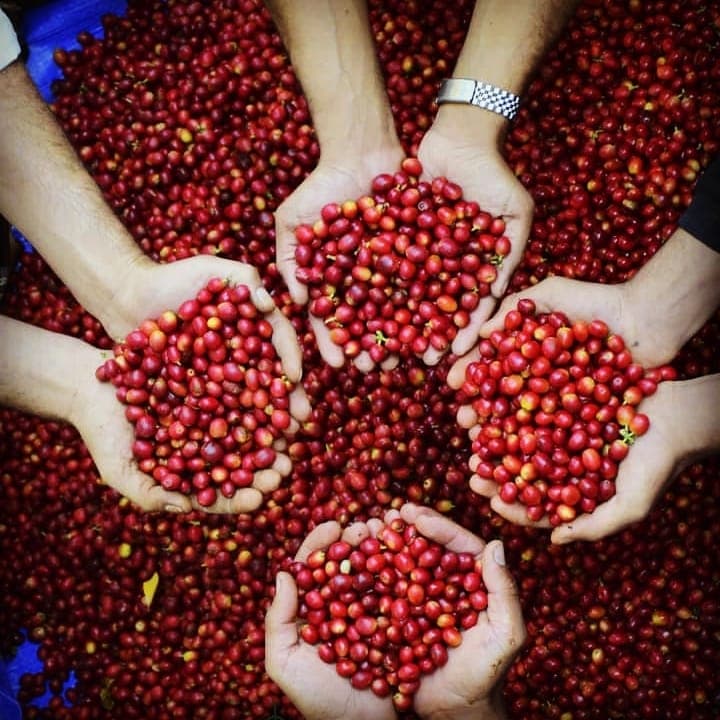
Yemeni coffee competes globally with exceptional quality and production not exceeding 40 tons in 2025
Author: Qahwa World – Dubai | Source: Al Jazeera | Date: May 12, 2026 This article discusses the story of Al Jazeera Yemen coffee above the clouds and its journey to Kuala Lumpur. In fact, the story of Al Jazeera Yemen coffee above the clouds Kuala Lumpur highlights a unique cross-cultural journey.
Al Jazeera published a report on Yemeni coffee titled “Have You Tried Above the Clouds Coffee? The Secret of the Yemeni Bean That Caught Eyes in Malaysia,” prepared by its correspondent in Malaysia covering the International Coffee and Beverages Exhibition 2026 in Kuala Lumpur, held from May 7 to 9, 2026. Notably, the Al Jazeera Yemen coffee above the clouds Kuala Lumpur phenomenon was a main attraction at the exhibition.
The report opens by noting that those seeking an authentic flavor, rich taste, and captivating aroma from an exceptional cup of coffee might begin their journey in the Yemeni highlands, where coffee trees grow at altitudes exceeding 2,200 meters above sea level, in conditions unique to the mountains of Yafi and Abyan. The appeal of Al Jazeera Yemen coffee above the clouds Kuala Lumpur continues to grow among coffee lovers in Malaysia.
Yemeni Coffee.. Globally Recognized Quality
According to Yemeni coffee expert Ahmed Al Shoubli, Yemeni beans produce complex flavors tending toward chocolate, particularly in Al Yafei coffee, with ratings exceeding 85 points on the global quality scale, placing Yemeni coffee among the world specialty coffee elite.
However, Qaddafi Hamza, representative of the Chinese company Golden Choice in Malaysia, notes that Arabica coffee is no longer exclusive to Yemen, as his company also imports this variety from Guatemala, Mexico, Argentina, Indonesia, and elsewhere.
The Malaysian food exhibition in Kuala Lumpur brought together Al Shoubli and Hamza, with coffee companies occupying nearly half the exhibition space, a clear indicator of the rapidly growing global coffee industry. Al Jazeera Yemen coffee above the clouds Kuala Lumpur stands as a symbol of the region’s growing international presence.
Marketing Challenges and Limited Production
Coffee experts largely agree that Yemeni coffee possesses exceptional quality, but the greatest challenge lies in marketing and building a global brand capable of competing.
Rifat Al Ariqi, head of the coffee sector at the Small and Micro Enterprise Development Agency in Yemen, believes that enhancing the global presence of Yemeni coffee requires expanding Yemeni company participation in international coffee exhibitions, developing worker skills across various coffee production stages, establishing a specialized quality control authority, and strict adherence to global standards in farming, sorting, storage, roasting, packaging, and export.
Al Ariqi points out that officially exported Yemeni coffee does not exceed 10 percent of production volume, while a large portion leaves through unofficial channels, limiting its ability to compete in global markets.
Yemeni coffee farming also faces challenges related to high production costs due to farmers reliance on manual labor and the difficulty of using agricultural machinery in rugged mountainous areas, making quality and flavor distinction the most important competitive weapon.
From Qat to Coffee
Coffee cultivation is spread across 17 Yemeni governorates. According to Al Ariqi, production reached approximately 40 tons during 2025, with a notable expansion in cultivated areas at the expense of qat farms.
He confirms that Yemen witnessed the planting of more than 100,000 coffee trees over the past year, including 1,000 trees planted within just one month this year, indicating growing youth awareness of the importance of shifting toward coffee as a more sustainable and profitable economic crop.
This trend receives support from development organizations, including the Saudi Fund for the Reconstruction of Yemen and the Islamic Development Bank.
Nevertheless, the challenges facing Yemeni coffee are no different from global challenges related to climate and rising temperatures, which directly affect production volume and quality.
Accelerated Growth of Malaysia Coffee Market
Data from the World Coffee Portal indicates that Malaysia coffee sector recorded 28 percent growth over the past year, with the number of coffee shops and outlets reaching approximately 3,330 stores, with a market size estimated at $210 million.
Coffee is now present in nearly every corner of Malaysian shopping centers, alongside the spread of refrigerators dedicated to ready-made coffee in public places.
Shafiq Amin, an official at one coffee equipment company, says demand for coffee preparation machines has seen unprecedented growth over the past ten years, explaining that his company sales rose 15 percent this year compared to the previous year. He added that approximately 60 percent of machines sold go to homes, followed by offices and workplaces, amid increasing reliance on coffee as a daily source of energy and focus.
Boycotts and the Rise of Local and Asian Brands
Qaddafi Hamza believes that recent years have witnessed the rapid rise of local and Asian brands, particularly Chinese, at the expense of some traditional global brands.
He adds that boycott campaigns against companies accused of supporting Israel have contributed to accelerating the spread of these new brands, noting that building a brand in the coffee sector previously required many years, while startups today achieve wide reach within a short period.
He also pointed to the closure of some Starbucks branches in Malaysia amid boycott campaigns and accusations against the company regarding its positions on the Gaza war.
Hamza believes that some global cafes reliance on serving alcoholic beverages or mixing coffee with alcohol has pushed a segment of consumers toward local and Asian brands that offer products closer to consumer culture and values, while maintaining competitive quality levels.
Frequently Asked Questions
What is Above the Clouds coffee mentioned in the Al Jazeera report?
It is Yemeni coffee grown in highlands exceeding 2,200 meters above sea level, particularly in the Yafi and Abyan regions, known for complex chocolate-like flavors.
How much coffee did Yemen produce in 2025?
Production reached approximately 40 tons, with notable expansion in cultivated areas at the expense of qat farms, and more than 100,000 coffee trees planted over the past year.
What are the main challenges facing Yemeni coffee?
Key challenges include marketing and building a global brand, high production costs due to manual labor in mountainous areas, and a large portion of production leaving through unofficial channels.
How has the Malaysia coffee market grown?
The coffee sector in Malaysia recorded 28 percent growth, with approximately 3,330 coffee shops and a market size estimated at $210 million.
What is the relationship between boycott campaigns and the rise of local brands in Malaysia?
Boycott campaigns against companies accused of supporting Israel, including Starbucks, have accelerated the spread of local and Asian brands in the Malaysian market.
Author: Qahwa World – Dubai | Source: Al Jazeera | Date: May 12, 2026