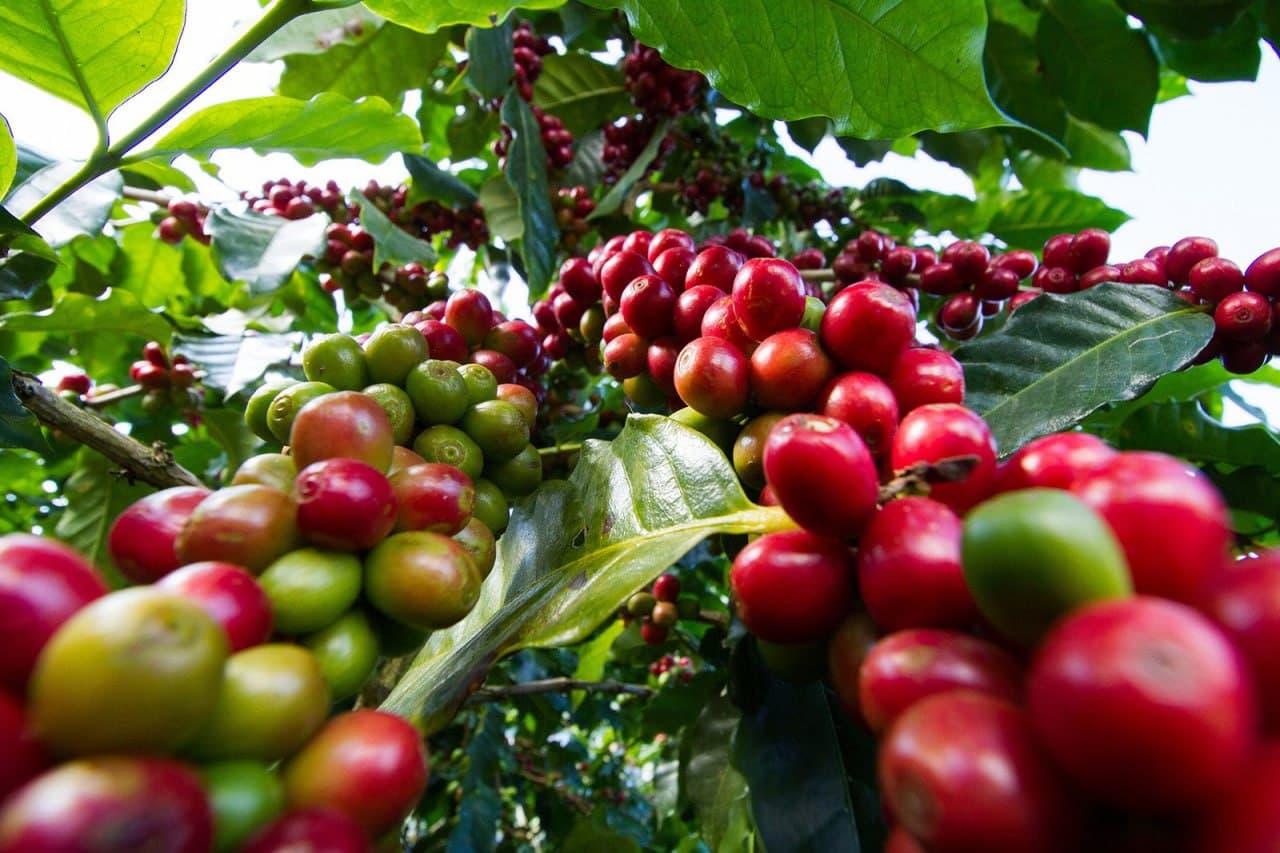
Delays to Brazil’s Harvest Push Coffee Prices Higher
- September arabica rose 1.33% and robusta gained 0.18% on Monday.
- Brazil’s 2026/27 harvest is only 64% complete, behind last year’s 77% and the 70% average.
- ICE robusta inventories climbed to a 3.75-month high of 4,239 lots.
- Arabica inventories fell to a 2.25-year low of 329,870 bags.
- Heavy rains in Brazil have disrupted fieldwork and may have lowered crop quality.
- El Niño concerns continue to support prices with potential impacts on Brazil’s flowering.
- Only 0.2 mm of rain fell in Minas Gerais last week, 20% of the historical average.
Coffee prices moved higher on Monday. September arabica closed up 4.25 cents, gaining 1.33%. September robusta closed up 7 points, a rise of 0.18%. The gains came amid delays in Brazil’s coffee harvest.
Safras & Mercado reported the harvest is 64% complete as of July 15. This compares with 77% at the same time last year. The five-year average stands at 70%. The slow pace continues to support prices.
Harvest Delays Drive Coffee Prices Higher
Brazil’s 2026/27 coffee harvest is progressing slowly. Heavy rains have disrupted fieldwork. These rains may have also lowered crop quality. Brazilian farmers are holding back on sales. They hope prices will rise further. They are also bracing for potential El Niño impacts.
On July 6, arabica soared to a 5.75-month high. On July 7, robusta also hit a 5.75-month high. However, prices have since whipsawed in a wide range. Trading conditions remain illiquid. This has led to volatile price moves.
| Period | Completion |
|---|---|
| Current year (2026/27) | 64% |
| Previous year (2025/26) | 77% |
| Five-year average | 70% |
Margin Hikes Reduce Liquidity
ICE raised margin requirements for coffee futures recently. This action has dried up liquidity. Many commodity funds have closed their positions. The result has been excessive one-way price moves. Volatility has been amplified by the illiquid conditions.
This has created a challenging trading environment. Prices have moved sharply in both directions. Market participants should expect continued volatility in the near term.
Inventory Trends Support Prices
ICE coffee inventories have trended lower over the past three months. This is supportive for coffee prices. ICE arabica inventories fell to a 2.25-year low of 329,870 bags on Monday. Meanwhile, ICE robusta inventories fell to a 2-year low on May 15. However, they have since risen to a 3.75-month high of 4,239 lots on Monday.
| Category | Latest Level | Status |
|---|---|---|
| Arabica inventories | 329,870 bags | 2.25-year low |
| Robusta inventories (May 15) | 3,631 lots | 2-year low |
| Robusta inventories (current) | 4,239 lots | 3.75-month high |
El Niño Concerns Support Prices
Concerns about an El Niño weather pattern are bullish for prices. Coffee trader Commercial warned that El Niño may delay rains in Brazil. This September and October is when tree flowering normally occurs. Any delay could hurt Brazil’s 2026/27 coffee crop.
On July 8, the US Climate Prediction Center issued a warning. The El Niño pattern that emerged across the equatorial Pacific last month will likely be one of the strongest in more than 75 years. This sets the stage for possible floods, droughts, and temperature fluctuations. These conditions could hinder coffee production in Asia and South America.
Somar Meteorologia reported on Monday that only 0.2 mm of rain fell in Minas Gerais in the week through July 19. This is Brazil’s biggest coffee-growing region. This represents only 20% of the historical average. The dry conditions add to market concerns.
Bearish Factors to Consider
Despite the bullish momentum, several bearish factors exist. Recent strength in Brazil’s coffee exports is negative for prices. Last Wednesday, Cecafe reported Brazil’s June green coffee exports jumped 14.4% year-on-year to 2.64 million bags.
Vietnam’s soaring coffee exports are also bearish for robusta prices. On July 3, Vietnam’s National Statistics Office reported coffee exports from January to June rose 7.3% year-on-year to 1.05 million metric tons. Vietnam’s 2025 coffee exports jumped 17.5% to 1.58 million metric tons. Production for 2025/26 is projected to climb 6% to a four-year high of 1.76 million metric tons.
The USDA’s Foreign Agriculture Service projected record global production. World coffee production in 2025/26 is forecast to increase 2% to a record 178.848 million bags. Arabica production is expected to decline 4.7% to 95.515 million bags. Robusta production is projected to rise 10.9% to 83.333 million bags.
| Category | Forecast | Change |
|---|---|---|
| World coffee production 2025/26 | 178.848 million bags | +2.0% |
| Arabica production | 95.515 million bags | -4.7% |
| Robusta production | 83.333 million bags | +10.9% |
| Brazil 2025/26 production | 63 million bags | -3.1% |
| Vietnam 2025/26 output | 30.8 million bags | +6.2% |
| Ending stocks 2025/26 | 20.148 million bags | -5.4% |
Technical Perspective
On June 9, arabica coffee fell to a 20.5-month nearest-futures low. Robusta slid to a 3.5-month low. This occurred amid an outlook for a bumper coffee crop in Brazil. However, prices have since recovered significantly. The market remains highly volatile with significant upside potential.