Dubai — Qahwa World
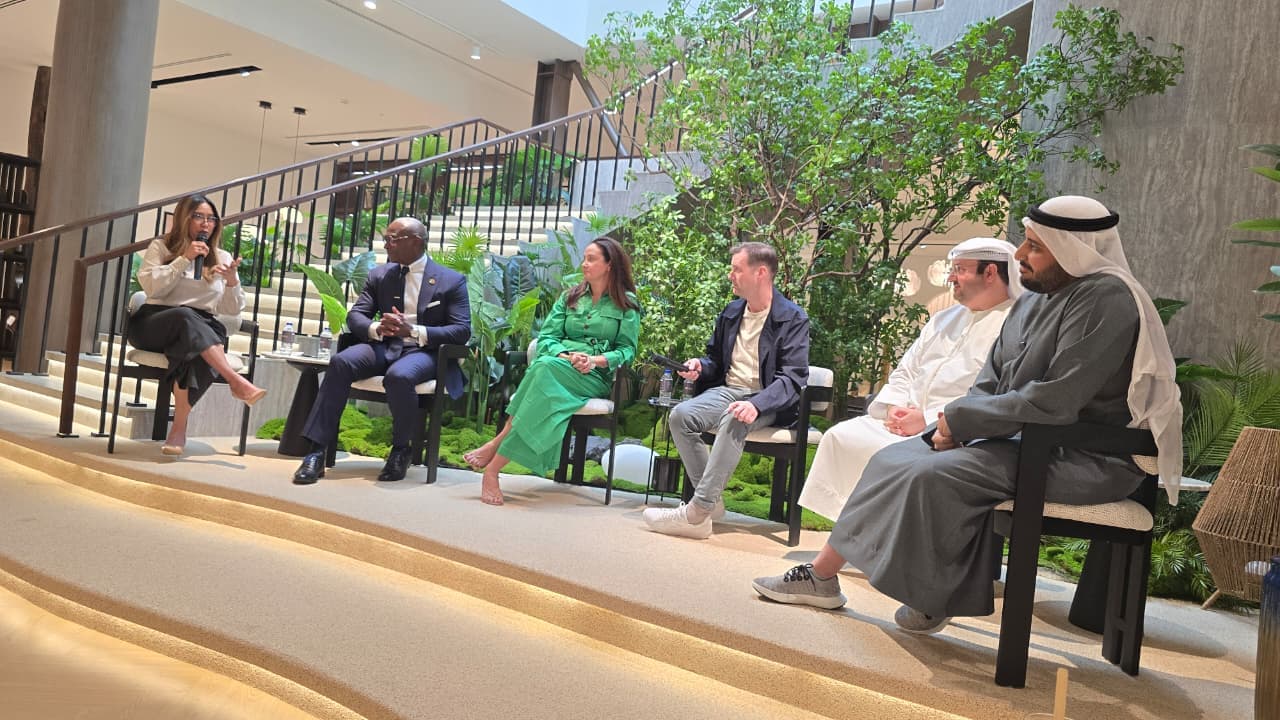
The first Coffee Break forum, held yesterday in Dubai, brought together senior leaders from the coffee, hospitality, logistics, media, and investment sectors to discuss the growing structural pressures facing the global coffee industry.
Organized by Mokha 1450 in partnership with Modora, the event went beyond discussion, offering a detailed real-time reading of how the sector is reacting to overlapping global disruptions.
Despite the complexity of challenges, a consistent theme emerged throughout the sessions: Dubai’s business environment continues to operate with a high level of institutional confidence, repeatedly linked by speakers to government crisis management performance and long-term economic stability.
- SPEAKERS LIST (FULL PARTICIPANTS)
The session featured a high-level panel including:
- Abdulla Al Shaibani — Group CEO, Axceed LLC
- Garfield Kerr — CEO, Mokha 1450 and Former President of the Specialty Coffee Association
- Khalid Al Mulla — CEO, Dubai Coffee Museum
- Jennifer Pettinger-Haines — Founder and CEO, The GRIF Collective
- Paul Clifford — Industry Editor and Analyst
- Zeena Zalamea — Moderator, Broadcaster and Entrepreneur
GOVERNMENT CONFIDENCE AS A CORE BUSINESS FOUNDATION

A central thread across discussions was the role of government performance during crises, particularly the COVID 19 pandemic.
Speakers described how the UAE maintained operational continuity during global shutdowns, reopened faster than most major economies, and minimized long-term disruption to business ecosystems.
This experience created what participants described as a “structural confidence layer” that continues to shape decision-making today.
Rather than reacting defensively to current market pressures, companies are maintaining operations, focusing on internal stability, and prioritizing workforce wellbeing.
One speaker emphasized that during crises, the primary concern shifted away from business survival toward emotional and organizational stability within teams, supported by confidence in national systems.

- ABDULLA AL SHAIBANI: LEADERSHIP UNDER STRUCTURAL CHANGE
Abdulla Al Shaibani highlighted that leadership in the current cycle is no longer defined by expansion, but by resilience management.
He emphasized that the priority for landlords and operators alike is stability rather than aggressive growth, stressing that maintaining continuity with tenants and partners is now the key objective.
He also noted that supporting smaller business ecosystems through flexible operational frameworks is essential during periods of uncertainty.

- GARFIELD KERR: SUPPLY CHAIN DISRUPTION AND INDUSTRY PRESSURE
Garfield Kerr described significant disruption across global coffee logistics, particularly in air freight and container movement.
He explained that shipping costs have increased sharply, forcing businesses to pause shipments, delay projects, and reallocate inventory already positioned at origin.
He added that specialty coffee operators are now managing a fragile balance between cost pressure and quality preservation, especially as green coffee prices continue to rise globally.

- JENNIFER PETTINGER-HAINES: THE TWO SPEED MARKET
Jennifer Pettinger-Haines presented data analysis covering approximately 400 venues across Dubai, revealing a clear structural divide:
- Community cafés and neighborhood venues: growth of 30 to 40 percent in some cases
- Fine dining restaurants: declines reaching 70 to 80 percent
She explained that this divergence reflects a fundamental shift in consumer behavior toward proximity, affordability, and familiarity.
Community driven venues are benefiting from consistent local demand, while high-end restaurants remain heavily dependent on tourism and discretionary spending.

- PAUL CLIFFORD: PRICING STRATEGY AND BRAND RISK
Paul Clifford warned against aggressive discounting strategies, stating that repeated price reductions can permanently damage brand perception.
Once a brand is positioned at a lower price point, restoring premium positioning becomes significantly more difficult.
He noted that many operators are instead restructuring offerings by simplifying menus, reducing service formats, adjusting portions, and forming supplier collaborations rather than competing through pricing alone.

- KHALID AL MULLA: LOGISTICS AND SYSTEM STABILITY
Khalid Al Mulla emphasized that government intervention extends beyond regulation into active operational support during crises.
He referenced past interventions that protected businesses from immediate financial collapse and ensured continuity of operations.
He also highlighted current logistics diversification strategies, including alternative shipping routes and regional port redistribution to reduce dependency on single supply corridors.
- INDUSTRY TRANSFORMATION ACROSS OPERATIONS
Across the sector, businesses are adjusting core operations:
- Reduced operating hours in line with demand
- Workforce restructuring
- Menu redesign due to cost inflation
- Ingredient substitution and sourcing recalibration
- Training program expansion
At the same time, companies are investing in internal capability development to prepare for post-crisis recovery cycles.
- DIFFERENT ECONOMIC REALITIES WITHIN ONE MARKET
Speakers noted a widening gap between companies:
- Well capitalized operators are investing and repositioning
- Smaller operators are focused on survival and liquidity management
Overall performance remains below historical averages, with many businesses operating near break-even thresholds.

- HOSPITALITY ASSET UNDERUTILIZATION
Hotel infrastructure was identified as an underutilized resource due to reduced occupancy rates.
Proposals included repurposing unused spaces into coworking environments, delivery kitchens, and hybrid operational models to improve asset efficiency.
- SHIFTING CUSTOMER DEMOGRAPHICS
A key strategic concern raised was the under engagement of younger consumer groups.
Speakers noted that this demographic represents a growing opportunity but requires new approaches in branding, product development, and communication strategy.
- ORIGIN LEVEL PRESSURE IN THE COFFEE CHAIN
At production level, rising costs and low farmer returns continue to threaten long-term sustainability.
Some producers are exiting the industry entirely, while younger generations are increasingly avoiding agricultural participation.
Sustainability investment and fairer value distribution were highlighted as critical structural requirements.

- OUTLOOK: CONTROLLED OPTIMISM
Despite challenges, sentiment remained cautiously positive.
Most participants expect partial recovery within 12 to 24 months based on historical cycles in hospitality markets.
A widespread view emerged that current disruptions are cyclical rather than structural, shaping investment and operational decisions across the sector.
- CONCLUSION
The Coffee Break forum in Dubai highlighted an industry under simultaneous global pressures but actively adapting across every layer of its value chain.
From supply chains to consumer behavior, the sector is undergoing structural recalibration.
At the center of this transition is sustained confidence in the UAE’s institutional stability and crisis management capability, which continues to influence strategic decisions across the industry.