$1.5M Initiative Modernizes Coffee Breeding
- World Coffee Research launched a $1.5 million project to modernize coffee breeding tools.
- New molecular breeding tools can shorten variety development timelines by half or more.
- The research targets major threats: coffee leaf rust, coffee berry disease, fruit rot, and berry borer.
- A public-private partnership includes FFAR funding and industry co-investment from Taylors of Harrogate and Coffee Circle.
- Global partners include Cenicafé, KALRO, and USDA-ARS.
- Three workstreams cover arabica markers, robusta genotyping, and breeder training.
- Record-high 2025 prices reflect urgent need for more resilient coffee varieties.
World Coffee Research announced a $1.5 million project to modernize coffee breeding. The initiative develops high-precision tools to make breeding faster, better, and cheaper. These tools will accelerate the creation of high-performing varieties for the next era of coffee.
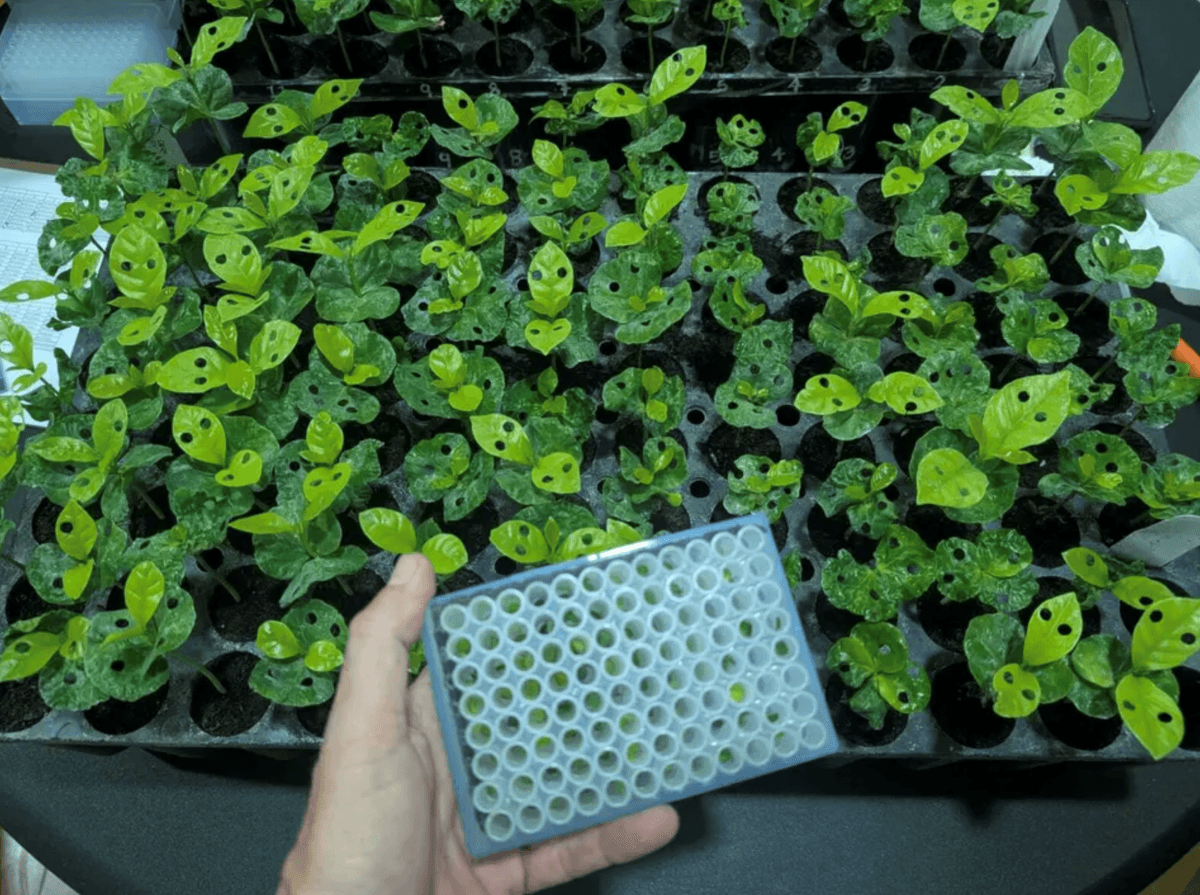
Using molecular breeding approaches, breeding timelines can be shortened by half or more. The project is supported by a grant from the Foundation for Food & Agriculture Research. Industry partners Taylors of Harrogate and Coffee Circle are matching the investment.
Closing Coffee’s Innovation Gap
Other major crops have benefited from modern genomic revolutions. Coffee breeding has remained largely stuck in traditional methods. Record-high prices in 2025 reflect a profound underinvestment in coffee R&D. The industry faces a USD$126–405 million per year gap.
This underinvestment has left farmers vulnerable to evolving environmental stressors. More productive and resilient varieties are urgently needed. This project aims to address that gap directly.
Three Workstreams Drive the Research
The project includes three technical workstreams. Each targets a critical area of coffee breeding innovation.
| Workstream | Focus | Expected Impact |
|---|---|---|
| Arabica Marker Mapping | Coffee leaf rust, berry disease, fruit rot, berry borer | Faster disease resistance selection |
| Robusta Genotyping Tool | 3,500 genetic markers for Coffea canephora | Modern genetic roadmap for robusta |
| Breeder Training | Genomic approaches for national breeders | Global technology transfer |
The first workstream focuses on arabica genetic markers. It targets devastating pests and diseases. These include coffee leaf rust, coffee berry disease, coffee fruit rot, and coffee berry borer. Together, these cause hundreds of millions in annual production losses.
The second workstream creates a foundational genotyping tool for robusta. Robusta now accounts for over 40% of global production. The tool utilizes 3,500 genetic markers. A similar tool for arabica was developed in 2025. It is already being used in the Innovea Global Coffee Breeding Network.
The third workstream trains national breeders from multiple origin countries. This ensures advanced tools integrate into local programs. The goal is delivering improved trees to farmers’ fields faster.
Global Scientific Partnership
The initiative leverages a global network of technical experts. In East Africa, WCR works with KALRO to advance tools for coffee berry disease resistance. The USDA-ARS at TARS in Puerto Rico conducts screening for coffee leaf rust and fungal pathogens. In Colombia, Cenicafé collaborates on berry borer marker development.
“Cenicafe is pleased to be part of this collaborative research program and to host plant breeders from around the world. The future of global coffee production and climate adaptation will depend on scientific excellence and the development of productive, resilient, high-quality varieties. Collaborative science ensures the best cup remains on the tables of millions.”
— Santiago Jaramillo, Scientific Director, Cenicafé
Industry Support for the Initiative
Keith Writer, Supply Director at Taylors of Harrogate, emphasized the importance of this work. “Taylors depends on the success of many origins around the world to source the high-quality coffee our customers love. Their success depends on coffee farmers having access to new, climate-resilient varieties as quickly as possible. Bringing coffee breeding into the future is essential for farmers and essential for our entire industry.”
Leadership Perspectives
Dr. Jennifer “Vern” Long, CEO of World Coffee Research, highlighted the project’s foundational nature. “Better coffee starts with better trees. This project is about building foundational technology that will benefit our entire sector. We are providing the industry with the insurance it needs to thrive.”
Dr. Kathy Munkvold, Scientific Program Director at FFAR, noted the broader impact. “This research will equip breeders with the tools they need to accelerate the development of improved coffee varieties, helping farmers reduce losses and strengthen productivity.”
Frequently Asked Questions
What is the goal of this $1.5 million project?The project aims to modernize coffee breeding through molecular tools, making breeding faster, better, and cheaper for the entire sector.
How much time can the new tools save?Molecular breeding approaches can shorten variety development timelines from 25-30 years by half or more.
What diseases are being targeted?The research targets coffee leaf rust, coffee berry disease, coffee fruit rot, and coffee berry borer.
Who are the project partners?Partners include FFAR, Taylors of Harrogate, Coffee Circle, Cenicafé, KALRO, and USDA-ARS.
What is the Innovea Global Coffee Breeding Network?It is a WCR network that uses shared science to advance coffee breeding goals globally. The arabica genotyping tool is already in use there.
Is this project using genetic modification?No, molecular breeding uses the plant’s natural genetic diversity without involving genetic modification.