DUBAI – QAHWA WORLD
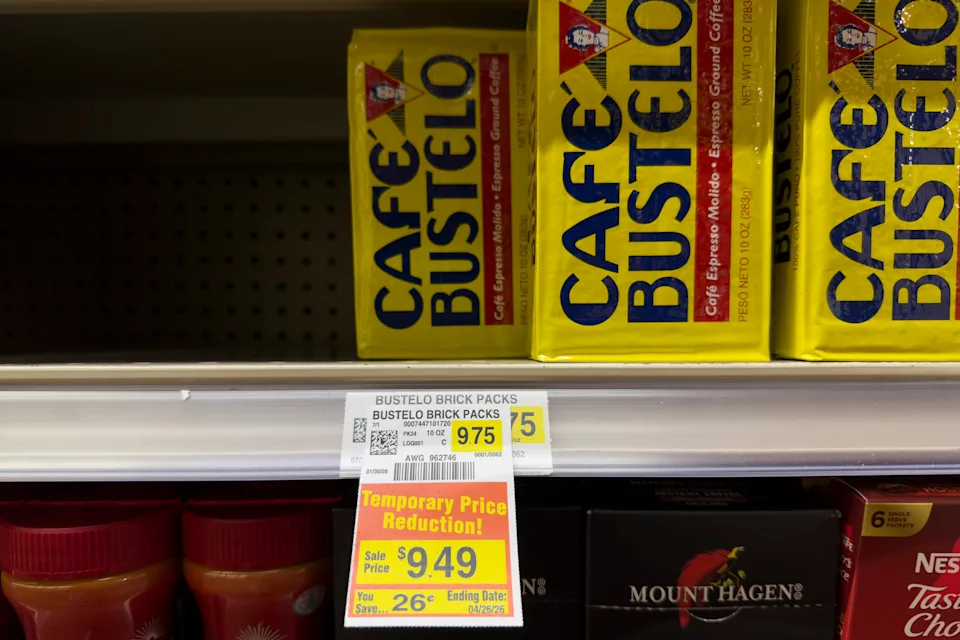
A grocery store in Chicago displayed coffee for sale on February 9, 2026, as rising prices continue to impact consumers nationwide.
For a long time, Chandra Donelson’s morning started with a trip to McDonald’s for a coffee with five creams and ten sugars, later evolving into Starbucks caramel macchiatos. The 35-year-old from Washington, D.C., has treated coffee as a vital ritual since her youth. However, the surge in prices eventually led her to an unexpected decision: quitting her daily habit. “I did that daily for years. I loved it. That was just my routine,” she explained. “And now it’s not.”
Across the United States, coffee enthusiasts are being forced to modify their behaviors—either by skipping the café, opting for cheaper alternatives, or stopping altogether. In January 2026, the Consumer Price Index revealed that coffee prices jumped 18.3% compared to the previous year. Looking back over five years, the government reported a staggering 47% increase.
YOU MAY LIKE: Coffee Prices Rise as Brazilian Real Strength Sparks Short Covering
These financial pressures have led people like Liz Sweeney, 50, of Boise, Idaho, to take drastic steps. Once a self-described “coffee addict,” Sweeney used to drink three cups at home and visit a café whenever she went out. Now, she has limited herself to a single cup at home and occasionally grabs a Diet Coke for a cheaper caffeine fix.
Similarly, 34-year-old Dan DeBaun from Minnesota has reduced his café visits to save money for a new home. He noted that what once cost $2 has now become a $5 or $6 expense. He now prepares ground coffee from Trader Joe’s and carries it in a travel mug. Data from the payment platform Toast indicates that the median price for a hot coffee reached $3.61 in December, while cold brew climbed to $5.55.
The vast majority of coffee in the U.S. is imported. Although some tariffs briefly impacted the market in 2025 before being revoked, the primary culprits for the price surge are environmental. Severe droughts in Vietnam, excessive rainfall in Indonesia, and harsh weather in Brazil have devastated crop yields and pushed global market prices higher.
Despite the financial strain, the National Coffee Association notes that two-thirds of Americans still consume coffee every day, and overall consumption has remained relatively stable. However, for those feeling the pinch of rising rent and food costs, the habit is becoming harder to maintain.
Sharon Cooksey, 55, of North Carolina, used to visit Starbucks every morning but eventually switched to brewing at home. After discovering that a bag of Lavazza coffee was significantly cheaper, she realized that an entire bag—which lasts for weeks—costs the same as one latte at a shop. “I’ll be damned if it didn’t taste so good,” she said, surprised to find she preferred her own brew.
For Chandra Donelson, the final straw came during a government shutdown that paused her paycheck. She traded her $8 coffee for a tea blend that costs about twenty cents per cup. As she puts it, “The math just makes sense.”