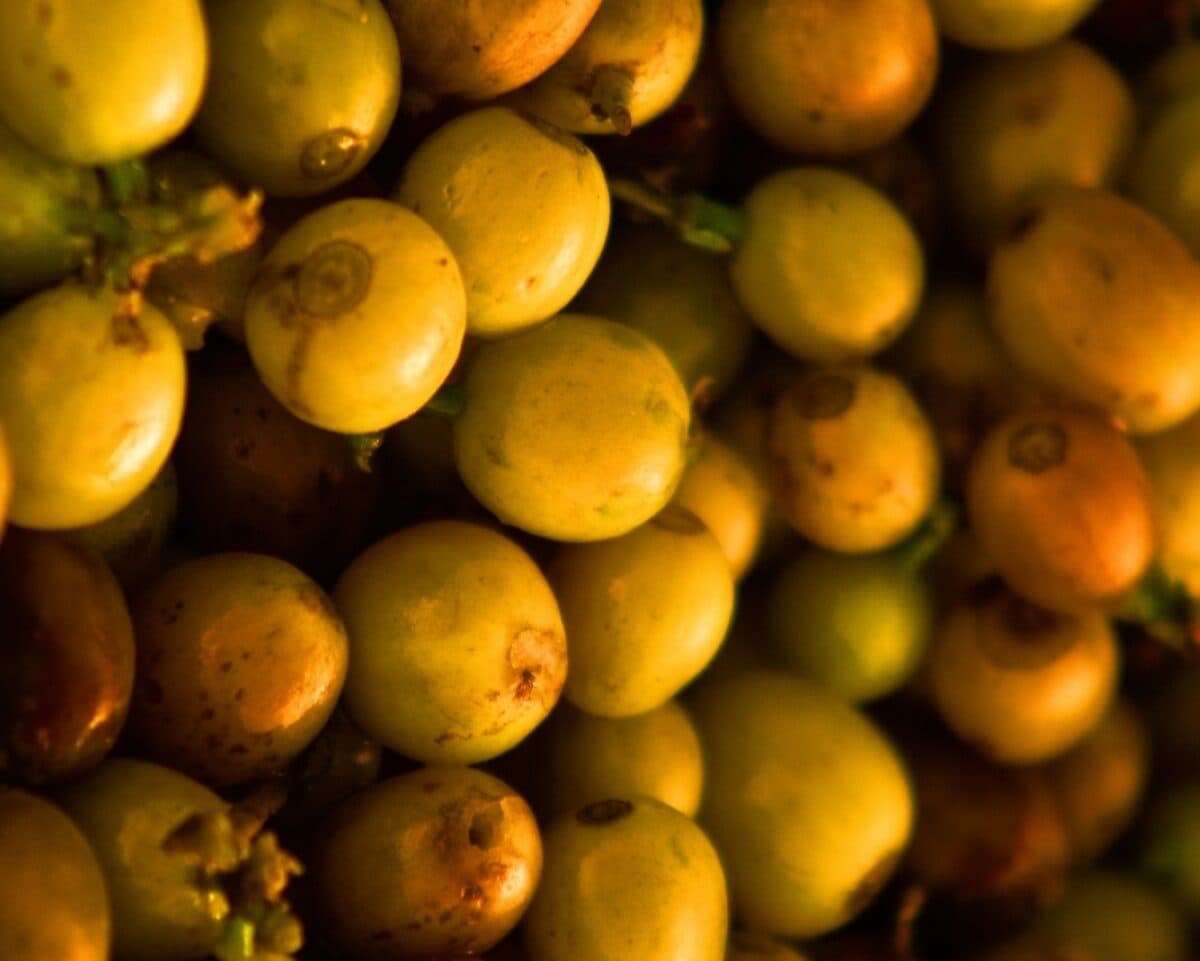
Source: Barchart (Rich Asplund)
Date: May 18, 2026 Coffee prices decline ample supplies is the main story as the market experiences significant changes.
- July arabica coffee fell to a 1.5 year low on Monday, closing down 1.01 percent. July robusta posted a 4 week low, closing down 1.75 percent.
- The Coffee Trading Academy projects Brazil’s 2026/27 harvest will increase 12 percent year on year to 71.4 million bags.
- Marex Group and StoneX both forecast record Brazilian crops exceeding 75 million bags for 2026/27.
- StoneX projects the 2026 global coffee surplus will expand to 10 million bags, the largest in six years.
- Vietnam coffee exports rose 15.8 percent in the first four months of 2026 compared to the same period last year.
- ICE robusta inventories fell to a two year low last Friday, while arabica inventories dropped to a 2.75 month low.
- The closure of the Strait of Hormuz continues to disrupt global coffee supplies, supporting prices.
Coffee prices extended their sharp losses from last Friday on May 18, 2026. July arabica coffee futures closed down 1.01 percent, reaching a one and a half year low. July robusta coffee fell 1.75 percent, hitting a four week low. The declines were driven largely by expectations of a larger Brazilian coffee crop and surging exports from Vietnam.
Market analysts are forecasting a record harvest in Brazil for the 2026/27 season. On May 7, the Coffee Trading Academy projected Brazil’s crop would increase 12 percent year on year to 71.4 million bags. Earlier forecasts from Marex Group and StoneX were even higher. Marex projected a record 75.9 million bags, while StoneX raised its estimate to 75.3 million bags. StoneX also predicted that the global coffee surplus would expand from 1.8 million bags in 2025 to 10 million bags in 2026, the largest surplus in six years.
Vietnam, the world’s largest robusta producer, is also adding to supply pressure. According to Vietnam’s National Statistics Office, coffee exports in the first four months of 2026 rose 15.8 percent year on year to 810,000 metric tons. For the full year 2025, Vietnam’s coffee exports jumped 17.5 percent to 1.58 million metric tons. Production for the 2025/26 season is projected to climb 6 percent to a four year high of 1.76 million metric tons, equivalent to 29.4 million bags.
Inventories and Supply Disruptions
ICE coffee inventories have trended lower over the past two months, which typically supports prices. ICE robusta inventories fell to a two year low of 3,631 lots last Friday. ICE arabica coffee inventories dropped to a 2.75 month low of 462,777 bags on Monday. Despite these declines, the broader supply outlook remains bearish.
Meanwhile, smaller exports from Brazil are providing some support. On May 12, Cecafe reported that Brazil’s April green coffee exports fell 1.3 percent year on year to 2.76 million bags. Additionally, the ongoing closure of the Strait of Hormuz has disrupted global coffee supplies. The closure has increased shipping rates, insurance costs, fertilizer and fuel prices, raising costs for coffee importers and roasters. This factor remains bullish for prices.
Key Market Data
| Indicator | Value |
|---|---|
| July arabica coffee close (May 18) | Down 1.01% to 1.5 year low |
| July robusta coffee close (May 18) | Down 1.75% to 4 week low |
| Brazil 2026/27 crop forecast (Coffee Trading Academy) | 71.4 million bags (+12% y/y) |
| Brazil 2026/27 crop forecast (Marex Group) | 75.9 million bags (record) |
| Brazil 2026/27 crop forecast (StoneX) | 75.3 million bags (record) |
| Projected 2026 global coffee surplus | 10 million bags (largest in 6 years) |
| Vietnam coffee exports (Jan-Apr 2026) | 810,000 MT (+15.8% y/y) |
| ICE robusta inventories (May 15) | 3,631 lots (2 year low) |
| ICE arabica inventories (May 18) | 462,777 bags (2.75 month low) |
Global Export and Production Outlook
On November 7, the International Coffee Organization reported that global coffee exports for the current marketing year (October to September) fell 0.3 percent year on year to 138.658 million bags. This decline is a bearish factor for prices.
The USDA Foreign Agriculture Service released a bi-annual report on December 18 projecting that world coffee production in 2025/26 would increase 2.0 percent year on year to a record 178.848 million bags. Within that total, arabica production is expected to decrease 4.7 percent to 95.515 million bags, while robusta production is forecast to rise 10.9 percent to 83.333 million bags. The USDA also forecast that Brazil’s 2025/26 coffee production would decline 3.1 percent to 63 million bags, while Vietnam’s output would rise 6.2 percent to a four year high of 30.8 million bags. Ending stocks for 2025/26 are projected to fall 5.4 percent to 20.148 million bags from 21.307 million bags in 2024/25.
Frequently Asked Questions (FAQ)
1. Why are coffee prices falling?
Coffee prices are under pressure mainly due to expectations of a larger Brazilian coffee crop for 2026/27 and surging exports from Vietnam, which point to a global surplus.
2. How low did arabica coffee prices go?
July arabica coffee futures fell to a one and a half year low on May 18, 2026, closing down 1.01 percent.
3. What is the projected Brazilian coffee crop for 2026/27?
Forecasts vary, but the Coffee Trading Academy projects 71.4 million bags, while Marex Group and StoneX project record crops above 75 million bags.
4. How much did Vietnam’s coffee exports increase?
Vietnam’s coffee exports rose 15.8 percent in the first four months of 2026 compared to the same period last year, reaching 810,000 metric tons.
5. What is the expected global coffee surplus for 2026?
StoneX projects the 2026 global coffee surplus will expand to 10 million bags, the largest surplus in six years.
6. How does the Strait of Hormuz closure affect coffee prices?
The closure disrupts global coffee supplies by increasing shipping rates, insurance, and fuel costs, which is a bullish factor supporting prices.
Published: May 18, 2026