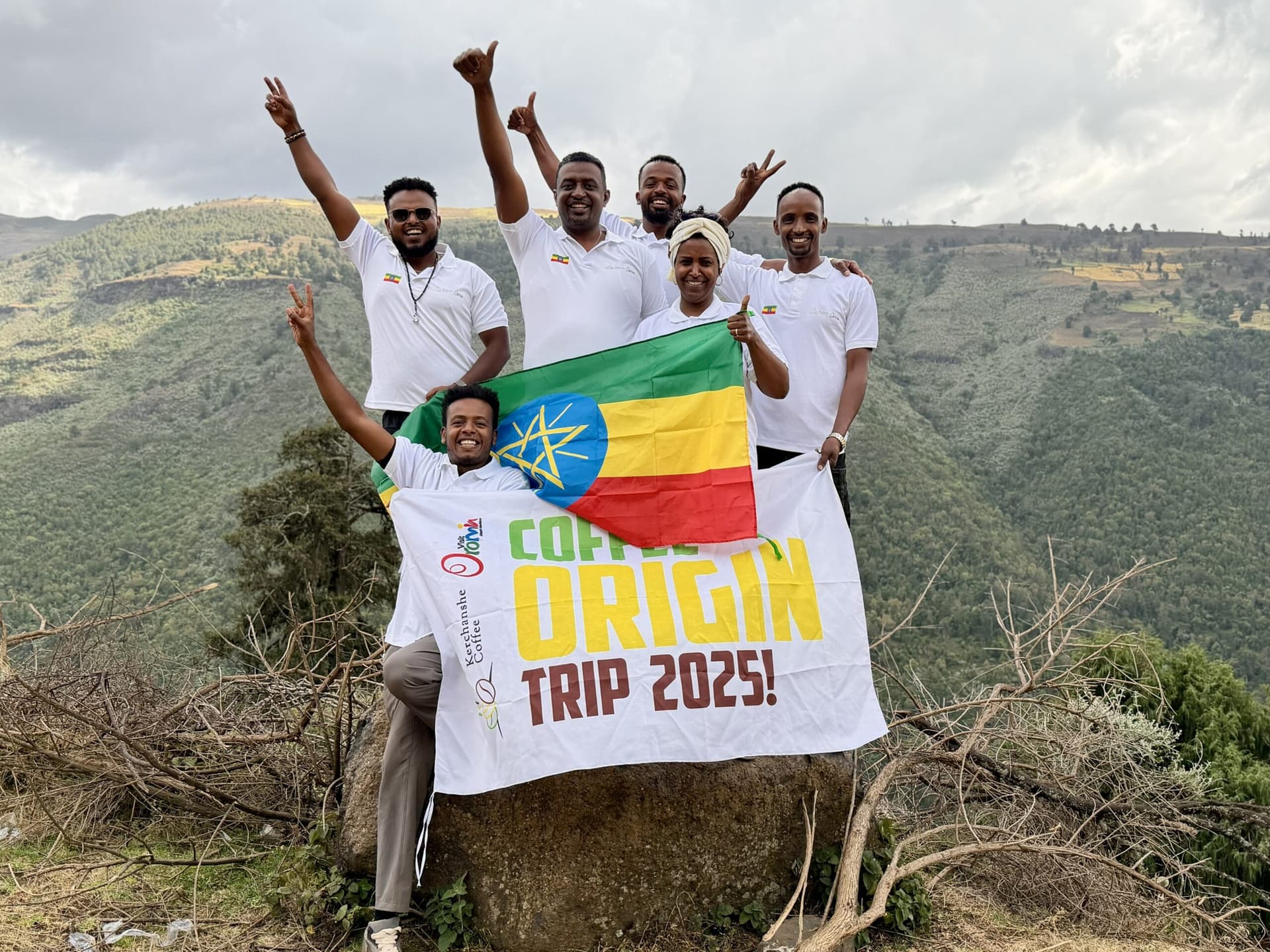
COFFEE ORIGINS TRIP (COT2) by Kerchanshe Group Ethiopia
Ethiopia– Qahwa World×Buna Kurs
The road out of Addis didn’t just fall away behind us — it released us. Dawn had made its mind, and sunlight has claimed authority as our convoy of white 4x4s rolled in disciplined sequence onto the outbound expressway. The “Coffee Pilgrim’s Caravan,” someone called it, half-joking — but the scale made the term fit. Each vehicle carried buyers, agronomists, exporters, storytellers; all bound by the crop that pays no attention to titles. As we passed clusters of early runners — lean, rhythmic, seemingly carved by the altitude that trained them — the contrast was sharp: those running toward the city we were leaving, and us driving toward the mountains that shape the coffee they drink. Everyone on the road seemed in motion for a reason.
The expressway was a brief luxury. After Adama, heat rose off the Rift like a warning. But the real shift came with the turn toward Asella — the first switchback where asphalt begins to ask for patience. Climbing requires commitment.
- Bokoji Stop: The Taste of Terroir
Halfway up, the itinerary became appetizing. We made a stop in Bokoji, the highland town that has repeatedly introduced champions to the world. Up here, lungs stretch differently; legs grow stronger not by ambition but by geography. The town is famous for producing athletes, yes — but we stopped for something quieter: its organic yoghurt. Fresh, tart, thick enough to hold the spoon upright, carrying the unmistakable signature of altitude-fed pastures. Dairy doesn’t get its character from steel tanks — it comes from the forage, the soil, the water, the chill. Much like coffee, its flavor is the sum of what the land allows. In that bowl was terroir — protein, pasture, and precipitation converted into something simple but unforgettable. I scraped it clean.
The Arsi Massif and the Water Tower
Beyond Bokoji, the ascent stiffened; mist met the windshield sideways. Donkeys shrugged past us with the indifference of longtime residents. Horsemen appeared on ridges as if summoned. Cattle moved in slow procession, not obstructing the road but governing it. You learn quickly in the highlands: right-of-way belongs to whoever has lived with the altitude longest.
We pulled over near the ridge past Dera — the first cold that made us zip jackets without suggestion. From that vantage, the Arsi massif explained itself without words. Green geometry folding into valleys, springs glinting far below — the water tower in full view. Everything downstream — including the fermentation tanks and depulpers we romanticize — depends on this cold storehouse wringing rain from cloud. Hydrology is not a concept here; it’s the quiet labor of the land.
- Conclusion and the Enduring Lineage
The Bale chain ran along our flank for hours — less a backdrop, more a boundary. It truly looks split — as if tectonics tried to tear Ethiopia apart and changed their mind mid-act. Yet the rift remains: a scar, a story, a geographic clause that explains why heirloom Arabica has the cradle it does. Geology to climate. Climate to ecology. Ecology to coffee. The lineage remains intact, visible from a moving vehicle window.
Robe arrived late and unceremoniously — headlights dissolving fog into woolen streaks. Dinner was humble and welcomed, jackets steaming beside us. Someone raised a quiet toast beneath the hum of fluorescent light and lingering chill.
Why does the best coffee come from the hardest places?
Tonight, after a day spent climbing into the source, the answer was simpler than the question:
Because greatness rarely lives where the road is easy — for landscapes, for people, or for coffee.