Dubai – Qahwa World
The International Coffee Organization highlights a strategic direction focused on building stronger connections between origin and specialty markets, emphasizing that stronger links between origin and specialty markets mean stronger opportunities for coffee producers.
The organization expresses pride in its partnership with the International Trade Centre in supporting initiatives designed to bridge this gap, connect producers more directly with high value markets, promote value addition at origin, and strengthen knowledge across the coffee value chain. The shared objective is clearly defined as working towards a coffee sector that is more inclusive, transparent and sustainable for everyone.
This vision is further reflected in the initiative titled Bridging the gap between origin and specialty coffee markets, which brings together Ethiopia, Honduras and other producing countries through a structured training partnership.
The programme demonstrates how coffee producers and cooperatives are being guided to understand specialty markets, build skills to connect with the right buyers, and communicate their identity with confidence. The central idea is a shift in role, expressed in the objective to evolve from simply delivering their coffee to actively selling it.
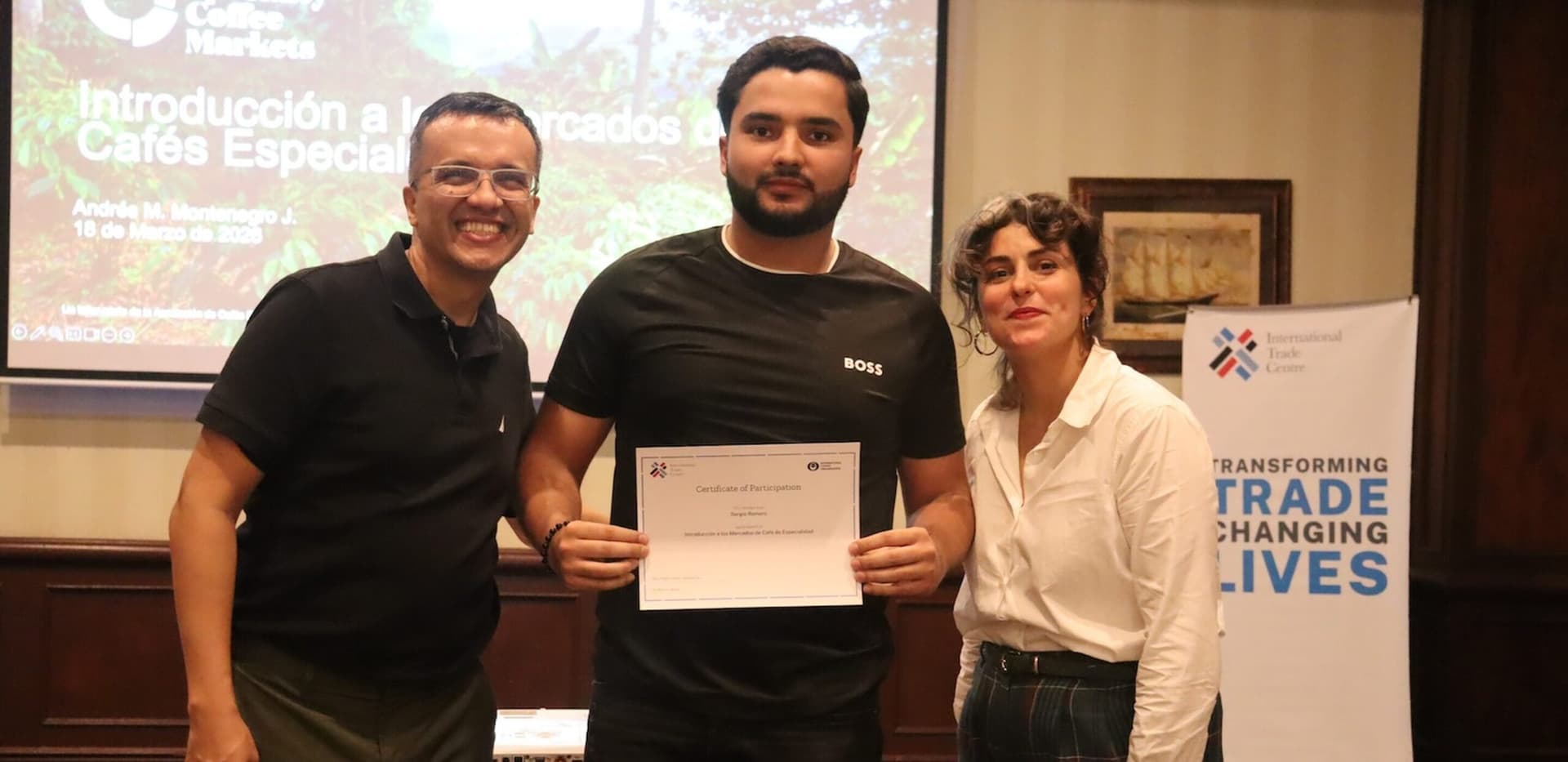
The International Trade Centre has partnered with the Specialty Coffee Association and the International Coffee Organization to deliver a series of practical workshops under the banner Introduction to Specialty Coffee Markets. These workshops are implemented through ITC’s ACP Business-Friendly and CLEAR Supply Chains projects, and are designed to strengthen market readiness and commercial positioning for coffee producers across origin countries.
The training structure is consistent across sessions and focuses on three core areas. It begins with understanding what makes a coffee specialty and how farm level decisions shape quality. It continues with identifying the right market segment for a given coffee profile. It concludes with learning how to communicate effectively with buyers and telling the cooperative’s story in a way that resonates across cultures and commercial contexts.

The first edition took place on 3 February 2026 in Addis Ababa, Ethiopia, bringing together 21 participants including cooperative representatives from Uganda. The session was delivered by Sara Yirga, a certified specialty coffee trainer and ITC consultant based in Ethiopia. A second edition followed on 19 March in San Pedro Sula, Honduras, with 32 participants consisting of 17 men and 15 women from cooperatives and producer organizations across the country, led by Andrés Montenegro, Specialty Coffee Association Sustainability Director. A third edition is planned ahead of World of Coffee Brussels which takes place on 24 June this year, with further editions planned across producing countries before year’s end.
The Honduras session brought together stakeholders from across the value chain including cooperatives, roasters and exporters. Participants described the training as a turning point in how they understand their position in the global specialty market. In Ethiopia, feedback highlighted immediate practical changes, including plans to approach different markets with greater specificity, tailor farm stories to buyer profiles, and engage more actively in the wider coffee world through events and social media.
- Participant reflections illustrate the impact of the programme.
Karla María Cartagena from Cafico stated: “Participating in this workshop was a very enriching experience. It allowed us to strengthen our knowledge about specialty coffee markets and reaffirm the value of the work we do as an organization to position our coffee internationally.”

Orlin Alvarado from Proexo noted: “The training provided key tools for improving decision-making across the coffee value chain, from understanding intrinsic and extrinsic coffee attributes to learning how to strategically position our coffee in the specialty segment.”
Kristy Matamoros from Olanch Café said: “For Olanch Café, participating in this workshop reaffirms our commitment to excellence. A practical, dynamic, and enriching experience that broadened our strategic vision and motivates us to continue elevating our role within specialty coffee.”
Maira Lizzeth Gómez from COMIPRONIL Cooperative in Honduras shared: “It was our first time participating in a training on this topic. This learning motivates us to continue improving our processes and to identify new opportunities in the specialty coffee market. I am deeply grateful for these opportunities that strengthen our capabilities and contribute to the growth of our cooperative.”

From Ethiopia, Degaga Wakahum of Yedesta Buna Trading PLC said: “The introduction to the specialty marketing pilot programme was really good. It put everything in simple terms and made it easy to understand. Now I can easily compile information and put it in a way that the market can easily understand and aligned with the value attributes they want to focus on.”
Horom Teshome from Buunni Coffee added: “This training focused on three main areas: knowing the product, the market, and the right fit. It was a very insightful training. Especially for someone like me who’s very new to the coffee industry. It was practical, engaging, and experimental.”
The broader project framework is anchored in two major development initiatives. The ACP Business-Friendly Programme is funded by the European Union and the Organisation of African, Caribbean and Pacific States and jointly implemented by ITC’s Alliances for Action, the World Bank and UNIDO. It aims to improve the ability of agribusiness firms in ACP countries to compete, grow and prosper in domestic, regional, and international markets through inclusive and sustainable agricultural value chains that value all stakeholders from farm to shelf.

The CLEAR Supply Chains project, funded by the European Union, brings together the International Trade Centre, the International Labour Organization as the leading UN agency, the Food and Agricultural Organization, and the United Nations Children’s Fund. It focuses on addressing the root causes of child labour in supply chains, with a primary focus on coffee, while supporting farmer organizations, micro, small and medium enterprises, and value chain actors in strengthening commercial value, sustainability, Human Rights and Environmental Diligence alignment, and incomes for smallholder farmers in coffee producing countries including Uganda, Honduras, DRC and Vietnam.
Together, these efforts reflect a coordinated approach to strengthening origin capacity, improving market access, and building a more transparent and sustainable global coffee sector.