Author: Qahwa World |
Date: June 16, 2026
Starbucks Korea to Close Stores for History Training After ‘Tank Day’ Controversy
Key Takeaways:
- Starbucks Korea will close all its stores nationwide at 3 PM next Monday for employee training on historical awareness and social sensitivity.
- The decision follows a controversial marketing campaign that used the terms “Tank Day” and “5/18” to promote coffee tumblers, evoking the 1980 Gwangju military crackdown.
- The backlash led to the dismissal of Starbucks Korea CEO Son Jung-hyun.
- This is the first time since Starbucks entered the South Korean market in 1999 that all stores have closed early on the same day.
- Shinsegae Group, the operator of Starbucks Korea, said Chairman Chung Yong-jin and other senior executives will attend separate training sessions on Wednesday.
- South Korea is Starbucks’ second-largest market outside the US, with more than 2,000 stores nationwide.
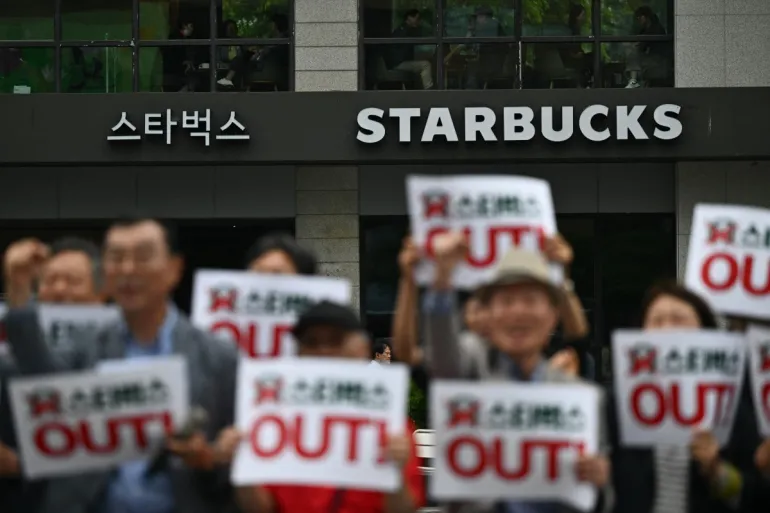
Starbucks Korea will close all of its stores early next week to allow employees to participate in history education and social awareness training after a marketing campaign sparked widespread public criticism.
The decision follows a controversy last month when Starbucks Korea launched a promotional campaign that unintentionally referenced one of the most painful events in South Korea’s modern history. The campaign used the terms “Tank Day” and “5/18” to promote a series of coffee tumblers. Many South Koreans viewed the wording as an insensitive reference to the military crackdown on the pro-democracy uprising in Gwangju on May 18, 1980.
Historic Closure and Unprecedented Training
In a statement released on Monday, Shinsegae Group, the operator of Starbucks Korea, announced that all Starbucks outlets nationwide will close at 3 p.m. next Monday so employees can participate in “historical awareness and social sensitivity” training. According to the company, this will be the first time since Starbucks entered the South Korean market in 1999 that all stores across the country have closed early on the same day.
Shinsegae Group also said that Chairman Chung Yong-jin and other senior executives will attend separate training sessions on Wednesday. “The initiative is intended to learn from this incident and help prevent similar situations from occurring across the group in the future,” the company said.
| Date | Event |
|---|---|
| May 18, 1980 | Military crackdown on the Gwangju Uprising |
| May 2026 | Controversial “Tank Day” and “5/18” campaign launched |
| May/June 2026 | CEO Son Jung-hyun dismissed |
| Next Monday (3 PM) | All stores close for historical training |
| Next Wednesday | Executive leadership training sessions |
Background: The Painful Memory of the Gwangju Uprising
The Gwangju Uprising remains a defining moment in South Korea’s democratic movement. Led largely by student protesters opposing the military rule of Chun Doo-hwan, the uprising was violently suppressed when troops were deployed to regain control of the southwestern city.
The event became a major catalyst for South Korea’s democratization, culminating in the country’s first free presidential elections in decades in 1987 after years of military-led governments. Official figures place the death toll at more than 200 people, although activists and historians have argued that the true number may have exceeded 2,000.
South Korea: Starbucks’ Second-Largest Global Market
South Korea is one of Starbucks’ most important international markets, with more than 2,000 stores nationwide. It is the company’s second-largest market outside the United States, after China. This extensive presence makes any marketing misstep or incident involving cultural and historical sensitivity have significant repercussions for the company’s global reputation.
Starbucks’ response was swift and decisive. Headquarters described the incident as unintentional but acknowledged that it should never have occurred. The controversy led to the dismissal of Starbucks Korea CEO Son Jung-hyun.
| Indicator | Value |
|---|---|
| Number of stores in South Korea | Over 2,000 stores |
| Global ranking outside the US | Second (after China) |
| Year of market entry | 1999 |
Frequently Asked Questions About the Starbucks Korea Crisis
Q: What was the “Tank Day” controversy that triggered the crisis?
A: A marketing campaign by Starbucks Korea used the terms “Tank Day” and “5/18” to promote tumblers, evoking the painful memory of the 1980 Gwangju military crackdown.
Q: Why is “5/18” a sensitive date in South Korea?
A: May 18, 1980, marks the start of the military suppression of the pro-democracy Gwangju Uprising, which cost hundreds (possibly thousands) of civilian lives.
Q: What action did Starbucks Korea take after the controversy?
A: It dismissed its CEO and announced an early closure of all stores for employee training on historical awareness and social sensitivity.
Q: Is this the first time Starbucks has closed all its stores in South Korea?
A: Yes. Since entering the market in 1999, this is the first time all stores have closed on the same day.
Q: Why is South Korea important to Starbucks globally?
A: South Korea is Starbucks’ second-largest market outside the US, with over 2,000 stores, ranking second only to China.
The Starbucks Korea crisis highlights the critical importance of cultural and historical sensitivity in global marketing campaigns. In an era where brands operate across borders, deep understanding of local contexts and history has become an essential necessity, not an optional extra. Closing stores for training is a bold step that reflects the company’s commitment to learning from the mistake and preventing its recurrence.
Prepared and edited by: Qahwa World – Based on a Reuters report.
All rights reserved. Republication with attribution permitted.
Publication date: June 16, 2026