Dubai – Qahwa World
Coffee growers across Costa Rica are facing mounting financial pressure as two powerful forces converge: a sharply stronger national currency and declining global coffee prices. Industry leaders warn that the combination could significantly reduce farm income in the coming harvest and deepen the economic strain on rural coffee communities.
For a sector long recognized for producing high-quality Arabica coffee, the current environment highlights how global market shifts and domestic economic trends can quickly reshape the outlook for producers.
- Currency Strength Erodes Export Earnings
Coffee in Costa Rica is sold on international markets in United States dollar, while most production costs—such as wages, fertilizers, transportation, and farm maintenance—are paid in Costa Rican colón.
You may read:Brazil’s Specialty Coffee Sector Gains Global Momentum
As the colón strengthens, every dollar earned from coffee exports converts into fewer colones. This reduces the real income farmers receive even when the global coffee price remains stable.
Exchange-rate data released by the Banco Central de Costa Rica show the dollar trading near ₡470 in mid-March 2026, significantly stronger for the local currency compared with rates above ₡680 only a few years earlier.
For export sectors such as coffee, the shift has created a challenging environment. While a strong currency can help reduce the cost of imported goods for consumers, it often compresses margins for industries that rely on international sales.
- Factors Behind the Strong Colón
Economists attribute the strength of the Costa Rican currency to several economic trends that have increased the supply of foreign currency in the country.
Read also: Global Study Maps the “Carbon Footprint” of Latin American Coffee
Strong tourism revenues, expanding exports from companies operating in special economic zones, and steady foreign investment have all contributed to increased inflows of dollars into the national economy. Lower energy import costs have also reduced the demand for foreign currency.
In response to these pressures, the Banco Central de Costa Rica has purchased large amounts of dollars in foreign-exchange markets in an effort to moderate fluctuations and build international reserves. Despite these efforts, the colón has remained relatively strong compared with historical averages.
- Global Coffee Prices Move Lower
At the same time that currency movements are reducing local earnings, international coffee prices have begun to retreat from the highs seen in recent years.
You can also read: AI and Gas Chromatography Identify Coffee Origins
Prices for Arabica coffee traded on the Intercontinental Exchange in New York surged during 2025 amid global supply concerns. However, market sentiment has shifted as forecasts point to increased production in several major coffee-growing countries.
A major factor influencing the outlook is the expected harvest in Brazil, the world’s largest coffee producer. Production forecasts indicate the possibility of a larger crop in the 2026–2027 season, which could add significant supply to global markets and place additional downward pressure on prices.
For Costa Rican producers, the combination of falling prices and currency shifts means revenues could decline even further in the coming harvest cycle.
- Rural Communities at Stake
Coffee remains a central pillar of rural economic life in Costa Rica. The industry provides employment for tens of thousands of workers throughout the year, along with additional seasonal jobs during harvest.
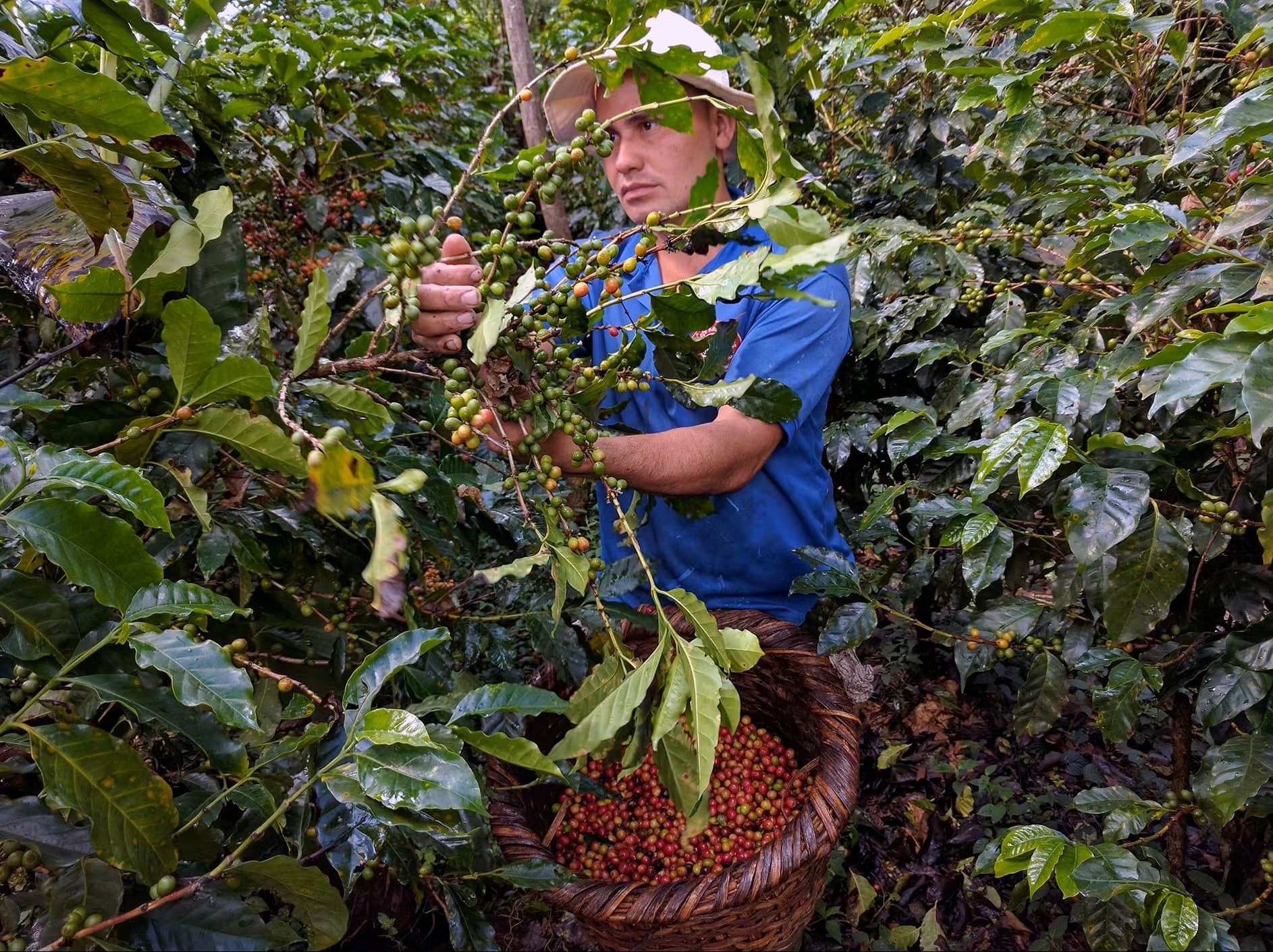
Production is concentrated in well-known coffee-growing regions such as Tarrazú, Pérez Zeledón, and Coto Brus, where generations of families have cultivated coffee as their primary source of income.
Small farms dominate the sector. A large majority of producers operate relatively small holdings, and many rely on modest harvest volumes each year. These producers are often the most vulnerable to price volatility and economic shocks.
Read also: ICO February 2026 Report: Has the Inflationary Wave Receded?
Over the past decade, the number of registered coffee growers in the country has declined as some farmers left the sector due to rising costs and uncertain profitability.
- Growing Concern Among Industry Leaders
The Costa Rican Coffee Institute has described the current situation as a serious challenge for the industry and has called for continued dialogue with policymakers about possible support measures.
Proposals being discussed include improved credit access for farmers, targeted programs to support rural communities, and long-term initiatives focused on innovation, sustainability, and productivity.
Industry representatives emphasize that strengthening the resilience of coffee farms will be essential if Costa Rica is to maintain its reputation as a producer of high-quality coffee in a rapidly changing global market.
- A Defining Moment for Costa Rica’s Coffee Sector
Costa Rica’s coffee industry has long been regarded as a symbol of national agricultural identity and quality. Yet the sector now finds itself navigating a complex mix of economic pressures beyond farmers’ control.
If global prices continue to soften while the national currency remains strong, growers may face increasingly difficult decisions about the future of their farms.
For thousands of coffee-growing families, the coming seasons could determine whether coffee cultivation remains a sustainable livelihood—or whether the country’s historic coffee landscape begins to change in fundamental ways.