Author: Qahwa World – Climate Desk
Source: NOAA, WMO, ICO, StoneX, industry sources
Date: May 22, 2026
Executive Summary
- There is a 96% probability that El Niño will persist through the Northern Hemisphere winter of 2026‑2027.
- Sea surface temperatures in the Niño 3.4 region have already exceeded the +0.5°C El Niño threshold.
- Vietnam and Indonesia face drought and higher temperatures, threatening Robusta yields.
- Brazil may see irregular rainfall during critical flowering (August‑October 2026), reducing Arabica quality.
- Colombia and Central America face mixed risks: excess rain (leaf rust) or drought.
- Analysts expect higher coffee price volatility in 2027, with Robusta supply risks pushing futures higher.
- Smallholder farmers in vulnerable regions could face income losses, food insecurity, and migration pressure.
As of mid‑May 2026, the tropical Pacific is showing unmistakable signs of a rapid transition toward El Niño conditions.
According to the NOAA Climate Prediction Center’s ENSO Diagnostic Discussion released on May 14, there is an 82% probability that El Niño will emerge between May and July 2026, rising to a 96% chance that it will persist through the Northern Hemisphere winter of 2026‑2027.
Scientists are closely monitoring whether this event could evolve into a Super El Niño, potentially rivaling the record‑strength episodes of 1982‑83, 1997‑98, or 2015‑16. With sea surface temperatures in key Niño regions already warming sharply, the stage is set for significant disruptions to global weather patterns — from devastating floods in South America to severe droughts across Southeast Asia and parts of East Africa.
What Is El Niño?
El Niño (Spanish for “The Little Boy” or “Christ Child”) is the warm phase of the El Niño‑Southern Oscillation (ENSO), Earth’s most influential climate variability pattern. Under normal conditions, strong easterly trade winds push warm surface water westward across the equatorial Pacific toward Indonesia, allowing cold, nutrient‑rich water to upwell off the coasts of Peru and Ecuador. During El Niño, these trade winds weaken or reverse. Warm water spreads eastward, suppressing upwelling and altering atmospheric circulation patterns worldwide.
The counterpart, La Niña, brings cooler waters and opposite weather effects. ENSO events typically occur every 2‑7 years and last 9‑18 months.
Current Status – May 2026
The equatorial Pacific is currently in a transitional state following a weak La Niña. Sea surface temperatures in the Niño 3.4 region have risen rapidly, with recent weekly values exceeding the +0.5°C El Niño threshold.
Multiple international models, including those from NOAA, the ECMWF, and the WMO, show high confidence in El Niño development by mid‑to‑late 2026. While peak strength remains uncertain, some projections suggest anomalies could exceed +2.0°C, raising the possibility of a strong‑to‑very‑strong event.
Global Weather Impacts
El Niño redistributes heat and moisture across the planet:
- South America (Peru, Ecuador, northern Brazil): Increased rainfall and flooding risks, potential damage to infrastructure and agriculture.
- Southeast Asia, Indonesia, Australia: Significantly reduced rainfall, drought, higher wildfire risk, water shortages.
- East Africa: Wetter‑than‑average conditions, increased flood and disease risks.
- Southern United States: Wetter winters; Northern US and Canada often milder.
- Global: Elevated average temperatures (El Niño typically adds ~0.1–0.3°C to global surface temperatures).
Impact on Global Coffee Production
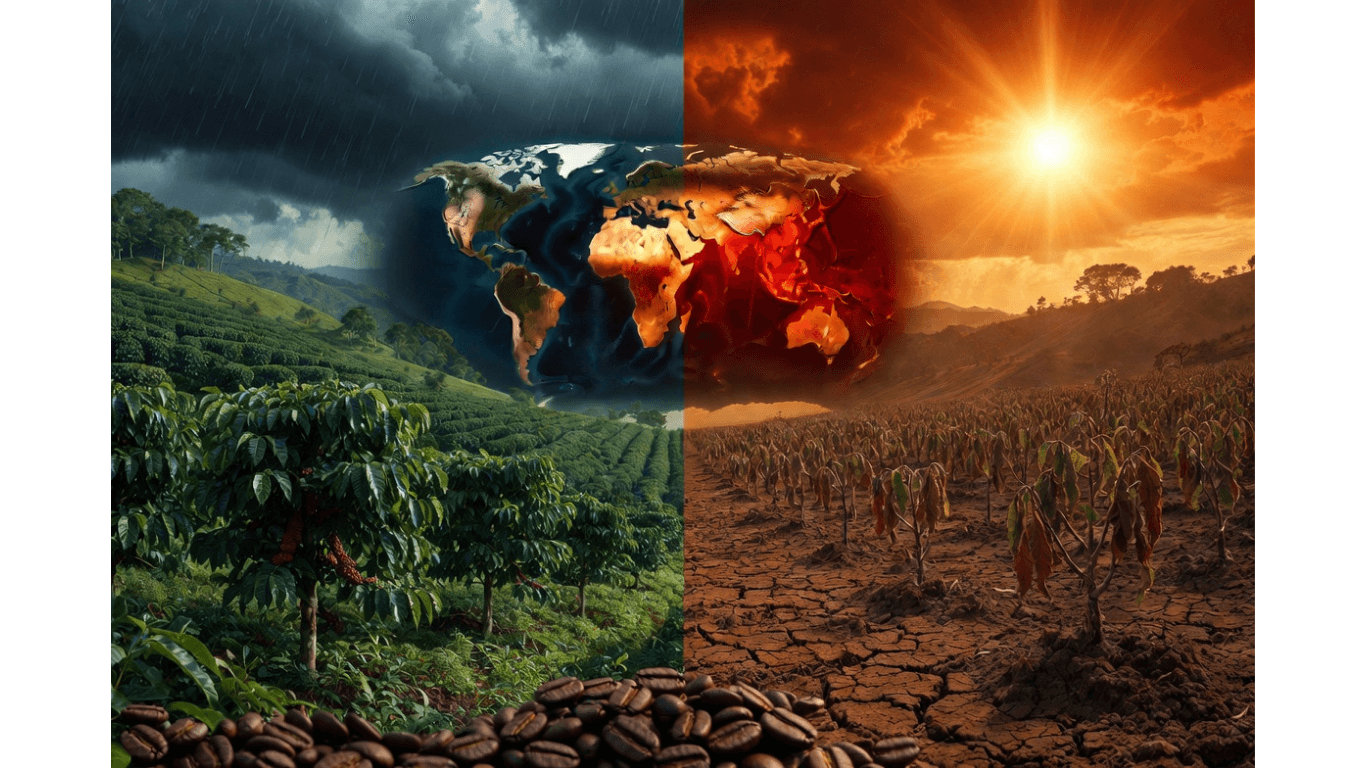
Coffee is one of the most climate‑sensitive major commodities. With roughly 12.5 million farming families dependent on it worldwide, any major ENSO event sends ripples through prices, quality, and livelihoods. The 2026‑2027 El Niño is expected to affect both Arabica and Robusta differently across key origins.
1. Brazil – The World’s Largest Producer
Brazil faces a complex outlook. While the current 2026/27 harvest is projected to be strong, El Niño could disrupt the critical flowering period (August‑October 2026) through irregular rainfall or excessive heat. Historical patterns show El Niño often brings drier conditions to key Arabica regions in Minas Gerais and São Paulo, potentially reducing bean size, increasing defects, and lowering quality.
2. Vietnam and Indonesia – Robusta Heartlands
These two giants are highly vulnerable to El Niño‑induced drought and elevated temperatures. Reduced rainfall and prolonged dry seasons can stress Robusta trees, leading to smaller beans, lower yields, and higher production costs due to increased irrigation needs. The 2015‑16 El Niño caused notable declines in Robusta output in these regions.
3. Colombia, Central America, and East Africa
Colombia and Central America face mixed signals: potential for excessive rainfall in some areas (increasing fungal diseases like coffee leaf rust) or drought in others. Ethiopia and Kenya may see wetter conditions that boost yields in some highlands but heighten disease pressure and complicate harvesting.
Overall Market Outlook
Analysts anticipate higher price volatility in 2027 as the event peaks. While Brazil’s large crop may buffer total volume in the short term, quality concerns and Robusta supply risks could push Arabica and Robusta futures higher. The ICO and major traders are already factoring these risks into their forecasts.
Broader Economic and Humanitarian Implications
- Price Spikes: Coffee futures have already shown sensitivity to El Niño headlines, with short covering observed.
- Smallholder Farmers: Millions in vulnerable regions face income losses, food insecurity, and potential migration pressures.
- Supply Chain: Roasters, traders, and consuming countries should prepare for tighter specialty‑grade supplies and elevated costs.
- Compounding Factors: Persistent low stocks, high input costs (fertilizers, labor), and climate change amplify risks.
Recommendations and Preparedness
For Governments and International Organizations: Strengthen early warning systems, support farmers with drought‑resistant varieties, irrigation, shade management, and crop insurance. The WMO, FAO, and ICO should coordinate contingency planning.
For the Coffee Industry: Diversify sourcing strategies, invest in sustainable practices that build resilience, and monitor ENSO updates monthly.
For Consumers: Expect potential price increases in premium and everyday coffee blends throughout 2027. Supporting traceable, climate‑smart coffee can help mitigate long‑term risks.
Frequently Asked Questions
What is the probability that El Niño will persist through winter 2026/2027?
NOAA estimates a 96% probability that El Niño will persist through the Northern Hemisphere winter of 2026‑2027.
Which coffee origins are most at risk from this El Niño?
Vietnam and Indonesia (Robusta) face drought; Brazil (Arabica) may see irregular flowering; Colombia and Central America face mixed flood/drought risks.
How could El Niño affect coffee prices?
Analysts expect higher price volatility in 2027. Robusta supply risks could push futures higher, and specialty‑grade supplies may tighten.
What can smallholder farmers do to prepare?
Governments and organizations should provide drought‑resistant varieties, irrigation support, shade management, and crop insurance.
How does this El Niño compare to past events?
Models suggest it could become a strong‑to‑very‑strong event, potentially rivaling 1982‑83, 1997‑98, or 2015‑16, but final strength remains uncertain.
What are the broader economic risks beyond coffee?
Smallholder farmers face income losses and food insecurity; supply chains face tighter supplies and elevated costs; migration pressures may increase.
Author: Qahwa World – Climate Desk | Source: NOAA, WMO, ICO, StoneX, industry sources | Date: May 22, 2026