Dubai – Qahwa World celebrates International Coffee Day.
When we raise a warm cup of coffee to our lips each morning, we are not merely consuming a comforting beverage to dispel the vestiges of sleep; we are partaking in a rich human history shaped by passion, patience, and global interplay.
On this October 1, 2026, as the world gathers to celebrate the very first officially recognized United Nations International Coffee Day, we honor far more than a passing occasion.
We recognize a profound historical debt owed to a small, dark cherry that reshaped world trade, spurred intellectual revolutions, and formed a living bond connecting more than 12.5 million farming families across the Global South to millions of coffee lovers in every corner of the planet.
A Journey Through Time: From Kaffa’s Canopy to Yemen’s Terraces
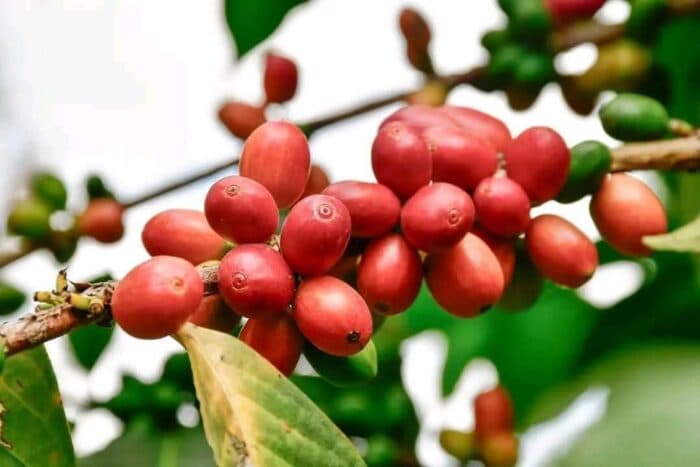
The story begins with the raw, earthy scent of the dense, tropical forests of the Kaffa region in the Ethiopian highlands. There, growing wild and untamed, the coffee tree first revealed its secrets to humanity. Early observers noticed that its vivid crimson cherries possessed a unique gift: they lightened the body, cleared the mind, and imparted an unmistakable surge of vitality. Yet, this wild botanical treasure was still awaiting the cultural craftsmanship that would elevate it from a remote forest plant into a refined global ritual.
That transformation found its destiny across the Red Sea, in the historic lands of Yemen.
In Yemen, coffee cultivation evolved from a simple agricultural task into a masterpiece of engineering and devotion. High up in the rugged mountains of Haraz, Sa’dah, and Manakhah, Yemeni farmers carved breathtaking stone terraces into steep cliffs. Here, they meticulously tended, harvested, and perfected the art of sun-drying and roasting the beans establishing the foundational methods of coffee preparation we still cherish today.
From the ancient port of Mokha, legendary ships laden with prized coffee beans set sail across oceans and continents, permanently embedding the port’s name into global culture as Mokha a universal synonym for fine coffee.
The Spark of the Enlightenment
Coffee never followed a quiet path; its trajectory was bound to human intellect and spiritual awakening. In its early days, it found a home in Sufi sanctuaries across Yemen, Mecca, Cairo, and Damascus, where scholars and mystics drank it to sustain long nights of contemplation, meditation, and spiritual clarity.
As coffee traveled across the Ottoman Empire, the world’s first coffeehouses sprang up in Istanbul. Known not merely as places of leisure, but as Mekteb-i ‘irfān (Schools of Knowledge), these spaces brought together poets, philosophers, scholars, and statesmen to debate ideas and exchange wisdom.
When coffee arrived on European shores in the seventeenth century, it sparked an intellectual awakening. Prior to its arrival, European daily life was heavily reliant on weak fermented beverages, leaving minds in a state of dull lethargy.
Coffee introduced unprecedented mental clarity and focus. In the bustling coffeehouses of London, Paris, and Venice, global financial institutions and insurance markets were born (such as Lloyd’s of London, which started in a coffeehouse), Enlightenment thinkers drafted foundational treatises, and composers penned enduring masterpieces. Coffee was no longer just a drink; it had become the liquid fuel of the Modern Age.
Geopolitics and Equity: Bringing Value Back to Origin
Today, coffee is more than a historical legacy it is a vast economic and human reality generating over $250 billion annually. Yet, for decades, the global supply chain was marked by a deep economic imbalance: green coffee left farms across Africa, Latin America, and Asia as an inexpensive raw commodity, while the vast majority of its financial value unlocked through roasting, branding, and retailing remained in importing nations.
Today, through concerted global initiatives led by the International Trade Centre (ITC) and the International Coffee Organization (ICO), that paradigm is undergoing a fundamental shift. The international community increasingly recognizes that true sustainability requires building local capacity from cupping and roasting to packaging and direct exporting right at origin.
When farmers in Ethiopia, Yemen, Kenya, Ghana, or Honduras can process, roast, and export their harvest as a premium finished product, they gain more than a fair economic return; they reclaim the dignity of their craft and their land. Ensuring full traceability, fair compensation, and environmental stewardship is no longer a luxury it is the vital cornerstone for preserving the future of coffee against climate change.
The Science of the Elixir: What Science Reveals About Coffee
Beyond its history and economics, a single cup of coffee contains a complex natural chemistry that explains its timeless appeal. Coffee is far more than a delivery system for caffeine; it is a rich matrix of bioactive compounds, most notably potent antioxidants like chlorogenic acid.
Modern clinical research affirms what human intuition has known for centuries:
Cognitive Enhancement and Neuroprotection: Caffeine stimulates the release of key neurotransmitters like dopamine and norepinephrine, heightening focus, alertness, and reaction time. Long-term observational studies suggest that regular, moderate coffee consumption is associated with a reduced risk of neurodegenerative conditions such as Alzheimer’s and Parkinson’s disease.
Cardiovascular Health: Natural compounds in coffee support vascular health, help maintain endothelial function, and reduce systemic inflammation throughout the body.
Metabolic Support and Liver Health: Extensive research highlights coffee as one of the most effective natural dietary allies for liver health, offering protective benefits against fatty liver disease and fibrosis. Furthermore, it supports metabolic rate and insulin sensitivity (keeping added sugar minimal ideally under 2.5 grams ensures these protective health benefits remain fully intact).
One Cup to Connect the World
Every time you lift a warm cup of coffee and breathe in its rich aroma, you are touching an unbroken thread of human history. That journey begins in the soil with a farmer on the slopes of Ethiopia or the terraces of Yemen, travels through the hands of skilled roasters and baristas, and settles comfortably between your hands. Coffee has never been a simple commodity; it is a daily invitation to pause, reflect, and connect. It remains a testament to human culture a timeless ritual that reminds us that people from all walks of life can always gather, share a moment, and find common ground over a single cup.