Author: Maryam Sinaiee
Date: May 16, 2026, 08:37 GMT+1The Iran café crisis economic collapse has been making headlines in recent months.
Executive Summary
- Café operating costs in Tehran have more than doubled, while customer numbers have fallen by up to 50 percent in recent months.
- The head of Tehran’s coffee shop union says up to 40 percent of cafés have shut down.
- Tehran alone had around 6,000 cafés before the crisis, but many can no longer survive.
- Coffee bean prices in Iran have nearly doubled compared to pre-war levels, while a cup of coffee costs up to four times more in some cafés.
- Many young people and women have lost their jobs due to closures and downsizing, with hiring frozen even at surviving cafés.
- Advertising companies have stopped buying coffee for office kitchens for the first time in 20 years, as work freezes and projects get canceled.
Rising costs and widespread café closures
Iran’s deepening economic crisis is pushing cafés and coffee culture toward collapse. Soaring prices and falling incomes force both businesses and customers to cut back. Mohsen Mobarra, head of the union overseeing coffee shops in Tehran, told economic daily Donya-e-Eqtesad that café operating costs have more than doubled. Meanwhile, customer numbers have dropped by as much as 50 percent in recent months, with up to 40 percent of cafés shutting down.
Mobarra explained that continuing operations does not mean profitability. The profits of these businesses are steadily shrinking. As a result, cafés that rent their locations or lack strong financial backing are heading toward closure.
From social spaces to memories
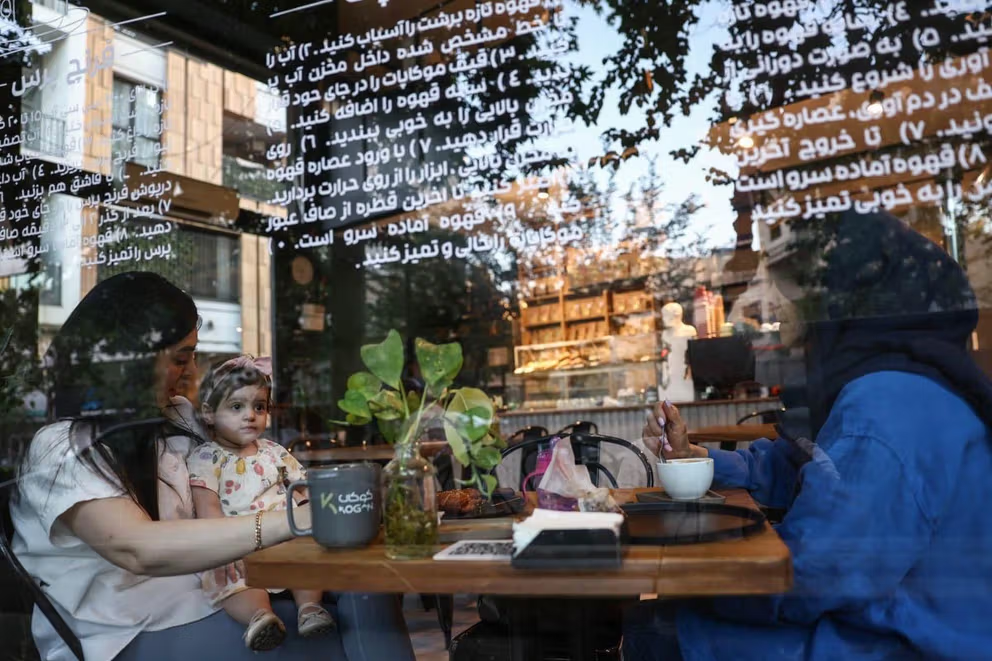
Over the past two decades, cafés became an important part of urban life in Iran. They took root in Tehran before spreading across the country. With affordable entertainment options limited, they emerged as some of the few accessible spaces where young Iranians could socialize, work and spend time outside the home.
Many cafés evolved into more than places to drink coffee or eat light meals. They hosted poetry nights, small music performances, photography exhibitions and informal gatherings. They became rare spaces for social interaction at a time when few other public spaces remained accessible. Until a few months ago, Tehran alone had around 6,000 cafés of different sizes in operation. But the collapse in consumers’ purchasing power has hit the industry hard.
Real stories: Young workers losing hope
Sanaz, a 28-year-old receptionist at a private company, said she and her friends used to visit cafés several times a week. But now, with sharp increases in the costs of food, transportation and housing, even such small pleasures require careful calculation. She added: “I have to calculate every expense, even this simple form of entertainment, just to make it to the end of the month — assuming I don’t lose my job. If I lose my job, after years of financial independence, I’ll have to move back to my parents’ home in my hometown.”
The closures and downsizing have also eliminated jobs for many workers, most of them young people and women. Shana, 26, completed professional barista training before finding work at one of the branches of the well-known Saedi Nia café chain. In January, the chain’s branches were abruptly shut down after the owner voiced support for opposition protesters. Shortly afterward, war broke out. She says: “Even cafés that have survived the economic downturn are not hiring new staff anymore. Many are actually laying off existing employees. I have no hope that even by learning new skills like cooking or other work, I’ll be able to find a job. The economy keeps getting worse every day, and the job market is shrinking.”
| Indicator | Previous Level | Current Level | Change |
|---|---|---|---|
| Operating cafés in Tehran | About 6,000 | 40% drop | ~2,400 closed |
| Café operating costs | Baseline | More than double | Increase >100% |
| Customer numbers | Normal level | Up to 50% drop | Sharp decline |
| Coffee bean price | Pre-war level | Nearly double | Increase ~100% |
| Price per coffee cup | Regular price | Up to 4 times higher | Increase up to 300% |
Coffee itself becomes a luxury
Tea remains Iran’s dominant traditional drink, but coffee consumption expanded rapidly in recent years. Now, however, the sharp rise in foreign currency prices and disruptions to imports have pushed coffee prices so high that many households are cutting consumption or abandoning it altogether. Although global coffee prices have declined, the cost of coffee beans in Iran — largely imported through the United Arab Emirates before the war — has nearly doubled compared to pre-war levels.
The increase has directly affected café prices. With rents and other expenses also rising, the price of a cup of coffee in some cafés has climbed by as much as four times. One café owner told Donya-e-Eqtesad that even cafés specializing in basic coffee drinks are seeing falling demand because many people can no longer justify going out even for coffee.
Impact on other sectors: Offices and companies
Tara, the manager of an advertising company with ten employees, said coffee has become so expensive that even buying it for office use is increasingly difficult. She adds: “For the first time in the past twenty years, I’ve had to stop buying coffee for the office kitchen, where it was always available for employees alongside tea. It’s not just about coffee prices. Since last summer’s war, work has effectively been frozen. Clients have even canceled half-finished projects, and everyone knows the company is taking its last breaths. If this situation continues, we’ll have no choice but to shut down.”
Frequently Asked Questions (FAQ)
1. What percentage of cafés have closed in Tehran due to the economic crisis?
According to the head of Tehran’s coffee shop union, up to 40 percent of cafés have shut down in recent months.
2. How much have customer numbers dropped at Iranian cafés?
Customer numbers have fallen by as much as 50 percent compared to previous periods, severely impacting revenues.
3. How have coffee prices changed in Iran?
Coffee bean prices have nearly doubled compared to pre-war levels, while a cup of coffee costs up to four times more in some cafés.
4. Why did the Saedi Nia café chain close?
The chain’s branches were abruptly shut down in January after the owner voiced support for opposition protesters, and war broke out shortly afterward.
5. Is there hope for improvement in the café job market?
Reports indicate that even cafés that have survived the downturn are not hiring new staff, and many are laying off existing workers as the crisis worsens daily.
6. How has the crisis affected coffee availability in workplaces?
Some companies, including advertising firms, have stopped buying coffee for their office kitchens for the first time in 20 years due to rising prices and frozen work.
Source: Iran International |
Publication date: May 16, 2026