SUNNYVALE – AP
Hundreds of years ago, Yemen helped introduce coffee to the world. Today, the mountainous, war-affected country is exporting something new: its distinctive coffeehouse culture.
Yemeni coffeehouses are rapidly expanding across the United States. According to Technomic, a restaurant industry consulting firm, the number of cafés operated by six major Yemeni-style chains grew by 50% last year, reaching 136 locations. This figure does not include the many independent cafés and smaller chains serving Yemeni coffee and tea.
Several factors are driving this growth. Many Yemeni cafés stay open late—sometimes past 3 a.m., especially during Ramadan—offering a social alternative for Americans who do not drink alcohol. A recent Gallup poll found that only 54% of U.S. adults reported drinking alcohol last year, the lowest rate in 90 years.
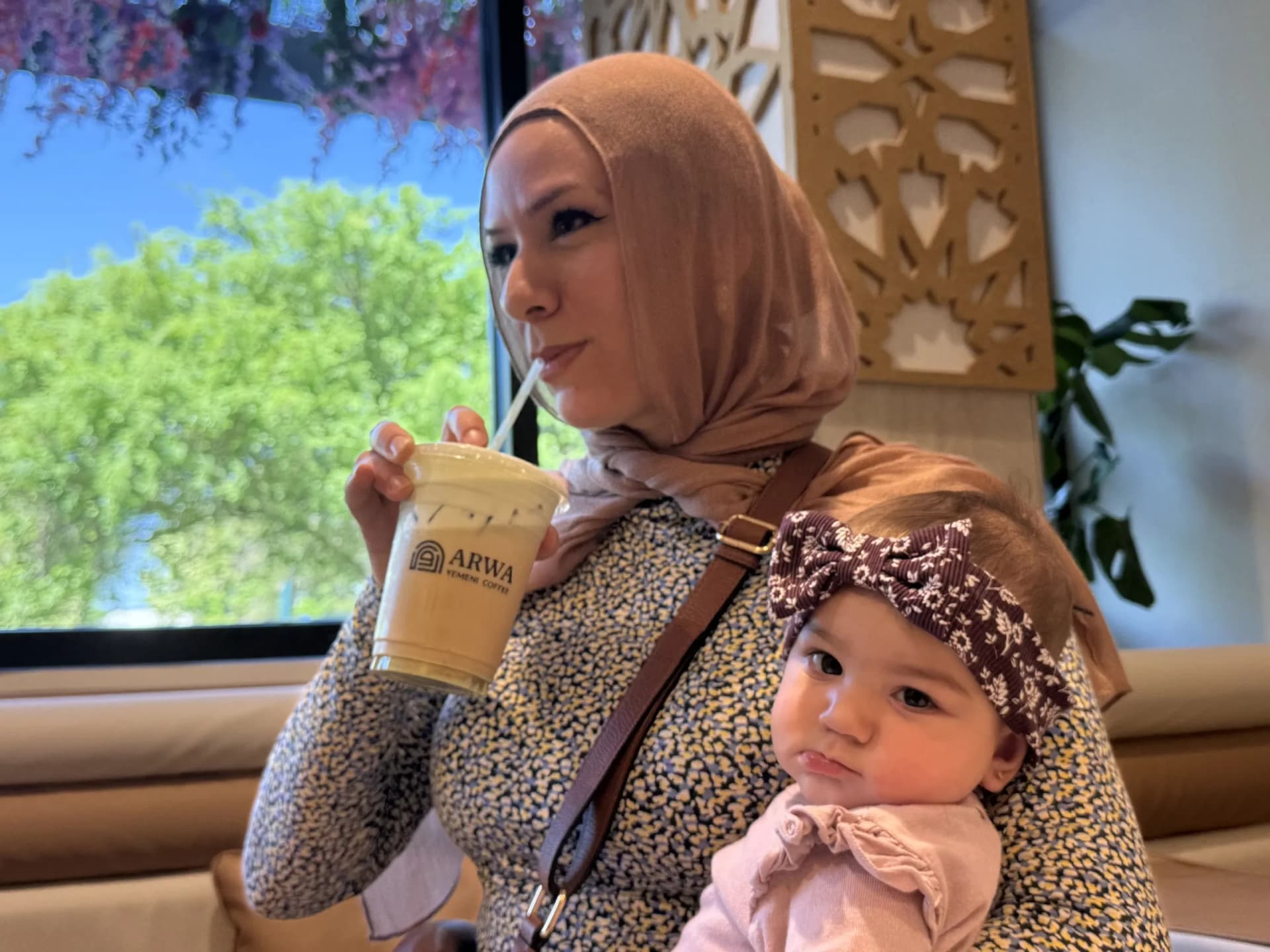
“Generally in the Middle East, our nightlife is coffee,” said Ahmad Badr, a franchise owner of Arwa Yemeni Coffee in Sunnyvale. “People gather in coffee shops, play games, and talk. We wanted to bring that here.”

Demographic shifts are also contributing to the trend. The Arab American population in the U.S. grew by 43% between 2010 and 2024, compared to roughly 10% growth for the overall population, according to the Arab American Institute.
While many Yemeni cafés are located in states with large Arab American communities—such as Michigan, California, and Texas—they are also appearing in more diverse locations, including Georgia, Kansas, and Maine.
A taste of home
For many Yemeni Americans, these cafés offer more than just beverages—they provide a connection to home.
Faris Almatrahi, co-founder of Texas-based Arwa Yemeni Coffee, said Yemen’s ongoing civil war, which began in 2014, has made travel difficult. His company, which operates 11 cafés and has 30 more in development, aims to recreate the atmosphere of Yemen.
Locations feature desert-inspired tones, mosque-like archways, and decorative elements reminiscent of traditional Yemeni culture.

“One way to experience Yemen without traveling there was to bring it here,” Almatrahi said. “It’s emotional—it really transports us back.”
However, he noted that most customers are not of Arab descent. Growing interest in global flavors and authentic cultural experiences—often fueled by social media—has broadened the appeal.
Menus typically include traditional drinks like Adeni tea, a spiced tea similar to chai, and qishr, made from dried coffee cherry husks. Familiar beverages such as lattes are often infused with spices or honey.
Food offerings may include khaliat nahal (Yemeni honeycomb bread filled with cheese and drizzled with honey) and basboosa, a syrup-soaked semolina cake flavored with lemon or rose water. Many cafés also serve more familiar items like matcha lattes and fruit-based drinks.
Expanding tastes
Industry experts say culturally specific cafés have become a major driver of growth in the U.S. coffee sector.
Peter Giuliano of the Specialty Coffee Association noted similar trends among Latin and Vietnamese coffee brands expanding their presence.
Customers are increasingly curious about new coffee profiles. Cindy Donovan, who recently visited a Yemeni café in Sunnyvale, described the experience as eye-opening.

“The flavors are more refined and mellow, but also richer,” she said. “The cardamom adds something really special—very flavorful without being heavy.”
Yemeni coffee is often sun-dried, a process that enhances its complexity, bringing out notes of chocolate and fruit. Many drinks are prepared using hawaij, a traditional spice blend that may include cardamom, ginger, cinnamon, cloves, coriander, or nutmeg.
Preparation methods also differ. “Our coffee and tea are not made with fully automatic machines,” said Mohamed Nasser of Haraz Coffee House. “We manually blend, boil, and prepare everything to achieve the perfect taste and color.”
A rich history
Coffee’s roots run deep in Yemen. While the plant is believed to have originated in Ethiopia, it was cultivated in Yemen by the 15th century, where it was used by monks to stay awake during prayers.
For about 200 years, Yemen controlled the global coffee trade before coffee plants were transported to other regions, breaking its monopoly.
In recent decades, renewed investment from entrepreneurs, organizations, and coffee specialists has helped revive Yemen’s coffee industry. Despite ongoing challenges, coffee remains one of the country’s most promising economic sectors.
“We see ourselves as ambassadors of our culture,” Almatrahi said. “Through these cafés, we share our hospitality and show what Yemen has to offer.”

Read the related stories:
Qahwah House: Bringing the Soul of Yemeni Coffee to Cahaba Heights
Yemeni Coffee Shops Expand Across Ann Arbor
Yemeni Coffee Craze Reaches Visalia with Bold Flavors and Slow Brews