Coffee’s Roots Are Arabic… and I Don’t Mind Modern History Blogs
Dubai – Ali Alzakary
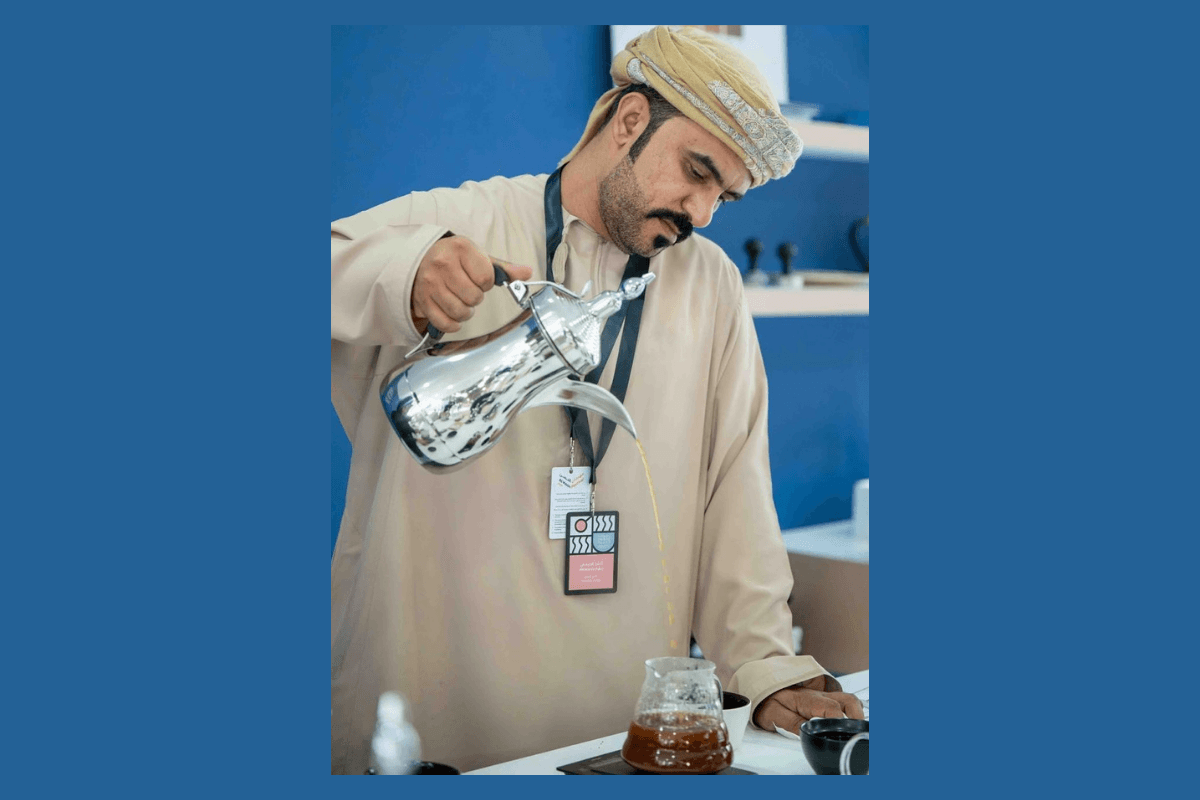
Coffee is more than just a drink for Ahmed Alhabsi; it’s a cultural journey that connects Oman’s heritage with the global coffee scene. As the founder of Historia Roastery and a certified coffee assessor, Alhabsi has built a career bridging tradition and innovation. From founding the Omani Coffee Championships to judging national and international competitions in Aeropress, Barista, Latte Art, and Roasting, his work emphasizes coffee as knowledge before it is a commodity. In this engaging interview, Ahmed Alhabsi shares his journey, philosophy on judging, and the secrets behind combining expertise with passion, inviting readers to explore his world of coffee.
- Who is Ahmed Alhabsi, and how did your journey with coffee begin?
I am Ahmed bin Amer bin Said Alhabsi, owner of Historia Roastery and a certified coffee assessor. I founded the Omani Coffee Championships and have served as a judge in Arab and international competitions in Aeropress, Barista, Latte Art, and Roasting. My interest extends to Omani coffee heritage, and I aim to elevate coffee as knowledge before it is merely a drink. My journey began with cultural curiosity: how did coffee move from social gatherings to become a global industry? That understanding led me to initiatives, assessment, and judging as tools to organize knowledge and maintain quality in coffee culture.
- What are the key standards for evaluating coffee quality?
Evaluation is an integrated process starting from origin, environment, and processing, through roasting, and culminating in balance in the cup. Flavor is important, but it is not everything; good coffee honestly expresses its source, without exaggeration or masking flaws. This is the standard I apply in all my assessments, whether at the roastery or while judging competitions.
- Does the Gulf palate tend toward fruity coffee?
Traditional tastes remain present, but they are part of a broader spectrum of flavors, reflecting greater consumer awareness. The problem only arises when this diversity is framed as a conflict between old and new, whereas it is truly a natural extension of earlier practices.
- How important is the “Certified Assessor” credential for a roastery owner?
The certification moves the roastery owner from individual effort to a standardized approach, allowing precise decisions in purchasing and roasting, which reduces quality fluctuations and builds consumer trust. Experience alone is not enough; methodology is what ensures consistency over the long term.
- What do judging panels look for?
Awareness is more important than skill. A person who knows their coffee and can clearly explain their choices delivers a complete experience. Technique is important, but without understanding, it becomes mere mechanical repetition without knowledge value.
- Has your practical experience, certifications, and participation in coffee competitions helped you as a judge?
Absolutely. It gave me a deeper understanding of the competitor’s experience under pressure, making judging more balanced and focused on the full experience rather than just the result. This experience allows me to appreciate the small details that make the difference between ordinary and exceptional performance.
- What are the most common mistakes among young coffee makers?
Relying on enthusiasm without solid knowledge. Enthusiasm is a positive factor, but it needs to be supported by continuous learning and precise practice, or decisions become unstable.
- How do you balance quality and economic viability at Historia?
Quality must be clear and understandable to the customer, without complexity or elitism. When consumers understand what they are getting, supporting the project becomes natural and sustainable. This is the secret to balancing quality with economic feasibility.
- What is your message through the media?
Coffee is a space for learning and dialogue, not a measure of superiority or a means of showing off. The goal is to raise consumer awareness and empower them to make independent and informed decisions.
- How can local roasteries enhance Oman and the Gulf’s global presence?
By building authentic knowledge content that connects the product to local identity and culture, presented with confidence and honesty. The world values the true quality of the product more than marketing or appearance alone.
- What is the golden rule for coffee lovers at home?
Focus on the quality of the beans and understand their characteristics before worrying about tools. This simple knowledge makes a big difference in the daily cup.
- How do you see the future of specialty coffee in the region by 2030?
I expect a more mature and aware phase, with projects continuing that treat coffee as a knowledge endeavor before a business, and the disappearance of projects that rely on appearance rather than substance.