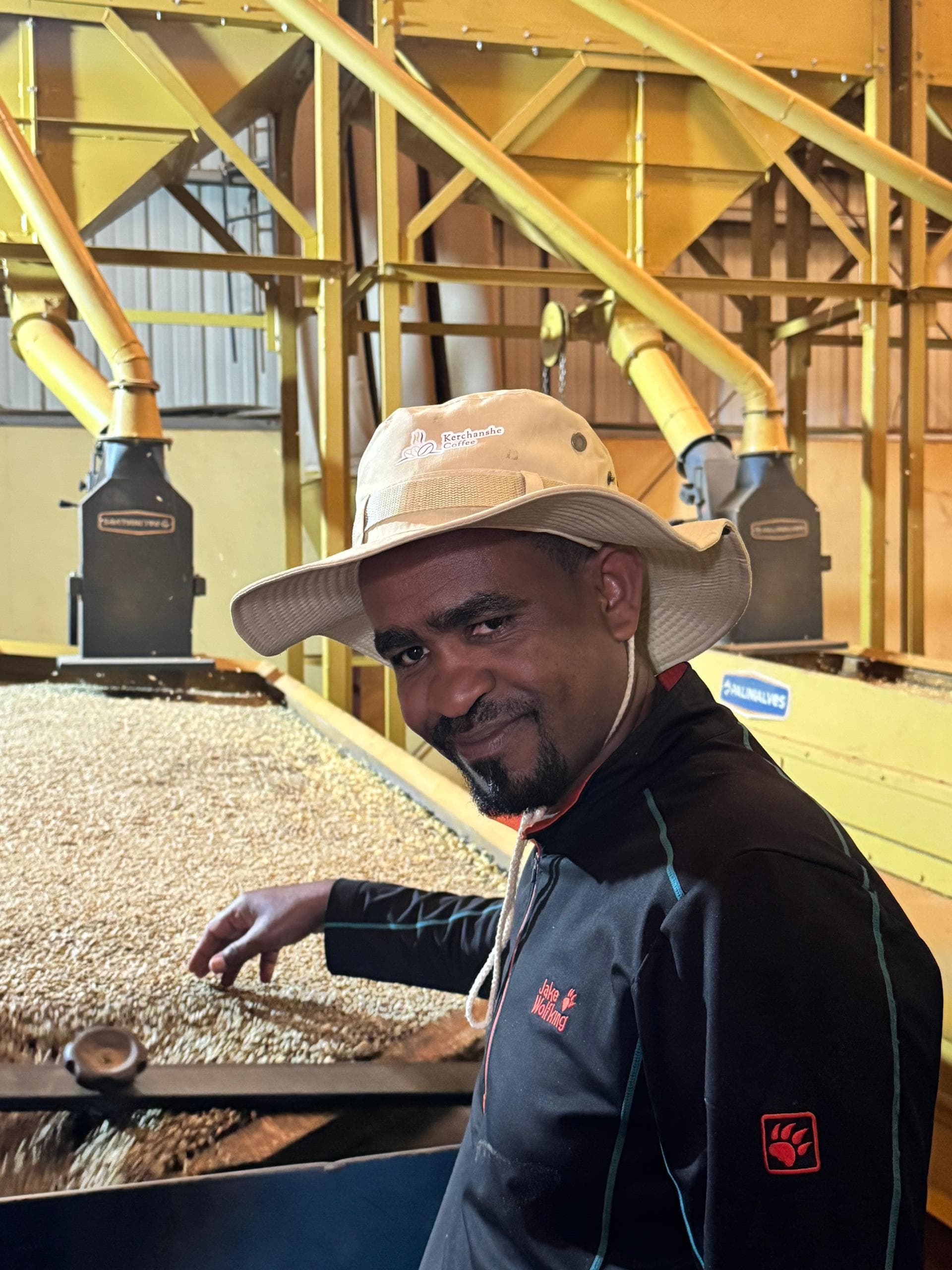
An interview with Musa Kedir CEO, Tourism Attraction and Product Development, Ministry of Tourism – Ethiopia
By Qahwa World × Buna Kurs
Coffee has long been Ethiopia’s most visible global export, yet its potential as a tourism experience remains largely untapped. While several coffee-producing countries have successfully transformed farms, processing sites, cupping rituals, and café culture into immersive visitor journeys, origin countries themselves have often underutilized this experiential dimension.
Ethiopia, the birthplace of Coffea arabica, holds a rare advantage. Coffee here is not only an agricultural product but a living culture—woven into daily life, social rituals, landscapes, and identity. Translating this depth into structured and sustainable tourism experiences represents one of the most promising frontiers for destination development.
During the Coffee Origins Trip (COT 2) organized by Kerchanshe and Oromia Tourism Commission, a diverse group of international buyers, roasters, social media storytellers, tourism executives, and sector leaders came together to experience Ethiopia’s coffee landscape firsthand. As part of this journey, Qahwa World and Buna Kurs sat down with CEO, Tourism Attraction and Product Development, Ministry of Tourism – Ethiopia, to discuss how coffee tourism fits into the national tourism agenda and what it will take to elevate coffee into a globally competitive tourism product.
Qahwa × Buna: How does the Ministry currently position coffee within the wider national tourism development agenda, and what opportunities do you see for formalizing coffee as a structured tourism product?
Musa Kedir: The Ministry has already recognized coffee as a key element within Ethiopia’s national tourism brand, “Land of Origins,” which positions the country as the birthplace of Coffea arabica. This recognition is also reflected in the revised National Tourism Development Policy, which explicitly emphasizes the development of niche tourism products.
Within this framework, coffee is viewed both as a core special-interest tourism product and as a supplementary experience that can enhance broader travel itineraries. This policy foundation creates strong opportunities to formalize coffee tourism through structured products, packages, and destination planning.

Qahwa × Buna: From a destination development perspective, what gives Ethiopia a unique competitive edge in coffee tourism compared to other producing countries?
Musa Kedir: Ethiopia’s advantage lies not only in having given the world Arabica coffee, but in the deep cultural attachment to coffee itself. Coffee in Ethiopia is an integral part of daily life.
The way Ethiopians prepare, serve, and share coffee reflects a living culture rather than a staged experience. This cultural intimacy is something no other coffee-producing country can replicate, and it provides Ethiopia with a uniquely authentic foundation for coffee tourism.
Qahwa × Buna: Which parts of the coffee value chain do you believe hold the strongest potential for experience design—farm level, processing, culture, heritage, gastronomy, trade, or a combination?
Musa Kedir: A combination of farm-level experiences, processing, culture, heritage, and gastronomy offers the strongest potential overall. Together, these elements allow visitors to understand coffee as a complete journey rather than a single moment.
Among these, a well-organized and customized combination of farm-level and processing experiences holds particularly strong appeal due to its uniqueness and attraction. These stages allow visitors to witness the transformation of coffee firsthand, which is central to meaningful tourism experiences.
Qahwa × Buna: Is the Ministry working on national guidelines, standards, or policy frameworks to support the growth of coffee tourism experiences such as farm tours, cupping sessions, processing visits, or heritage trails?
Musa Kedir: Based on the recognition of coffee as a potential niche tourism product, the Ministry has previously organized coffee-focused familiarization trips for media outlets and diplomatic communities.
More recently, recognizing the need for deeper strategizing, the Ministry has begun working with partners such as the Japan International Cooperation Agency (JICA) to identify Ethiopia’s major coffee-producing corridors. This work will support the development of well-organized coffee tour packages at the national level.
The Ministry also plans to organize a national coffee tourism awareness seminar that will bring together key stakeholders across the value chain, and it is working on comprehensive tourism destination and product development guidelines aligned with the revised tourism policy.

Qahwa × Buna: How does the Ministry view the role of major private-sector actors like Kerchanshe in shaping the future landscape of coffee tourism?
Musa Kedir: The Ministry has a strong belief in the vital role played by private-sector actors affiliated with the coffee industry.
This is why the Ministry collaborated in the recent coffee tour organized jointly by the Oromia Tourism Commission and Kerchanshe. Moving forward, the Ministry has also scheduled consecutive meetings with key coffee sector actors to facilitate brainstorming and discussions focused specifically on developing coffee for tourism.
Qahwa × Buna: What kinds of cross-sector collaborations are needed between tourism, agriculture, culture, trade, and regional governments to build a unified coffee tourism platform?
Musa Kedir: Because the coffee value chain is cross-sectoral by nature, it is critical for all stakeholders to reach a similar level of understanding in order to succeed in positioning coffee for tourism.
The Ministry is taking a catalyst role by creating platforms that bring stakeholders together and laying the foundation for strong collaborations that can endure into the future.
Qahwa × Buna: From what you have observed on this field visit so far, what strengths, innovations, or community stories stand out as directly translatable into tourism offerings?
Musa Kedir: The visit revealed that there are exemplary companies, such as Kerchanshe, that are aligned with national priorities to make coffee one of Ethiopia’s competitive tourism advantages.
These actors are taking the lead in showcasing meaningful experiences within their capacity. However, the visit also highlighted the need to further strengthen local community participation, improve readiness among local authorities, and better organize resources at the local level.
A shared understanding and collaboration among stakeholders is essential for the sustainable creation of a strong national coffee tourism culture.

Qahwa × Buna: How can coffee tourism support local community development, regional economies, and job creation across key coffee districts like Guji, Sidama, Yirgacheffe, Jimma, and Kaffa?
Musa Kedir: At present, coffee primarily serves its traditional commercial role. However, recent familiarization trips—particularly those led by Visit Oromia—have shown how tourism can be developed alongside existing coffee systems.
These initiatives can help create permanent economic advantages through tourism, including job creation and income diversification in key coffee-producing regions.
Qahwa × Buna: What narratives or storylines should Ethiopia prioritize when positioning itself internationally as the birthplace of coffee and a unique tourism destination?
Musa Kedir: It is critical to firmly engage in leveraging Ethiopia’s identity as the birthplace of coffee. Beyond that, creativity is required to transform everyday coffee culture into compelling tourism experiences.
Coffee culture in Ethiopia is deeply rooted and diverse across the country. Interpreting this heritage in a way that resonates with international travelers—both as a special-interest experience and as a complementary offering—is essential.
Narratives should focus on Ethiopia’s local coffee cultures and on organizing their interpretation into well-designed tourism products.
Qahwa × Buna: How does the Ministry plan to ensure that coffee tourism grows in an environmentally and culturally sustainable way?
Musa Kedir: The Ministry has only recently begun to systematically structure programs that position coffee for tourism. To ensure sustainability, it is preparing a comprehensive National Tourism Destination Development and Management Plan.
This plan will guide tourism development across the entire value chain, including coffee-related experiences, and will ensure environmental and cultural sustainability.

Qahwa × Buna: What level of investment or infrastructure development is required to elevate selected coffee-producing areas into international-standard tourism sites?
Musa Kedir: Most coffee corridors are already accessible, but as coffee tourism becomes more competitive, it will require basic infrastructure such as improved access within farms, accommodation facilities, and structured community collaboration.
While coffee farms are well organized for production, additional effort is needed to convert them into tourism experiences. This can best be achieved through collaboration among farm owners, government institutions, and tourism organizations.
Qahwa × Buna: What immediate next steps does the Ministry envision after this trip, and how might these insights shape upcoming MOT programs or national campaigns related to coffee?
Musa Kedir: The Ministry has already begun planning around coffee tourism and similar niche potentials. To ensure long-term and sustainable use, it will focus on redesigning model tourism packages that integrate coffee as both a special-interest experience and a complementary tourism offering.
These insights will directly inform upcoming Ministry programs and national tourism campaigns.