From regulatory hurdles like the EUDR to the volatile C-Market and climate resilience, the Director General of the International Coffee Organization (ICO) outlines a strategic roadmap for a fairer global coffee value chain.
Dubai – Ali Alzakary
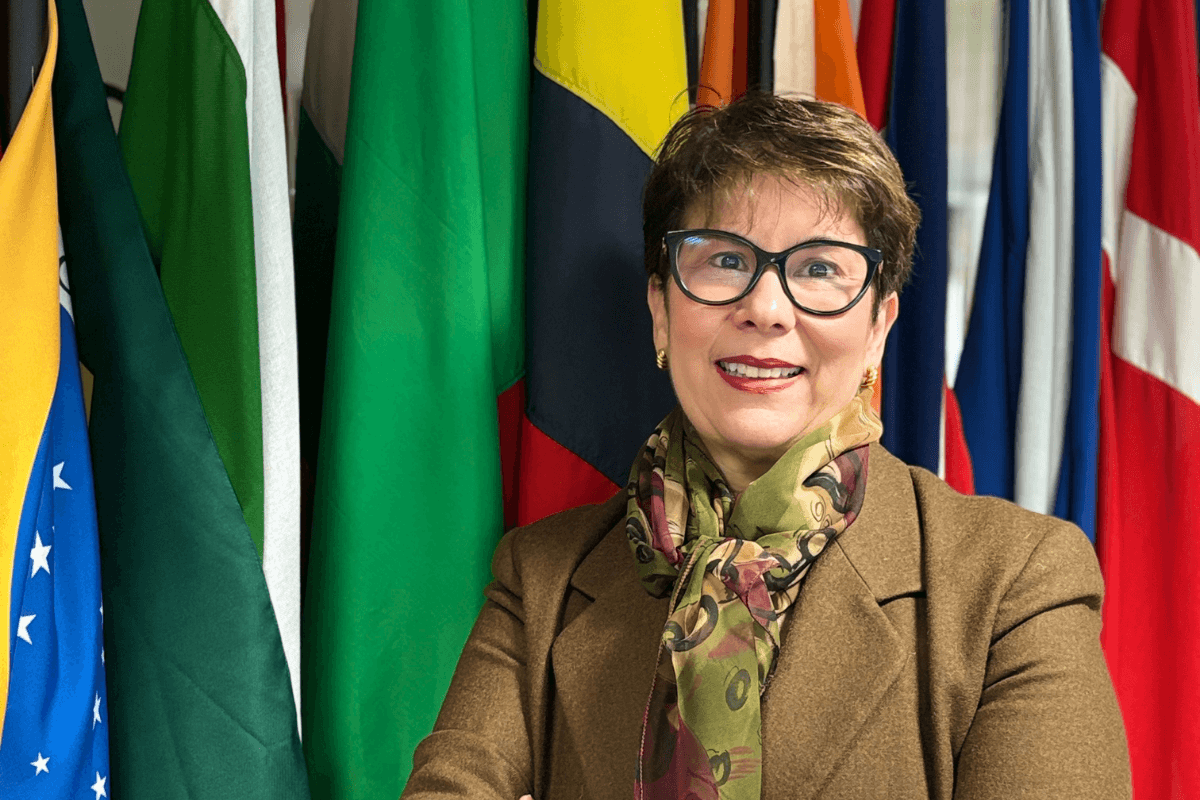
The International Coffee Organization (ICO) is the primary intergovernmental body dedicated to fostering a sustainable coffee sector. At its helm stands Mrs. Vanusia Nogueira, a visionary leader whose tenure has been defined by a relentless pursuit of equity for smallholder farmers.
This exclusive interview marks a historic moment—the first dialogue granted by the Director General to an Arabic media outlet. We are profoundly grateful to Mrs. Nogueira for graciously accepting our invitation. Beyond her professional stature, her humility and the sincerity with which she approached this conversation were truly remarkable. In an industry often characterized by formal diplomacy, her transparency and candor provided a clear and honest look at the challenges facing our sector. We are deeply indebted to her for her time, her precision, and the kindness she showed throughout this significant exchange.
- Now that we are well into 2026, how do you personally see the ICO’s role in helping smallholder farmers cope with regulations like the EUDR and other environmental requirements?
The ICO acts as a vital bridge between producing and consuming nations. With 75% to 80% of global coffee producers being smallholders, our role is to make policymakers understand the ground-level challenges. There is often a lot of good intentions behind regulations, but policymakers and consumers are often unaware of how difficult it is to comply in the field. We educate these stakeholders and bring together partners—governments, development agencies, and the industry—to provide the technical and financial support that vulnerable communities need to make these transitions feasible and viable.
- Traceability and data systems are becoming unavoidable. How can we ensure these costs don’t end up being paid mainly by small farmers?
We are building partnerships with the consuming side—the industry and governments—to support the infrastructure needed, from geolocations to databases. In many countries, the key issue is internal infrastructure, such as internet access. We are working with partners like the German, UK, and Italian governments to implement these systems. Furthermore, we need to educate consumers on why it is fair to pay a little more. Transparency is essential; we must show that these margins are necessary for producers to survive and thrive.
- Looking back at 2025, has the industry made progress toward a “living income,” or are we still stuck with the C-Market logic?
Vanusia Nogueira: The sector learned in the past two years that a living income is not just about price. It is about closing gaps in productivity, yield, and infrastructure like healthcare and education. While producers in some regions reached a comfortable level last year due to higher prices, others are still struggling. A key solution is for small producers to stop working in isolation; they must organize into cooperatives or associations to access new markets and technical assistance together.
- Regarding the climate impact on specific origins—in Yemen, for example, the harvest has become fragmented into multiple stages and quantities are dropping. How do you view this?
The situation in Yemen—where you have three or four harvests from the same tree instead of one—is a clear symptom of climate change that we must analyze deeply. We have seen similar shifts in Brazil. We need to understand if the traditional varieties in Yemen—which is one of the original homes of Arabica—are still suitable for this new climate or if we need to renovate the plantations with more resilient strains. Yemen’s heritage is a global priority, and scientists must work to find solutions that protect its unique productivity.
- There is a growing debate about responsibility. Are large roasters and traders doing enough today?
I see major roasters and traders working very closely with producing countries on “pre-competitive” actions to address these challenges. I am in constant contact with global industry leaders, and I am confident they are totally open to new solutions and are supporting the initiatives needed to stabilize the sector.
- How should the sector approach lab-grown and alternative coffee products without losing the value of natural coffee?
Vanusia Nogueira: Communication and clarity are paramount. It must be clear to everyone what is “real coffee” and what is a substitute. Natural coffee has scientifically proven health benefits, whereas the impact of chemical or artificial alternatives is often unmentioned. In countries like Brazil and Vietnam, regulations already exist to ensure that packaging for substitutes cannot claim to be “coffee.” We must continue to express why natural coffee remains superior for health and culture.
- Price swings have been extreme. What is actually driving this volatility?
It is a matter of a “short blanket”—supply and demand. Severe weather events since 2021—frosts in Brazil, droughts in Vietnam and Africa, and typhoons—have lowered production while consumption is surging, particularly in the Middle East and Asia. We are currently working with AI experts to create models that can better predict these events to help us protect production in the short and long term.
- Markets like the Middle East are now shaping their own identities. How does the ICO plan to engage with them?
The Middle East is a driver of the industry. Saudi Arabia became an official member of the ICO six months ago, and I visited Riyadh recently to touch base with the situation there. I also heard incredible things about the “World of Coffee Dubai” event two weeks ago—people told me it was a truly “crazy” and amazing event. We need to be present in these markets, working as partners to improve communication and support these maturing consumer bases.
- What role can consumer regions—including the Arab world—play in supporting producers beyond certifications?
The Arab world can play a strategic role as a “catalytic investor.” Beyond labels, their impact lies in investment, partnership, and system-building. They can help de-risk innovation and climate adaptation at the origin. By supporting logistics, research, and digital agriculture, they can help reshape how value and responsibility are shared across the sector.
- If you could speak directly to the global sector in 2026, what would you say needs to change most urgently?
Vanusia Nogueira: What needs to change most urgently is how risk and value are distributed. Today, smallholders absorb most of the impact of price volatility and climate change. Coffee must be treated not just as a commodity, but as a global public good. If producers earn a prosperous income, the entire sector becomes resilient. That change cannot wait.
- Editorial Highlights
“Coffee must be treated not just as a commodity, but as a global public good that supports livelihoods, ecosystems, and cultures.”
“Yemen is the cradle of Arabica; we must ensure that its historic coffee heritage survives the challenges of a changing climate.”
“The ‘World of Coffee Dubai’ was an amazing, high-energy event that proved the Arab world is now a central driver of the global coffee industry.”
“A living income is not just about prices—it is about productivity, healthcare, and education. Doubling prices is not enough if the foundation is missing.”
“We must be clear with consumers: natural coffee has scientifically proven health benefits that chemical substitutes simply cannot match.”
“The Arab world has the power to be a ‘catalytic investor,’ moving beyond labels to truly de-risk innovation at the origin.”