Dubai – Qahwa WORLD
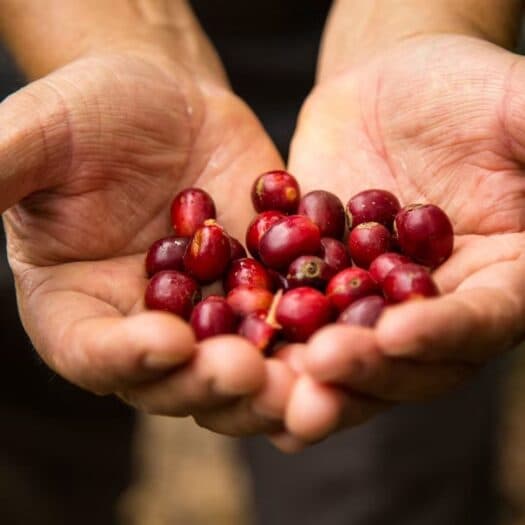
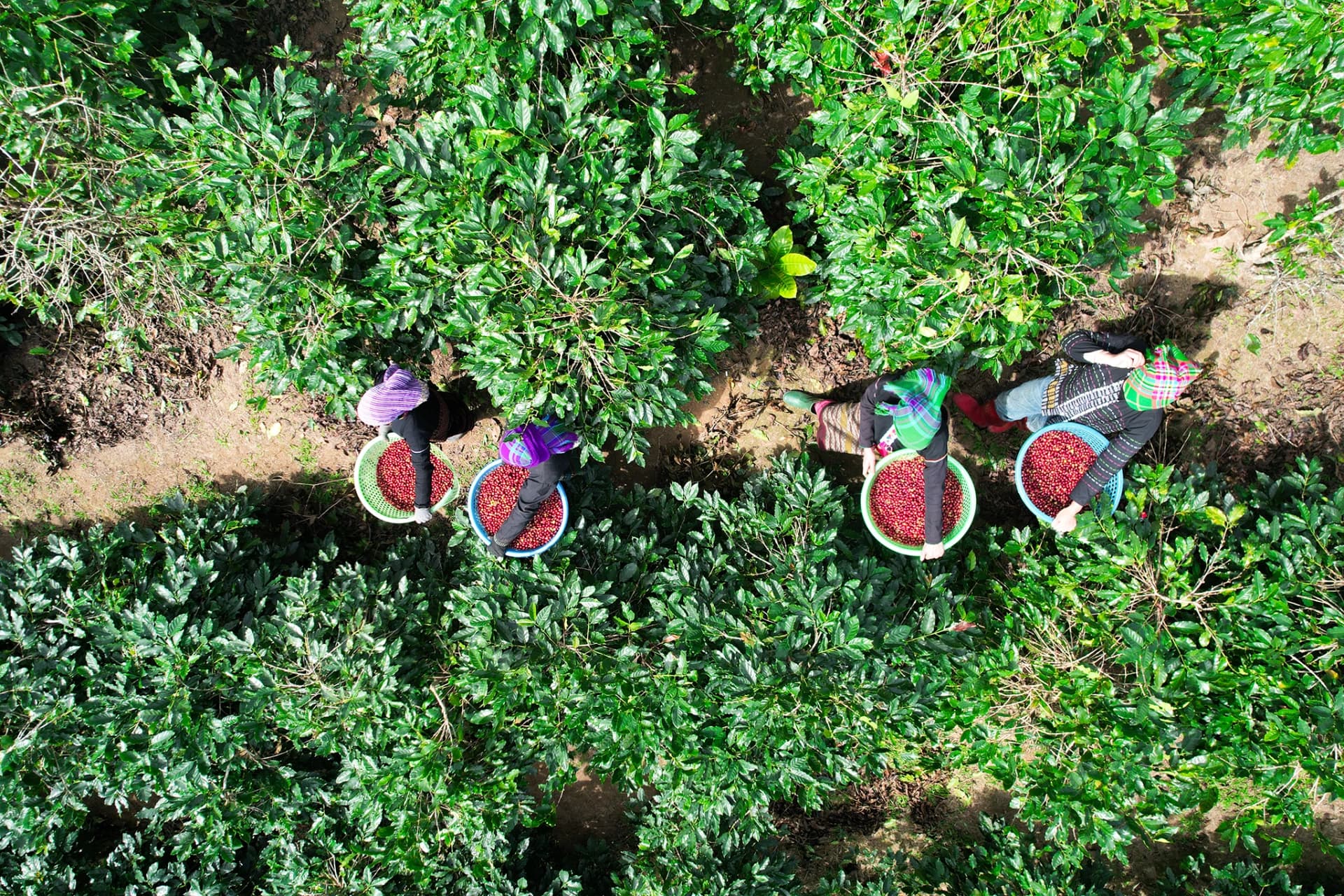
Starting every November, the coffee cherries in Quang Tri’s highlands reach full ripeness. On the rolling hills of Khe Sanh and Huong Phung, bright red Arabica cherries quietly release their rich aroma under the warm sunlight and gentle mountain winds, following the steps of local farmers from their fields to the villages. Each smile of a coffee picker captures a moment of the harvest season, where land, people, and coffee beans come together, telling a gentle story of a region growing stronger through its own fragrant bounty.
Lê Thị Phương Nhi, founder of BruLe Coffee, shared that 2025 was an exceptional year for Khe Sanh and Huong Phung coffee. Harvests were abundant, prices reached record highs, and yields were impressive—some areas produced as much as 25 tons per hectare.
In Xa Ry, coffee is gradually being cultivated organically, transforming from a common crop into a specialty product. This shift has significantly increased farmers’ income, with fresh coffee achieving the highest prices ever recorded, motivating further investments in quality and production expansion.
As the year draws to a close, coffee harvesting becomes a bustling activity across the coffee-growing communes of southwest Quang Tri. Nearly 4,000 hectares of coffee are in full production, and farmers are enthusiastic because this season offers the best yield and prices they have ever seen.
Phan Ngọc Long, Vice Chairman of Huong Phung Commune, reported that the commune has about 2,100 hectares of coffee ready for harvest. Average yields range from 8–10 tons of fresh cherries per hectare, with well-managed farms producing 15–20 tons per hectare. Coffee prices have soared to 24,000–27,000 VND per kilogram, enabling farmers to earn a net profit of 14,000–17,000 VND per kilogram after labor and other costs.
This year’s harvest also provides employment for thousands of seasonal workers, mainly from ethnic minority communities such as Van Kieu and Pa Ko. Daily wages range from 300,000–400,000 VND, giving workers stable income and improving livelihoods, especially at the end of the year.
Local authorities support farmers through marketing partnerships, ensuring transparency in quality and pricing, and preventing fraud. In the fields, the pride of women carefully tending specialty coffee beans is visible in every smile. Coffee cherries are meticulously sorted to ensure premium quality from the very first step.
Huong Phung Arabica is processed through strict procedures: from initial sorting, drying in solar greenhouses, to roasting with modern machinery. Each stage requires precision to preserve the coffee’s elegant aroma, mild acidity, and characteristic sweet finish. Roasted beans emit a captivating fragrance—a harmonious result of earth, climate, and human hands.
This is the unique taste of Huong Phung and Quang Tri, steadily claiming its place on Vietnam’s specialty coffee map.
Khe Sanh and Huong Phung coffee did not reach this success overnight. In previous years, low prices forced many farmers to abandon or replace coffee crops. Between 2010–2015, substantial areas of coffee were cleared for other plants. Today, specialty coffee provides sustainable livelihoods and creates a new path toward green agriculture.
Khe Sanh is no longer just remembered for its turbulent past; it is now recognized as the cradle of Central Vietnam’s Arabica specialty coffee. On hills over 500 meters above sea level, in a year-round mild climate, coffee trees thrive, carrying the aspirations of local highland communities.
Harvesting is done manually with careful selection, ensuring only perfectly ripe cherries are picked—a key factor in producing specialty coffee. According to Lương Thị Ngọc Trâm from Pun Coffee Co., Khe Sanh and Huong Phung’s natural conditions favor Arabica and Catimor varieties. Despite the basin-like terrain not being ideal, the wide day-night temperature difference of 7–9°C allows Arabica to thrive, creating Vietnam’s most distinctive coffee. The tropical monsoon climate, average temperature of 22°C, annual rainfall of 2,262mm, and abundant water resources from lakes, rivers, and streams contribute to high yields and quality.
To promote high-quality Vietnamese coffee globally, the Ministry of Agriculture and Rural Development approved the Vietnam Specialty Coffee Development Project (2021–2030), including Quang Tri. Coffee acreage in the province is projected to expand from 11,500 hectares (2021–2025) to 19,000 hectares (2026–2030), representing a growing share of national production.
During harvest season, the hills of Khe Sanh and Huong Phung come alive with activity. Women in traditional Van Kieu and Pa Ko attire carefully pick the bright red cherries. Handpicking and meticulous selection are crucial steps in producing specialty coffee.
Today, Khe Sanh and Huong Phung coffee is more than an agricultural product—it symbolizes revival, resilience, and the determined spirit of a community rising from a land once scarred by hardship. Among the fragrant hills, Arabica beans narrate a story of Quang Tri: a story of land, people, and a sustainable, hopeful future.