New York – Qahwa World
A new analysis by Climate Central (an independent group of scientists and communicators that studies and reports on climate change and its impacts on people’s lives, operating as a policy-neutral nonprofit) is raising a clear warning for the global coffee industry.
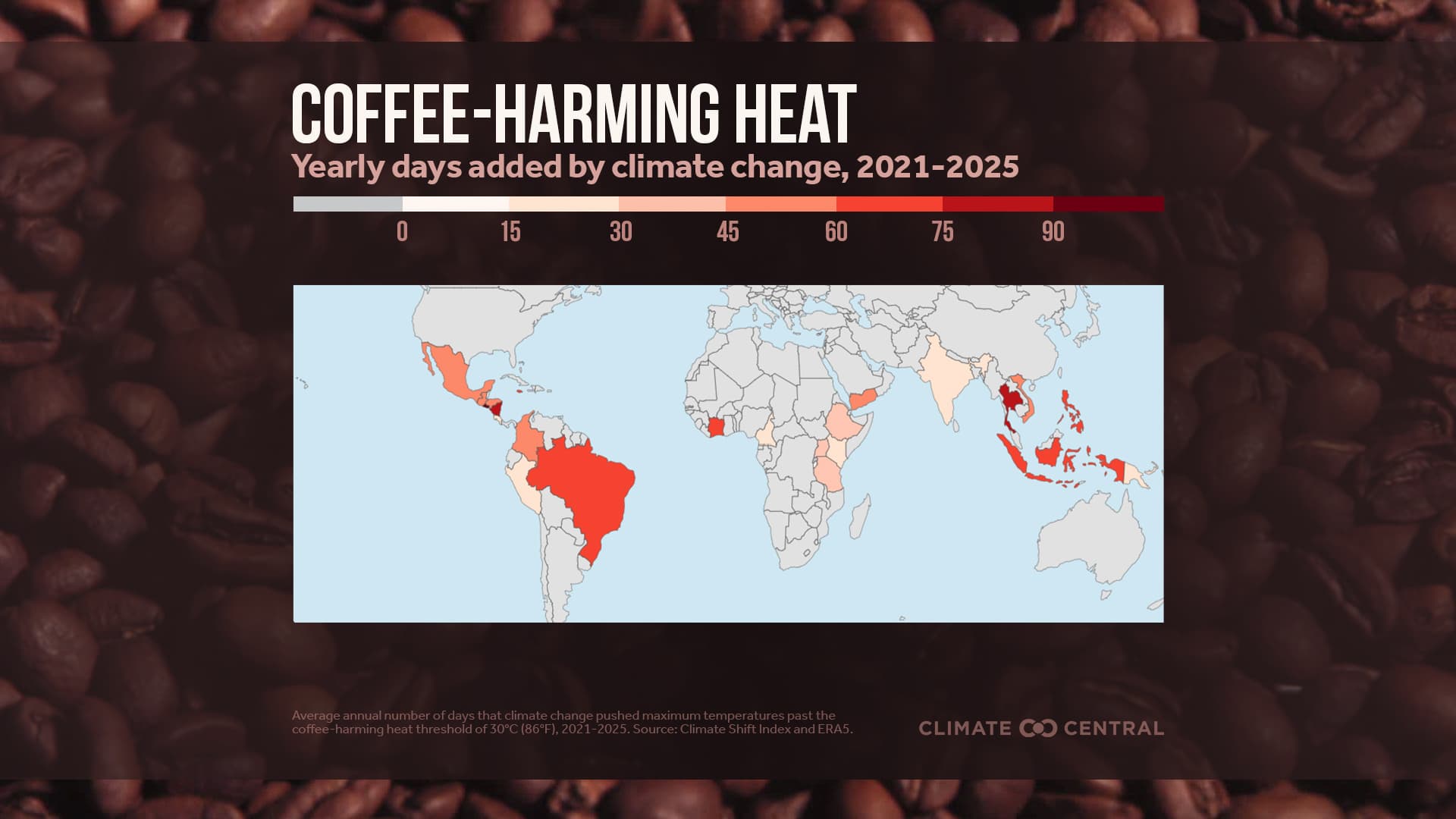
Data shows that coffee-growing regions across Latin America, Africa, and Southeast Asia are experiencing rising temperatures at an accelerated pace, faster than at any time in the modern agricultural era. An analysis of daily temperatures across coffee-producing areas reveals that plants are increasingly exposed to heat levels beyond their natural limits, placing significant pressure on yields, bean quality, and farm sustainability.
The findings indicate that extreme heat events exceeding critical thresholds for coffee plants are becoming more frequent in major producing countries such as Brazil, Colombia, Vietnam, Ethiopia, and Indonesia. These conditions are negatively affecting both major types of coffee, including those known for higher quality and those considered more resilient, impacting both quantity and quality of production.
This trend is occurring alongside broader climate instability, including irregular rainfall patterns and longer periods of drought. Farmers are reporting noticeable disruptions in flowering seasons, faster development cycles, and sudden weather shifts that damage flowers and coffee cherries. These changes make it increasingly difficult to predict key production stages and raise the risks of lower yields and soil stress.
View this post on Instagram
The impact is not limited to farms. It is also affecting global markets, where reduced harvests have led to sharp price volatility. These conditions have contributed to elevated coffee prices in recent periods, driven by tighter supply and growing uncertainty in the market.
The analysis also points to a possible shift in coffee-growing geography, with production gradually moving toward higher elevations or areas previously considered unsuitable. While this may create new economic opportunities, it also poses environmental risks, particularly deforestation as farming expands into cooler and ecologically sensitive regions.
At the same time, experts stress the importance of adaptation. Proposed solutions include the use of shade trees, improving soil health, adjusting farming practices, and supporting smallholder farmers to strengthen their resilience to rising temperatures. There is also a strong emphasis on adopting long-term strategies rather than short-term fixes.
The message is clear. Coffee-growing regions around the world are entering a period of profound climate change. Adaptation is no longer optional. It is becoming a decisive factor in determining the future of coffee production and its sustainability in the years ahead.