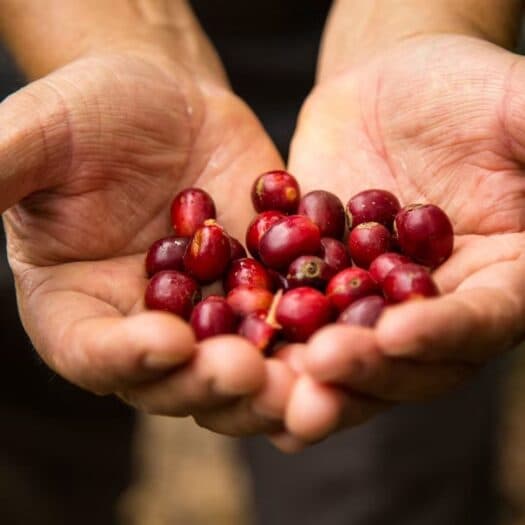
Coffee Returns to Bullish Mode After 49% Rally
- ICE Arabica coffee futures surged 49.5% in one month, erasing four months of declines.
- The rally followed a 37.8% drop from January to June, with prices bottoming at $2.3885 per pound.
- Brazil’s 2026/27 harvest is behind schedule due to heavy rain disrupting operations.
- ICE Arabica exchange inventories reached a two-year low of 366,756 bags.
- Emerging El Niño weather patterns could damage Brazil’s flowering and crop.
- Brazilian farmers are withholding beans, storing them for sale at higher prices.
- Key resistance is at the October 2025 record high of $4.3795 per pound.
Coffee futures are back in bullish mode. ICE Arabica coffee surged 49.5% over the past month. The rally erased four months of declines. Prices bottomed at $2.3885 per pound on June 9. On July 6, they reached $3.5700 per pound.
The volatility has been extreme. Coffee futures fell 37.8% from January to June. Then they made up all those losses in under one month. The market remains highly volatile with significant upside potential.
Why Is Coffee Back in Bullish Mode?
Several factors are driving the rally. First, Brazil’s 2026/27 harvest is behind schedule. Heavy rain has disrupted harvesting operations. This has increased concerns about coffee bean quality. The prospects for lower Brazilian output have been bullish for prices.
Second, global inventories are low. ICE Arabica exchange inventories reached a two-year low of 366,756 bags. This creates the potential for supply squeezes. Third, production costs are rising due to stubborn global inflation.
| Country | Share of Global Production |
|---|---|
| Brazil | 37.08% |
| Vietnam | 16.54% |
| Colombia | 8.44% |
| Ethiopia | ~4% |
| Indonesia | ~4% |
Brazil’s Dominance and Harvest Issues
Brazil is the world’s leading coffee producer. It accounts for 37.08% of global production. This is nearly as much as the next four countries combined. Vietnam, Colombia, Ethiopia, and Indonesia produce a combined 37.41%.
Brazil’s 2026/27 harvest is behind schedule. Heavy rain disrupted the harvest. This increased concerns that coffee bean quality had declined. The prospects for lower Brazilian output have been bullish for ICE Arabica coffee futures prices.
El Niño Risks and Farmer Stockpiling
The emerging El Niño weather pattern could trigger extreme temperature shifts. Irregular precipitation could damage coffee tree flowering. This could negatively impact the overall Brazilian crop. These concerns are pushing prices higher.
Brazilian farmers have begun withholding beans. They are storing them for sale when prices rise. This behavior further tightens supply. It also adds upward pressure on prices.
Technical Levels to Watch
The coffee futures market has clear technical levels. The record high stands at $4.3795 per pound from October 2025. This is the key resistance level. Technical support sits at the May 2025 low of $2.3885 per pound.
At $3.16 per pound on July 7, coffee futures were below the midpoint. However, they had traded above it on July 6. There is significant room for volatile price swings between these levels.
| Level | Price (per pound) |
|---|---|
| Record High (October 2025) | $4.3795 |
| Current Price (July 7, 2026) | $3.16 |
| Recent Low (June 9, 2026) | $2.3885 |
| Historical Support (May 2019) | $0.876 |
Futures and Options Trading
There are no ETFs that track coffee prices. Participation is limited to ICE futures and futures options. Each futures contract contains 37,500 pounds of Arabica coffee. At $3.28 per pound, the contract value is $123,000.
Traders can control this value with an original margin deposit of $23,227. This represents 18.9% of the contract value. Recent volatility caused margin requirements to rise from 7.9% of contract value. The exchange can change margin requirements based on market volatility. Wider price swings lead to higher margin requirements.
ICE offers put and call options on Arabica coffee futures. Long options involve paying a premium and are not subject to margin requirements. Short options require margin. The leverage is significant for market participants.
Risk Management Is Essential
Coffee is back in bullish mode in July 2026. This will likely increase trading activity. It could also lead to wide price swings. Any risk position in ICE Arabica coffee requires a risk-reward plan. Traders should use stops and profit horizons. This protects capital and establishes reasonable odds of success.