Coffee Prices Sharply Higher as Brazil’s Harvest Is Delayed
- September arabica rose 3.43% and robusta gained 1.12% on Monday.
- 32.4 mm of rain fell in Minas Gerais last week—2,700% above the historical average.
- Brazil’s 2026/27 harvest is only 64% complete, behind last year’s 77% and the 70% average.
- ICE arabica inventories fell to a 2.5-year low of 292,810 bags.
- USDA forecasts record global production of 189.7 million bags for 2026/27.
- El Niño risks continue to support prices with potential impacts on Brazil’s flowering.
- ICE robusta inventories climbed to a 4.25-month high of 4,254 lots.
Coffee prices settled sharply higher on Monday. September arabica closed up 10.75 cents, gaining 3.43%. September robusta closed up 42 points, a rise of 1.12%. The surge came amid concerns that heavy rain in Brazil will further disrupt the coffee harvest.
Somar Meteorologia reported 32.4 mm of rain in Minas Gerais for the week ended July 26. This represents 2,700% of the historical average. Minas Gerais is Brazil’s biggest coffee-growing region.
Harvest Delays Support Coffee Prices
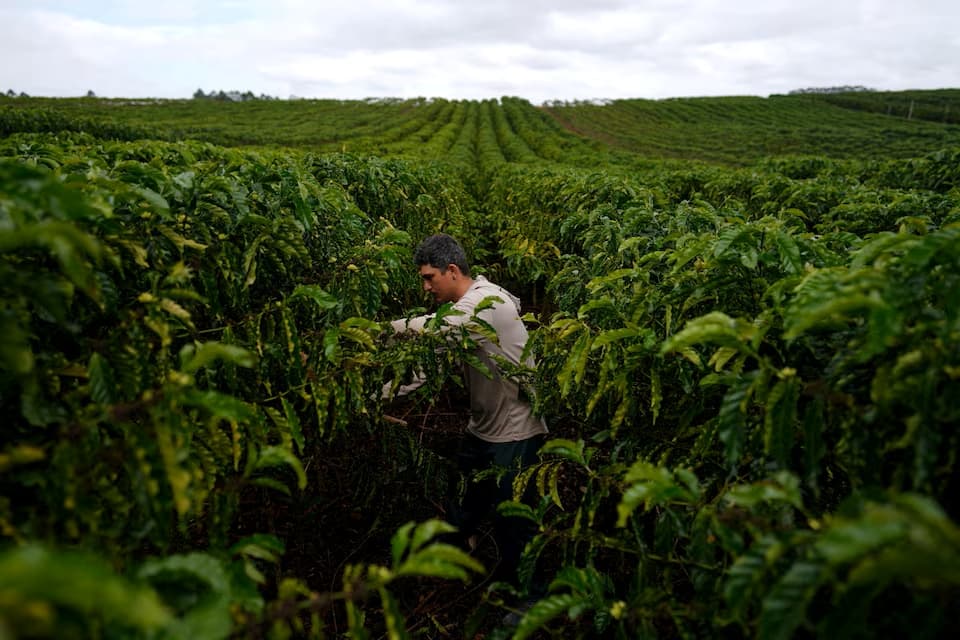
The slow pace of Brazil’s coffee harvest is supporting prices. Harvest among members of Cooxupe co-op was 47.3% complete as of July 17. This is behind the year-earlier pace of 59%. On July 17, Safras & Mercado reported Brazil’s 2026/27 coffee harvest was 64% complete as of July 15. This compares with 77% at the same time last year. The five-year average stands at 70%.
Heavy rainfall in recent weeks has disrupted harvesting operations. Coffee quality may also be affected. Brazilian farmers continue to hold back sales, hoping for higher prices.
| Indicator | Value |
|---|---|
| Cooxupe harvest (as of July 17) | 47.3% |
| Cooxupe year-earlier pace | 59% |
| Brazil overall (as of July 15) | 64% |
| Previous year (July 15) | 77% |
| Five-year average (July 15) | 70% |
| Rainfall in Minas Gerais (week ended July 26) | 32.4 mm (2,700% of average) |
USDA Forecast and Market Reaction
Last Friday, coffee prices tumbled to 3-week lows. This followed the USDA’s forecast last Wednesday that global coffee output in the 2026/27 season will rise by 6.0% to a record 189.7 million bags. The increase is mainly due to improved growing conditions in Brazil.
The USDA expects global arabica production to rise 12% year-on-year. However, robusta production is expected to fall by 0.7%. World ending stocks are expected to rise by 1.9 million bags to 26.3 million bags. On June 3, the USDA’s Foreign Agricultural Service forecast a record Brazil coffee crop of 71.9 million bags for 2026/27, up 14% year-on-year.
| Factor | Impact | Details |
|---|---|---|
| Brazil rainfall | Bullish | 32.4 mm rain, 2,700% above average, disrupting harvest |
| Harvest progress | Bullish | 64% complete vs. 77% last year and 70% average |
| Arabica inventories | Bullish | 2.5-year low of 292,810 bags |
| USDA production forecast | Bearish | Record 189.7 million bags globally |
| Robusta inventories | Bearish | 4.25-month high of 4,254 lots |
| El Niño risks | Bullish | Potential impact on flowering in September-October |
Inventory Trends Support Arabica, Weigh on Robusta
Rising inventories are weighing on robusta coffee. ICE robusta inventories climbed to a 4.25-month high of 4,254 lots last Wednesday. They were mildly below that level at 4,228 lots on Monday.
By contrast, a bullish factor for arabica coffee prices was that ICE arabica coffee inventories fell to a 2.5-year low of 292,810 bags on Monday. This tight supply situation supports higher arabica prices.
El Niño Concerns Support Prices
Concerns about an El Niño weather pattern are bullish for prices. Coffee trader Commercial warned that El Niño may delay rains in Brazil. This September and October is when tree flowering normally occurs. Any delay could hurt Brazil’s 2026/27 coffee crop.
On July 8, the US Climate Prediction Center issued a warning. The El Niño pattern that emerged across the equatorial Pacific last month will likely be one of the strongest in more than 75 years. This sets the stage for possible floods, droughts, and temperature fluctuations later this year. These conditions could hinder coffee production in Asia and South America.
Bearish Factors to Consider
Despite the bullish momentum, several bearish factors exist. Soaring coffee exports from Vietnam are bearish for robusta prices. On July 3, Vietnam’s National Statistics Office reported Vietnam’s 2026 coffee exports from January to June rose 7.3% year-on-year to 1.05 million metric tons. Vietnam’s 2025 coffee exports jumped 17.5% to 1.58 million metric tons. Production for 2025/26 is projected to climb 6% to a four-year high of 1.76 million metric tons.
The USDA’s record production forecast also weighs on the market. However, the supply tightening due to harvest delays and El Niño risks may offset these bearish factors.
Frequently Asked Questions
How much did coffee prices rise on Monday?September arabica gained 3.43% and September robusta rose 1.12% on Monday, July 27.
What is driving the price increase?Heavy rain in Brazil’s Minas Gerais region—32.4 mm, 2,700% above average—is disrupting the coffee harvest and tightening supplies.
What is the status of Brazil’s coffee harvest?Brazil’s 2026/27 harvest is 64% complete as of July 15, behind last year’s 77% and the 70% five-year average.
What are ICE coffee inventory levels?Arabica inventories fell to a 2.5-year low of 292,810 bags, while robusta inventories climbed to a 4.25-month high of 4,254 lots.
What does the USDA forecast say?USDA forecasts record global production of 189.7 million bags for 2026/27, up 6% from the previous year, led by Brazil’s recovery.
How does El Niño affect coffee prices?El Niño could delay rainfall during Brazil’s critical flowering period in September-October, potentially reducing crop yields and supporting prices.