Author: Qahwa World
Source: Hanns R. Neumann Stiftung (HRNS) – ICP 25th Anniversary Report
Date: July 23, 2026
ICP 25 Years: Building Resilience in Coffee Communities Worldwide
Executive Summary
- Over the past 25 years, the International Coffee Partners(ICP) has shifted from working in many countries to building deeper, long-term engagement in six regions: Brazil, Ethiopia, Honduras, Indonesia, Tanzania and Uganda.
- ICP has reached over 116,000 households across these regions, supported by more than 250 HRNS staff worldwide.
- In Indonesia, 19,406 households have been reached. Farming households reached 77% of a living income in 2024, up from 39% in 2021.
- In Uganda, 38,691 households have been reached. Women represent over 50% of training participants, and youth participation more than doubled from 10% to 26% in 2025.
- In Ethiopia, the CAFE project reached 3,029 households, with productivity increasing nearly 70% between 2020 and 2025.
- In Tanzania, 44,291 households have been reached. By 2025, 92% of farming families were food secure.
- In Brazil, 4,760 households have been reached. In 2025, 76% adopted good agricultural practices and 72% kept farm records.
- In Honduras, 9,892 households have been reached. Women hold 42% of cooperative leadership positions, and youth participation reached 33% in 2025.
The International Coffee Partners(ICP) is celebrating 25 years of working with coffee-farming families. Over this period, the program has shifted its approach significantly. It moved from working in many countries to building deeper, longer-term engagement in six key regions: Brazil, Ethiopia, Honduras, Indonesia, Tanzania and Uganda.
Hanns R. Neumann Stiftung (HRNS) implements and manages all ICP projects. The organization supports this work through country and regional offices. More than 250 staff worldwide provide the local presence needed to translate ICP’s long-term commitment into practical support on the ground.
Across these regions, ICP activities have taken different forms. The approach varies depending on local realities, priorities, and opportunities. However, one shared goal remains constant: strengthening the livelihoods of coffee-farming families.
Indonesia: From Second-Class Coffee to Stronger Coffee Systems
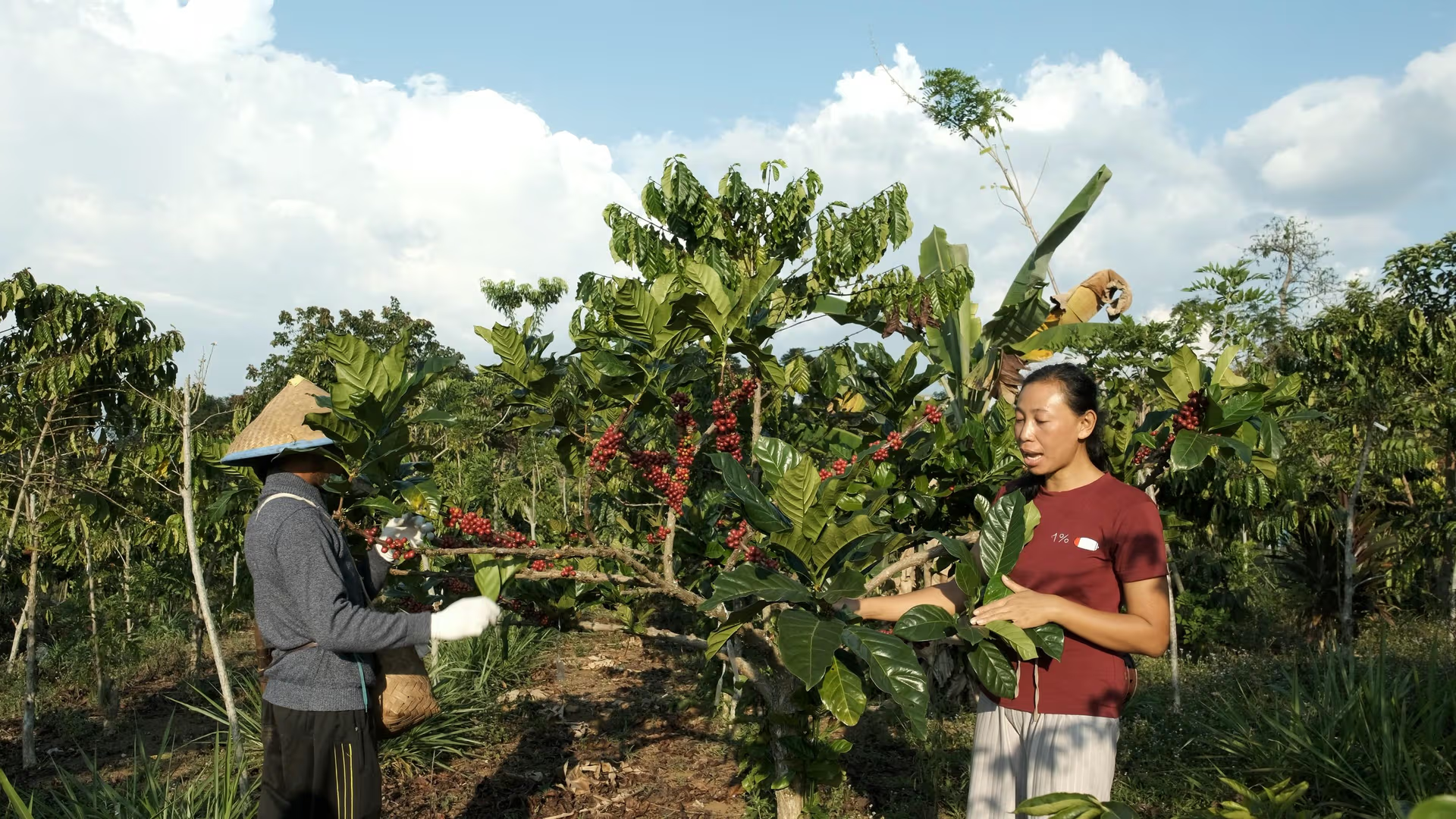
In South Sumatra, ICP has helped transform a region where coffee was once seen as second-class. When project activities began in 2014, productivity was low and few companies were willing to source directly from farmers or cooperatives.
Arman Ginting, Co-Country Manager at HRNS in Indonesia, describes the change: “Today, the situation has changed fundamentally.” He explains that ICP acts as an enabler of systemic change that works across the value chain. The program is driven by support for good agricultural practices, quality management, and market linkages.
Over time, farming families focused on improving existing land rather than expanding it. This approach has achieved higher yields and better quality. At the same time, diversification into fruit trees, chili, and other crops has strengthened household resilience.
Women’s economic role has become more visible. In 2025, women made up 46% of participants in ICP trainings in Indonesia. So far, ICP has reached 19,406 households in the country.
By 2025, 32% of farmers kept farm records. 29% had adopted good agricultural practices, and 33% were applying climate-smart practices. As a result, farming households reached an average of 77% of a living income in 2024, up from 39% in 2021.
Uganda: Change Begins at Household Level
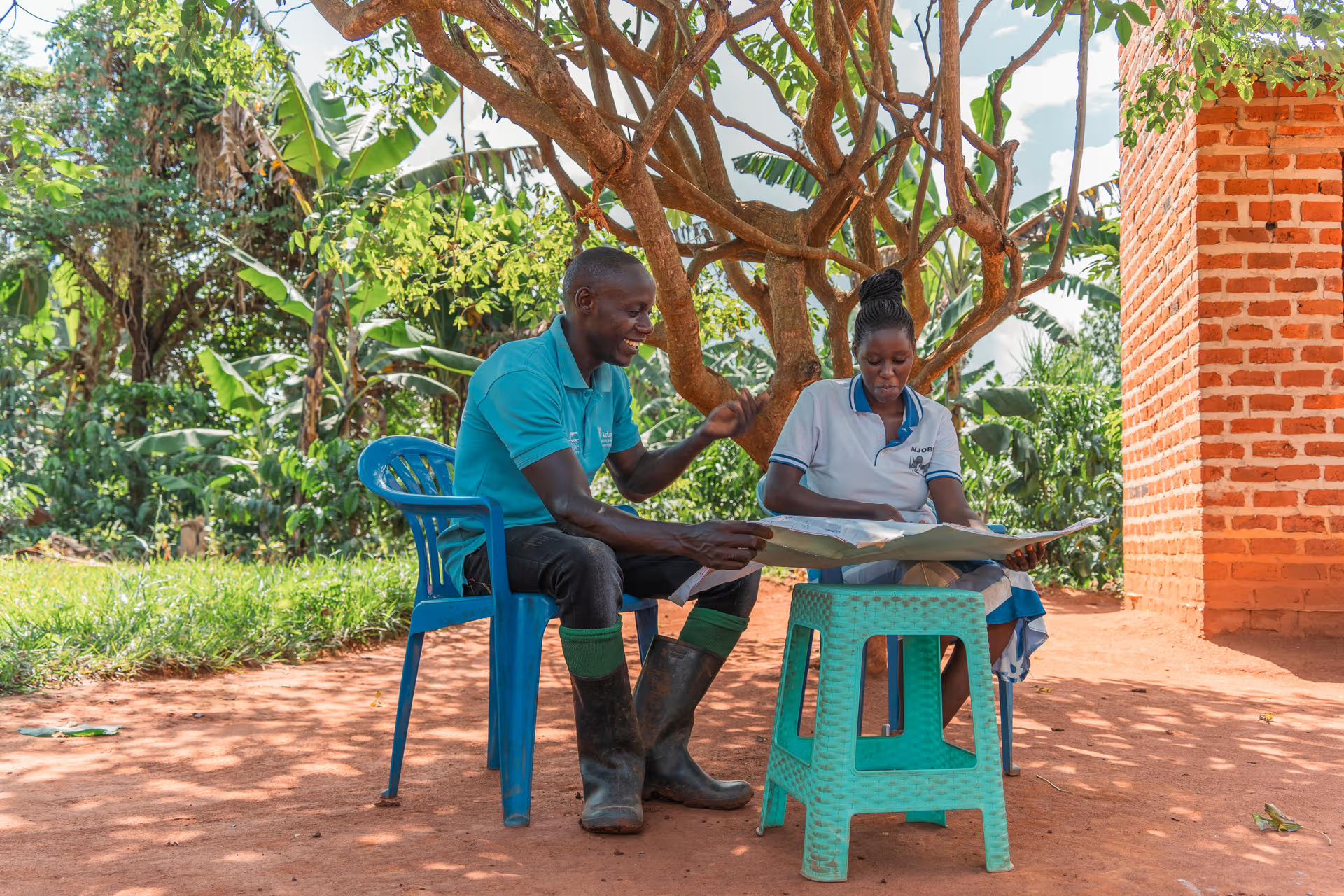
In Uganda, ICP’s work has shown how much can change when families plan and decide together. Since 2004, the focus has increasingly been on gender equality, youth empowerment, diversification, and climate resilience.
Victor Komakech, Climate Change Coordinator at HRNS Uganda, highlights one key achievement. The Gender Household Approach has been “one of the program’s most significant achievements.” By encouraging joint planning and decision-making, it has laid the foundation for more inclusive and sustainable household development.
This progress is also reflected in participation. In 2025, more than 50% of participants in ICP trainings in Uganda were women. This is the highest rate across all ICP regions.
At the same time, youth farmer field schools and innovation groups have helped young people build skills and start rural businesses. Youth participation in ICP projects more than doubled from 10% in 2024 to 26% in 2025. This was supported by the deliberate involvement of young people as demonstration plot holders and group leaders.
So far, ICP has reached 38,691 households in Uganda. By 2024, households had reached an average of 46% of a living income, up from 15% in 2021.
Ethiopia: An Integrated Approach to Stronger Livelihoods
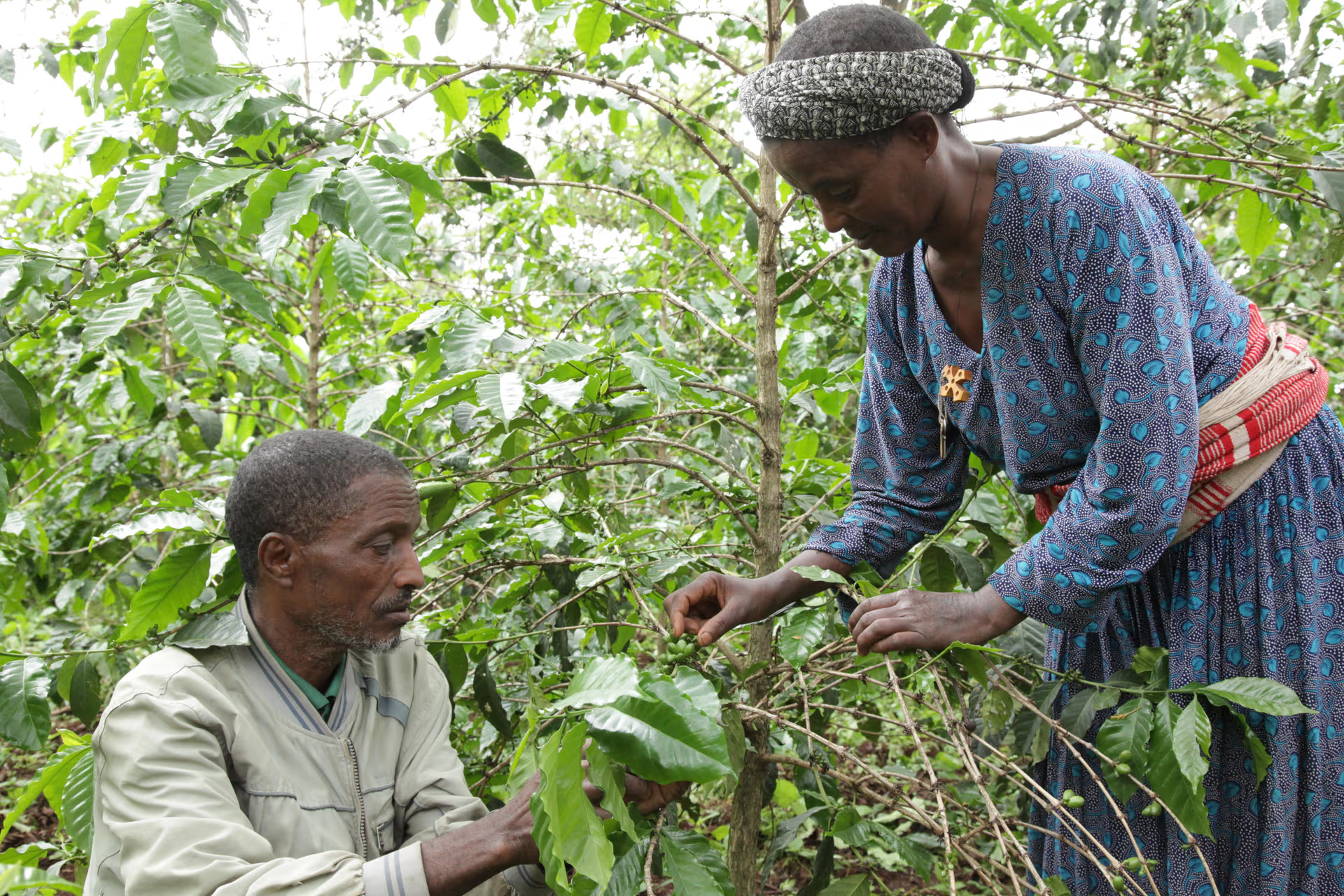
In Ethiopia’s Amhara region, the CAFE (Coffee Alliances for Ethiopia) project demonstrates the power of integrated support. Since 2019, ICP has reached 3,029 households through an approach that combines better farming practices with climate adaptation, stronger cooperatives, gender equality, youth opportunities, and more diversified livelihoods.
Rahel Adugna, Co-Country Manager HRNS Ethiopia, explains the project’s significance. The CAFE project has “evolved into a pioneering initiative in the region” by bringing these elements together in one coherent framework.
By 2024, 95% of participants had adopted good agricultural and climate-smart practices. This contributed to an increase in productivity by nearly 70% between 2020 and 2025. At the same time, home gardens, nurseries, and other livelihood activities significantly improved food security and resilience.
Tanzania: From Shared Knowledge to Stronger Livelihoods
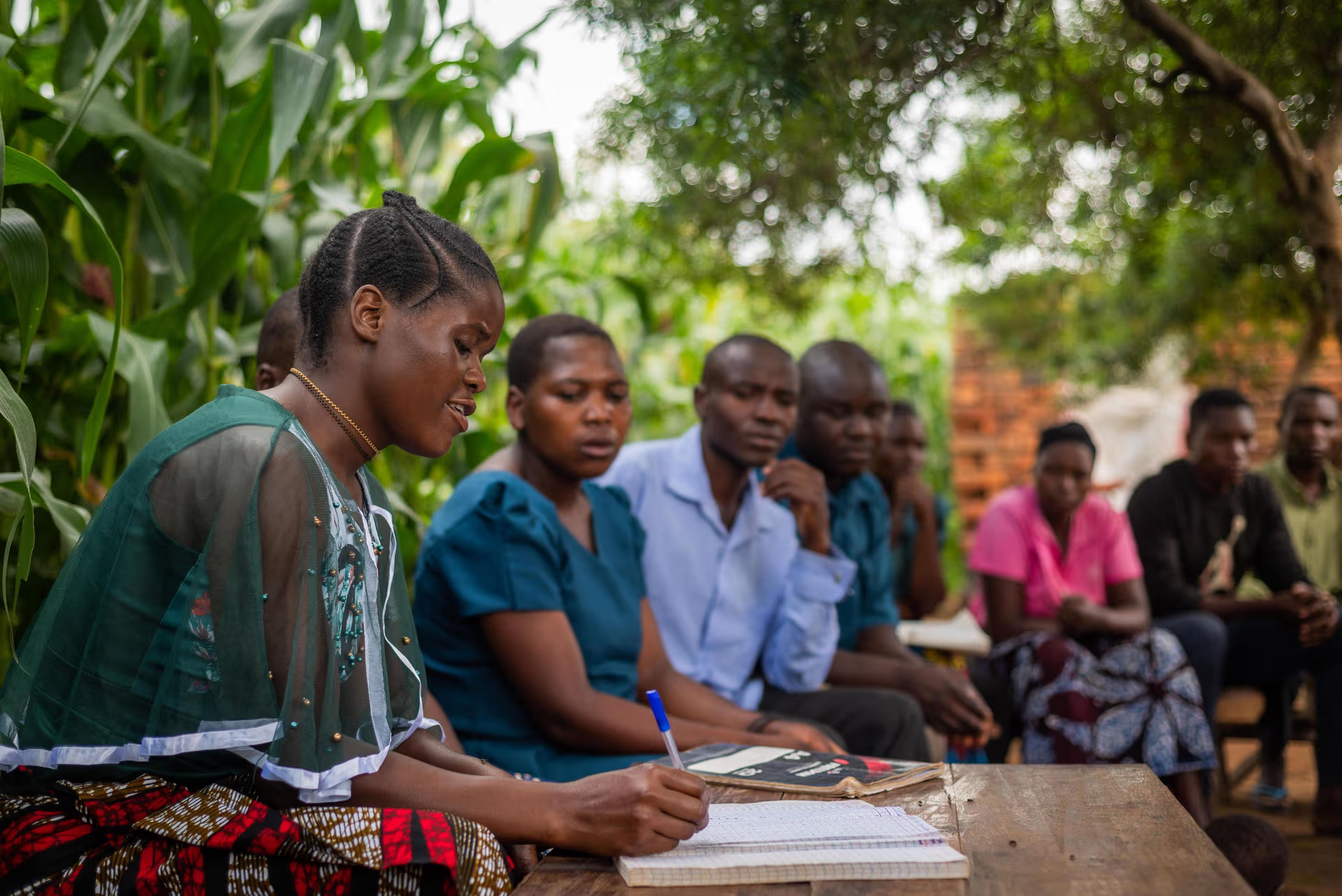
In Tanzania, ICP has helped turn knowledge-sharing into a lasting local resource. Since 2006, it has reached 44,291 households across northern and southern Tanzania.
Godfrey Wilgod, Climate Change and Agronomy Coordinator for ICP in Tanzania, points to a particular strength. “One particular strength has been the establishment of sustainable extension services.” Farmer-to-farmer approaches, such as Farmer Field Schools, have been especially effective.
In Mbeya and Songwe, this is reinforced by Youth Farmer Field Schools. These programs help young people build practical skills and shape the future of farming. Combined with climate-smart agriculture, agroforestry, women’s empowerment, and stronger farmer organizations, this has supported more resilient livelihoods.
By 2025, 92% of farming families were food secure. In 2024, farming households reached an average of 48% of a living income, up from 28% in 2022.
Brazil: From Producing More to Managing Better
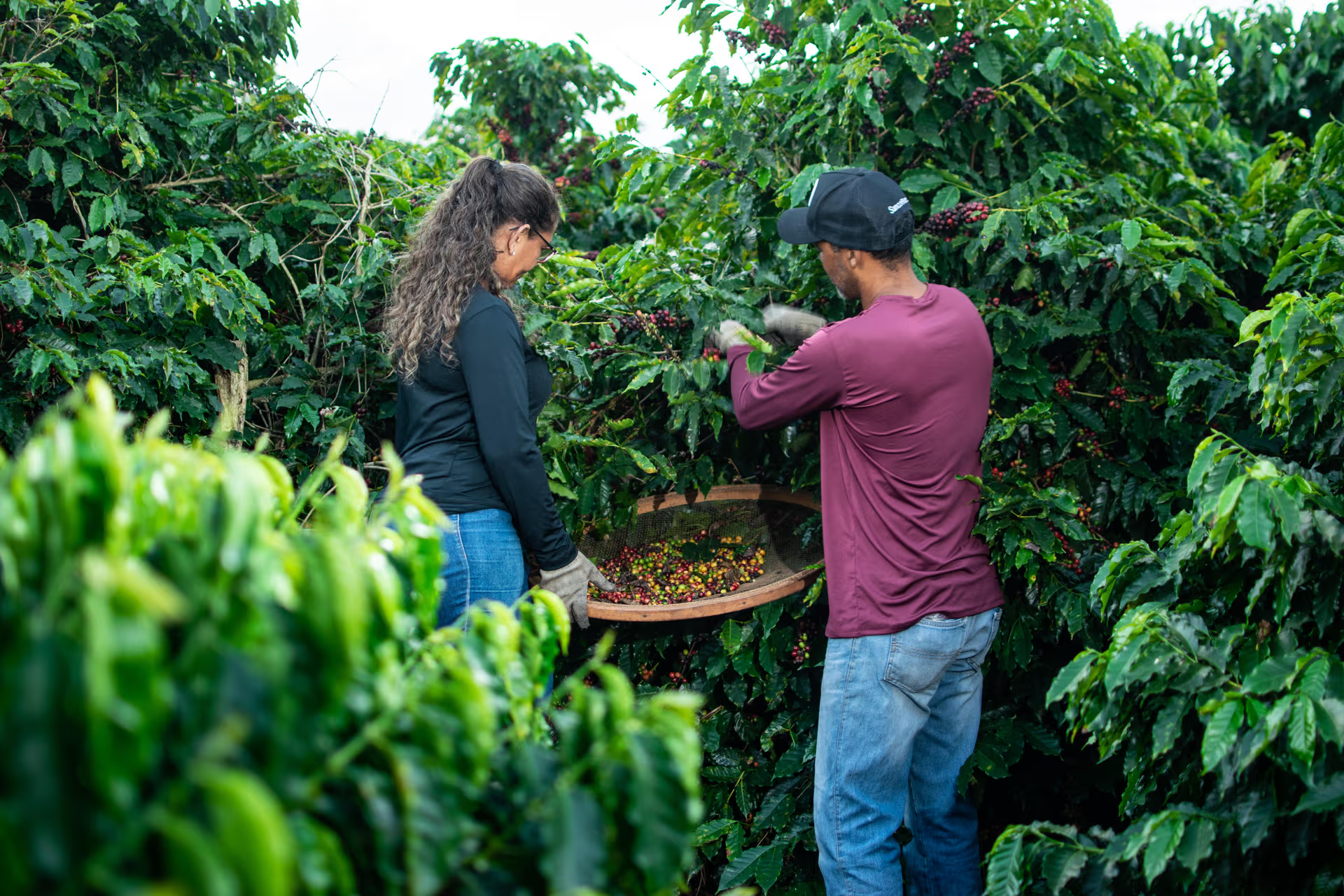
In Brazil, ICP has helped many families move beyond a narrow focus on production. Since 2001, it has reached a total of 4,760 households.
Francyelly Lasmar Balduino, Co-Country Manager at HRNS in Brazil, emphasizes the mindset shift. “Many families have learned to look at their farms differently, not only in terms of producing more, but also in managing costs, reducing climate risks, improving coffee quality, and improving their overall quality of life.”
By 2025, 76% of households had adopted good agricultural practices. 72% kept farm records, showing how strongly farm management has become part of everyday practice.
This shift has also made farms more resilient through diversification, regenerative practices, and better risk management. Women and young people now have more voice. In 2025, women made up 36% of participants in ICP trainings, and 19% of farm households had one young person engaged in a community group.
Honduras: Strong Organizations, New Generations
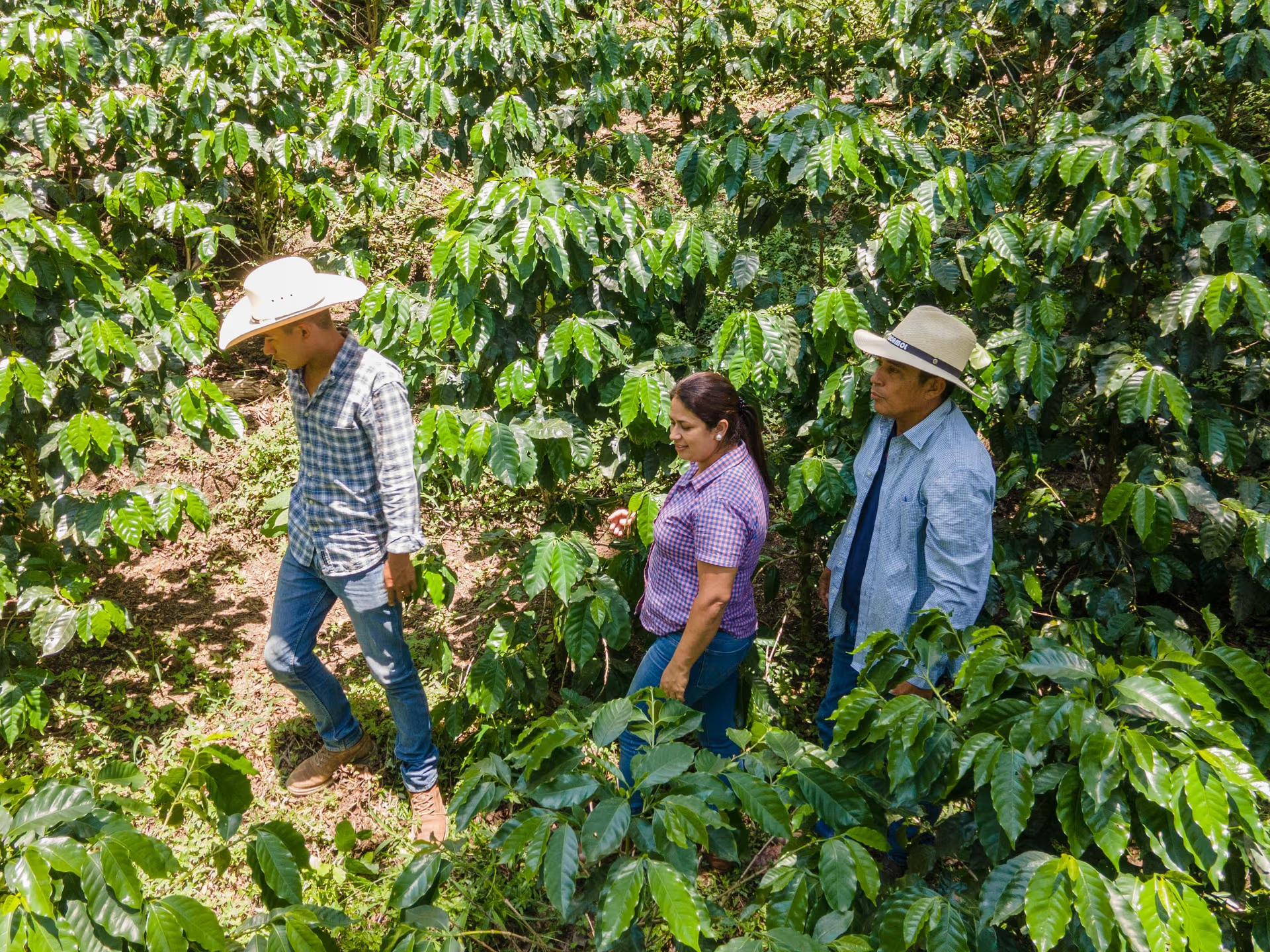
In Honduras, one of ICP’s most important achievements has been its long-term support for farmer organizations.
Pablo Ruiz, Co-Regional Manager at HRNS Central America, reflects on this success. “When I think about ICP’s work over the last decades, the first success that comes to my mind is the investment in farmer organizations.” This sustained engagement has helped farmers build organizations that have improved access to markets, services, and support.
Programs such as Climate Pioneers have reinforced this by encouraging young people to take a more active role in coffee-growing communities. In 2025, Honduras recorded ICP’s highest youth participation rate in projects at 33%.
Another notable result is the role of women. In 2025, they accounted for 49% of participants in ICP trainings and held 42% of cooperative leadership positions.
So far, ICP has reached 9,892 households in the region. Between 2024 and 2025, the share of farmers adopting good agricultural practices rose from 58% to 76%, and climate-smart practices from 37% to 56%.
A Shared Lesson Across Regions
These regional developments and results show that progress in coffee farming is never just about coffee alone. It is also about stronger families, more resilient livelihoods, better local structures, and new opportunities for the next generation.
After 25 years, ICP’s work across regions makes one thing clear. Lasting change happens where support is long-term, locally rooted, and shaped by the realities of farming families.
Table 1: ICP Regional Impact at a Glance
| Region | Households Reached | Women in Training (2025) | Youth Participation (2025) | Living Income (latest) |
|---|---|---|---|---|
| Indonesia | 19,406 | 46% | n/a | 77% (2024) |
| Uganda | 38,691 | 50%+ | 26% | 46% (2024) |
| Ethiopia | 3,029 | n/a | n/a | Productivity +70% |
| Tanzania | 44,291 | n/a | n/a | 48% (2024) |
| Brazil | 4,760 | 36% | 19% | GAP 76% |
| Honduras | 9,892 | 49% | 33% | Women in leadership 42% |
Frequently Asked Questions
What is the International Coffee Partners(ICP)?
ICP is a long-term initiative that works with coffee-farming families to strengthen their livelihoods. It is implemented by Hanns R. Neumann Stiftung (HRNS) and operates in six regions: Brazil, Ethiopia, Honduras, Indonesia, Tanzania and Uganda.
How many households has ICP reached?
ICP has reached over 116,000 households across all six regions, supported by more than 250 HRNS staff worldwide.
What are the main focus areas of ICP?
ICP focuses on good agricultural practices, climate resilience, gender equality, youth empowerment, farmer organizations, diversification, and improving household living incomes.
Which region has the highest women’s participation in trainings?
Uganda has the highest rate, with over 50% of ICP training participants being women in 2025.
What is the CAFE project in Ethiopia?
CAFE (Coffee Alliances for Ethiopia) is an ICP project in the Amhara region that combines coffee production improvements with climate adaptation, cooperatives, gender equality, youth opportunities, and livelihood diversification.
What has been ICP’s impact on living incomes?
In Indonesia, households reached 77% of a living income in 2024, up from 39% in 2021. In Uganda, it rose from 15% to 46%, and in Tanzania from 28% to 48%.
Author: Qahwa World | Source: Hanns R. Neumann Stiftung – ICP 25th Anniversary Report | Date: July 23, 2026