Dubai – Qahwa World
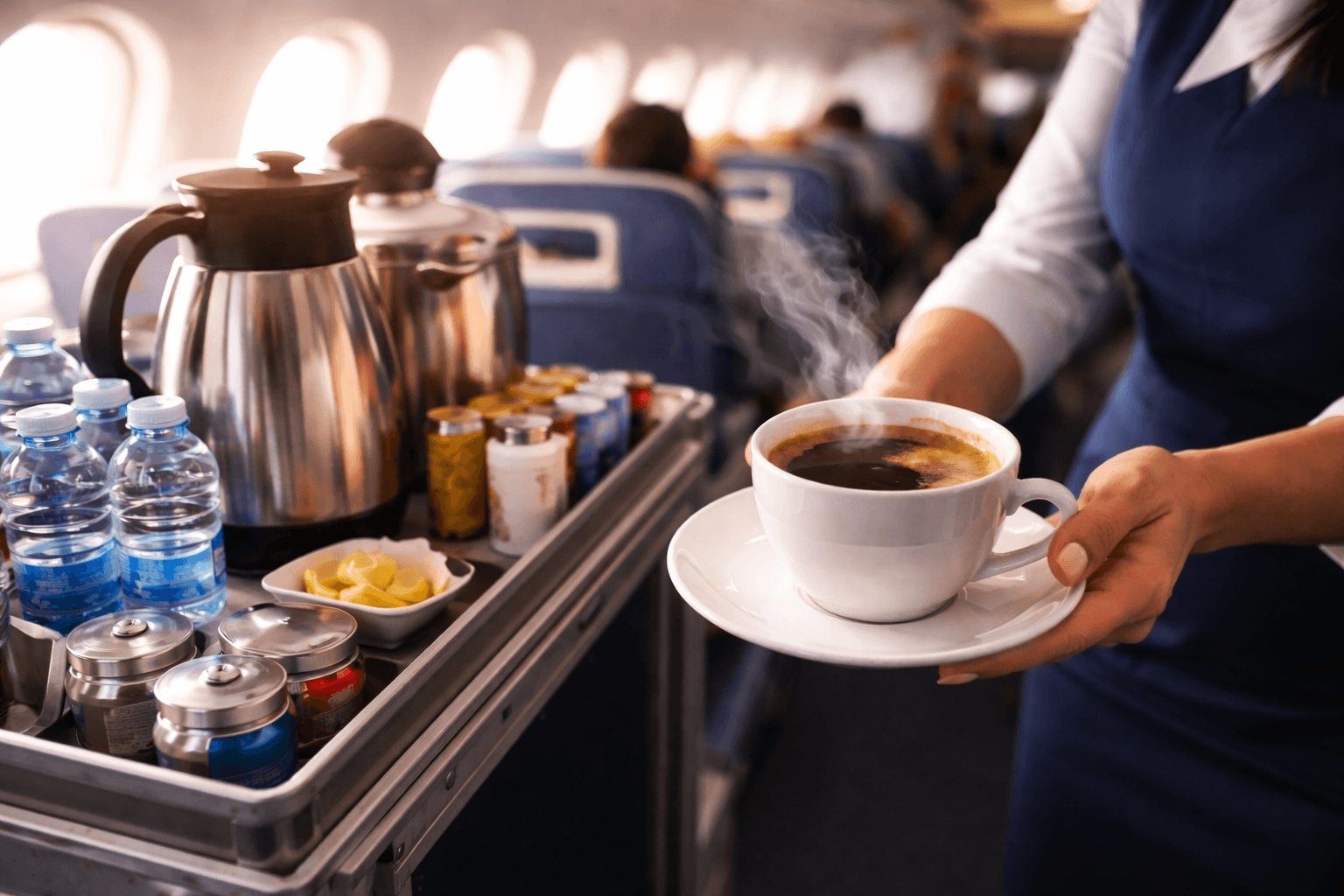
For many travelers, a cup of coffee is the first comfort requested after takeoff. But a new U.S. study suggests that the water used to brew that inflight coffee may not always meet the same standards passengers expect on the ground.
An independent review of airline drinking water practices has found wide differences in how U.S. airlines manage the water used for onboard beverages, raising fresh questions about the safety of coffee and tea served during flights.
- Why inflight coffee is under scrutiny
Unlike bottled drinks, coffee served onboard is typically made using water drawn from an aircraft’s internal tank system. That same system supplies water to lavatory sinks and galleys, making its cleanliness critical.
The findings come from the 2026 Airline Water Study, produced by the nonprofit Center for Food as Medicine and Longevity, which analyzed water testing and compliance data from 21 airlines operating in the United States.
Researchers reviewed three years of data, covering late 2022 through 2025, submitted to the U.S. Environmental Protection Agency (EPA) under federal aircraft drinking water regulations.
- Not all airlines perform the same
The study ranked airlines using a composite Water Safety Score that reflects bacterial test results, maintenance practices, and regulatory violations across each carrier’s fleet.
According to the results, Delta Air Lines and Frontier Airlines ranked among the strongest performers, suggesting more consistent water safety management. Alaska Airlines also placed near the top.
At the lower end of the rankings, American Airlines and JetBlue recorded the weakest scores among major carriers. Several regional airlines scored even lower, with the study identifying higher rates of bacterial indicators in some regional aircraft water systems.
- What the tests revealed
Across more than 35,000 water samples analyzed in the study, a small but notable percentage tested positive for total coliform bacteria — organisms that are not necessarily harmful themselves but can indicate conditions that allow other pathogens to grow.
While E. coli was detected far less frequently, its presence was treated as the most serious warning sign. The study documented more than 30 E. coli-related regulatory violations, which significantly affected airline rankings.
Because inflight coffee is prepared using this same water supply, the authors argue that beverage service deserves closer attention.
- Regulation exists — but concerns remain
U.S. airlines are required to follow the Aircraft Drinking Water Rule, which mandates routine testing and regular disinfection of onboard water systems. Airlines must take corrective action when contamination is detected, including repeat testing or shutting down affected systems.
However, the study argues that regulatory compliance does not always translate into consistently clean water. The researchers also raised concerns about enforcement, noting that penalties for violations appear to be rare.
- Why aircraft coffee water is hard to control
Aircraft water tanks are filled at airports using ground equipment such as hoses and service carts, often drawing from different water sources. According to the study, contamination can be introduced during servicing and persist if tanks and pipes are not thoroughly cleaned — particularly on aircraft used for frequent short-haul flights.
Once onboard, that water may be heated for coffee and tea, but heat alone does not guarantee the elimination of all contaminants.
- What passengers who love coffee should know
The study does not claim that inflight coffee is unsafe across the board, nor does it assess individual flights. Still, for passengers who want to reduce risk, the authors recommend simple precautions.
These include choosing sealed bottled beverages, opting for canned coffee or espresso-based drinks made with bottled water, or waiting until after landing for a fresh cup brewed on the ground.
For many travelers, inflight coffee will remain a routine part of flying. But as this latest research suggests, what’s in your cup may depend more on the airline than you realize.