Why the future of coffee may depend not only on what ends up in the cup, but on how the industry learns to use everything beyond it.
By Dr. Steffen Schwarz
The modern coffee industry has become exceptionally skilled at valuing one thing with remarkable precision: the bean.
Across the global supply chain, coffee seeds are classified by density, moisture, screen size, defect counts, volatile compounds, roast response, extraction behavior, and cup profile. They are traded across oceans, insured, hedged, certified, marketed, and, in the finest corners of the sector, narrated with almost ritual reverence.
Yet behind this sophistication lies a more uncomfortable truth: the coffee industry still operates largely as a linear economic system. Value is extracted from the coffee cherry, refined through a chain of transactions, and what remains behind is often treated as waste rather than opportunity.
That “waste” is not small. In fact, it represents the majority of the coffee fruit.
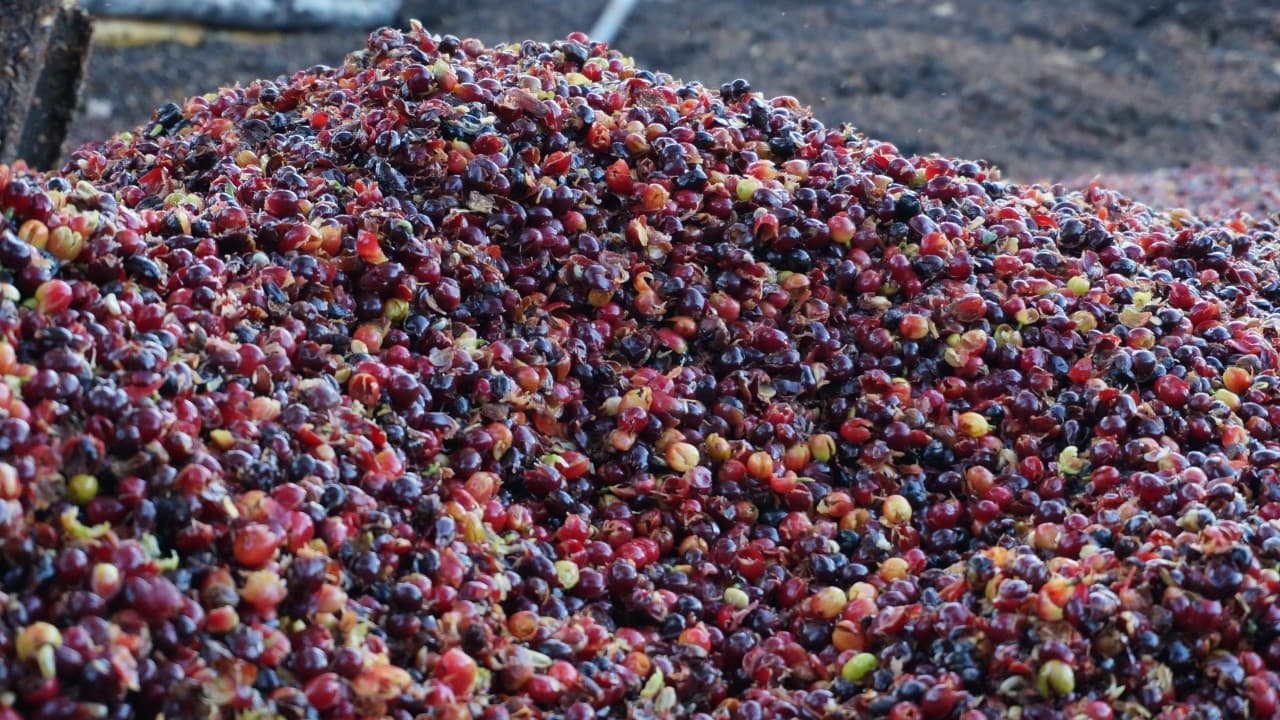
The green bean that dominates the imagination of producers, traders, roasters, and baristas is only a fraction of the material reality of coffee. The skin, pulp, mucilage, parchment, husk, silverskin, and spent grounds together form a vast landscape of underused biomass.
For decades, the conventional coffee economy has largely ignored these materials because they fall outside the narrow scope of the primary commercial product. Nature, however, does not recognize waste in the same way human supply chains do. It recognizes nutrients, energy, cycles, and time.
- Rethinking the Coffee Economy
This is where the idea of a circular coffee economy becomes transformative.
Circularity is not merely another sustainability slogan. It challenges the very way the coffee industry understands value creation. Instead of treating everything beyond the bean as residue, it invites the sector to see the entire coffee cherry as part of a broader economic and ecological system.
Once this perspective is adopted, coffee no longer appears as a simple value chain running from farm to cup. It begins to resemble a living network where ecological health, agricultural practices, processing technologies, materials science, consumer behavior, and farmer livelihoods are deeply interconnected.
- This shift comes at a crucial moment.
Coffee production is increasingly under pressure from climate change. Rising temperatures, altered rainfall patterns, and increased disease pressure are reshaping the environments where coffee—especially Arabica—has historically thrived. Producers are often forced to move cultivation to higher altitudes, placing additional pressure on fragile forest ecosystems.
At the same time, soil health is declining in many growing regions, input costs remain volatile, and smallholder farmers frequently carry the economic risks of a system they did not design.
The traditional model of coffee production is therefore not only environmentally incomplete—it is strategically fragile.

- The Hidden Scale of Coffee Biomass
Coffee remains one of the world’s most influential agricultural commodities, supporting economies in more than 80 producing countries and shaping daily routines for hundreds of millions of people.
Yet the scale of unused material generated by coffee processing is staggering.
According to the Coffee Development Report 2022–23, global coffee processing generates more than 40.68 million tonnes of biomass each year. Around 72% of this renewable organic material—approximately 29.34 million tonnes—originates in coffee-producing countries, where its economic potential remains largely untapped.
More than 86% of the coffee cherry is typically discarded as agricultural waste or by-products. By the time coffee becomes the beverage celebrated worldwide, only a small fraction of the original fruit remains in the cup.
This single statistic fundamentally challenges the traditional perception of value in the coffee sector.
For more than a century, coffee has been marketed as though the bean were the entire product and everything else merely a logistical problem. In biophysical terms, the opposite is closer to reality: the bean is simply the most commercially visible fraction of a much larger material system.
- From Waste to Resource
Mismanaged biological residues from coffee production can create serious environmental problems. Improperly handled pulp, wastewater, and organic waste contribute to water pollution, oxygen depletion in ecosystems, and greenhouse gas emissions.
But once these materials are viewed as resources rather than waste, entirely new possibilities emerge.
Coffee pulp and husk can be used for compost, fertilizers, biochar, food ingredients, fibers, fuels, and biomaterials. Silverskin—the thin layer released during roasting—can be transformed into valuable compounds. Spent coffee grounds can enter industrial applications ranging from energy production and biocomposites to textiles, paper, and construction materials.
None of these pathways will scale automatically. But the conceptual shift is profound.
The question is no longer whether value exists beyond the bean. The real question is who will capture that value, where it will be developed, and who will benefit from it.

- Keeping Value at Origin
A key challenge is ensuring that circular innovation benefits coffee-producing regions rather than shifting most economic value to consumer markets.
If new uses for coffee by-products emerge primarily in wealthy countries while producing nations remain responsible for waste management and environmental costs, the promise of circularity risks becoming hollow.
A genuine circular coffee economy must expand value creation at origin. Farmers, cooperatives, and local enterprises should have the opportunity to participate in emerging markets for by-products, technologies, and materials derived from coffee.
This is where regenerative agriculture becomes closely linked to circular thinking.
Regenerative systems emphasize soil health, biodiversity, water management, and ecological resilience. Practices such as agroforestry, cover cropping, improved nutrient cycling, and reduced reliance on synthetic inputs can strengthen farming systems while supporting long-term productivity.
Circularity without regeneration risks becoming merely a materials strategy applied to an exhausted agricultural base.
- From Value Chain to Value Circle
The coffee industry often speaks about the “coffee value chain.” But the concept of a chain suggests a one-directional process: inputs enter at one end, value exits at the other.
The future of coffee may depend less on perfecting that chain and more on creating a circular system where materials, nutrients, and economic benefits continuously flow through interconnected loops.
In such a model, farmers, processors, traders, roasters, retailers, and consumers all become part of a broader ecosystem rather than isolated links in a linear sequence.
This transition will require new forms of collaboration across disciplines that historically operated separately—agronomy, processing, roasting, packaging, sustainability management, and policy.
A Strategic Opportunity for the Coffee Sector
The shift toward circular coffee systems presents challenges. Knowledge remains fragmented, regulations for by-products are inconsistent, and infrastructure for recovery and reuse varies widely across regions.
Small and medium-sized enterprises also face significant risks when attempting to scale new applications for coffee by-products.
- Yet the opportunity is equally significant.
Circularity has the potential to create new income streams for farmers, new materials for industry, improved environmental outcomes, and a more resilient global coffee system.
For the coffee sector, this is not merely a sustainability conversation—it is a strategic one.
The next era of knowledge in coffee will not come solely from deeper understanding of roasting curves, fermentation techniques, or flavor chemistry. It will emerge from learning to see the coffee system as a whole.
Because the future of coffee may ultimately depend on a simple question asked at the edge of a processing station, beside a pile of discarded cherry pulp:
What if this is not a waste but the beginning of something new?