Dubai – Ali Alzakry
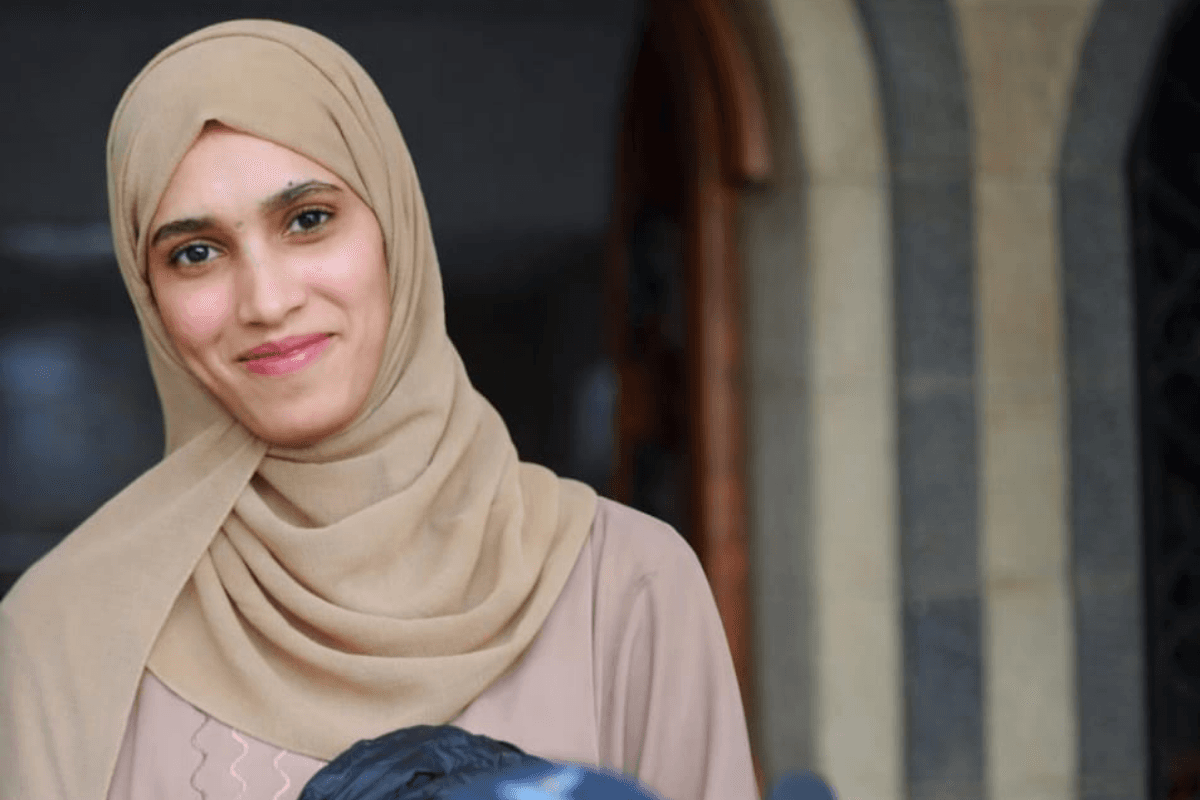
It wasn’t a calculated career move or a boardroom decision. For Samah Badr, the journey into the world of coffee began with a biological “finesse”—a heightened sensitivity to flavors that once exasperated her family. As a child, she didn’t just eat or drink; she analyzed, scrutinized, and questioned every note on her palate. This innate curiosity eventually evolved from a personal trait into a professional calling. Today, as the first and only Yemeni woman to become an Authorized SCA Trainer (AST), Samah is “drowning” in the coffee world, discovering her own rush of adrenaline and proving that God’s timing is always perfect.
In this exclusive interview, we explore the story of a woman who turned a childhood obsession with detail into a scientific mission to elevate Yemeni coffee to its rightful global throne.
We invite you to follow this inspiring dialogue that bridges the gap between ancient heritage and modern science:

- You grew up in an environment that loves coffee, specifically in Sana’a. How did the story begin before coffee became a scientific path for you?
Answer: For me, coffee was never just a beverage; it was a part of the fabric of daily life, present in our social gatherings, our memories, and the very identity of the place. Growing up in an environment that deeply values coffee gave me this early connection, which began as a sense of belonging and evolved over time into a passion for knowledge. When I entered the world of specialty coffee, I realized that the heritage we carry can be reintroduced through the language of science, allowing it to take its rightful place globally.
- Your roots trace back to Ibb–An Nadirah district. How has this heritage shaped your relationship with farmers and your work in the field?
Answer: This heritage gave me a different perspective; coffee is not a final product to me but a journey that begins with the farmer. My presence in the field is not a departure from the city but a journey back to the origin of the story. I am committed to visiting the farms because I believe that real change starts there—where knowledge can be turned into practice, and quality into tangible value that benefits the farmer before anyone else.
- As the first Authorized SCA Trainer (AST) in Yemen, working within a certified educational environment that includes the Espresso Academy, the SCA Premier Campus, and the CQI Professional Venue… what does this presence signify?
This presence represents the breaking of barriers that once separated ambition from opportunity. Today, young people in Yemen can access the same quality of education and global standards without the need to travel abroad. We are not just offering courses; we are building an educational ecosystem that fosters a new generation of specialists capable of competing and contributing to the development of the coffee sector both locally and globally.

- Throughout your training career, what is the most difficult conviction you have had to change?
The hardest challenge I faced was establishing the idea that quality is not a luxury. Many used to view coffee as a single, unchanging product. However, through experience and tasting, this concept began to fade. When a trainee sees the difference for themselves—in flavor and in value—the real transformation begins. Coffee then shifts from an ordinary commodity into a meaningful experience with high value.
- From your expert perspective as a Q Grader, what does Yemeni coffee lack to return to the top?
Yemeni coffee does not lack excellence; it lacks consistency. We have incredible diversity and high potential, but improving post-harvest practices—from processing to drying—is the real key. When we succeed in delivering stable, consistent quality, we will see Yemeni coffee return strongly, not just through its history, but through its current superior quality.
- How do you succeed in communicating complex quality concepts to the farmers?
I believe that the simplest methods are the most impactful. I rely on linking information to the end result and transforming theoretical concepts into practical steps that can be easily applied. When a farmer sees that a simple improvement in the drying method can double the value of their crop, change becomes a logical choice rather than a burden.

- How do you see the roadmap for the future of Yemeni coffee?
The future depends on building an integrated system that starts with the farmer and ends with the global market. We need to truly empower farmers, link them to fair value chains, and strengthen the identity of Yemeni coffee as a product that carries both a story and quality. If these pillars are addressed in a balanced way, Yemen will not only regain its status but also redefine itself in the specialty coffee market.
- When you represent Yemen in international forums as an AST, what do you say to the world?
I tell the world that Yemen is not just coffee history; it is a present full of opportunities and a promising future. I carry with me the story of a country that possesses unique agricultural and cultural depth. I strive for the world to see this side as I see it—full of potential, capable of competing, and worthy of having its voice heard once again.