Dubai – Qahwa World
This analysis is based on reporting first published by Dialogue Earth and written by Kevin Damasio. It has been adapted and republished by Qahwa World.
In the hills of Minas Gerais, where much of the world’s Arabica coffee is grown, a quiet transformation is underway. What was once a cycle of seasonal uncertainty has become a continuous struggle shaped by climate instability and shifting global demand.
This is no longer just a farming challenge. It is a defining moment for the future of coffee.
From Climate Variability to Climate Disruption
For generations, Brazilian coffee farmers adapted to occasional droughts, frosts, and irregular rains. Today, those events are no longer exceptions. They are part of a persistent pattern.
Longer dry periods, rising temperatures, and unpredictable rainfall are disrupting the biological rhythm of coffee itself. Flowering cycles are affected. Bean development becomes uneven. Yields lose consistency.
In regions like southern Minas Gerais, farmers are not asking if the weather will affect production. They are asking how severe the impact will be each year.
Scientific projections reinforce what farmers already experience on the ground. A significant share of Brazil’s Arabica-growing land faces the risk of becoming economically unviable in the coming decades if warming trends continue.
High Prices, Fragile Foundations
At the global level, coffee prices have surged as supply tightens. Brazil continues to generate record export revenues, even as shipment volumes fluctuate.
But this apparent strength hides a more fragile reality.
Higher prices are not translating into long-term security for producers. The cost of keeping coffee trees productive is rising. Irrigation systems, soil management, and climate-resistant varieties require investment. Losses from extreme weather events reduce financial resilience.
For many farmers, especially smallholders, the margin between survival and loss is narrowing.
The market is rewarding scarcity, but the conditions behind that scarcity are weakening the system that produces coffee.
The Retreat From Organic
One of the most telling shifts is happening in the field. Organic coffee production, once a growing segment, is under pressure.
Organic methods demand more labor, stricter management, and often higher costs. Under stable conditions, these systems can deliver value through quality and certification premiums. Under climate stress, they become harder to sustain.
As a result, some farmers are returning to conventional practices to secure more predictable yields. Even when they continue to limit chemical use, the shift reflects a deeper tension between sustainability and economic survival.
This raises an important question for the global coffee industry. Can sustainability commitments hold when producers face increasing climate risk and financial pressure?
Adaptation Becomes a Daily Practice
Across Minas Gerais, adaptation is no longer a long-term strategy. It is part of daily decision-making.
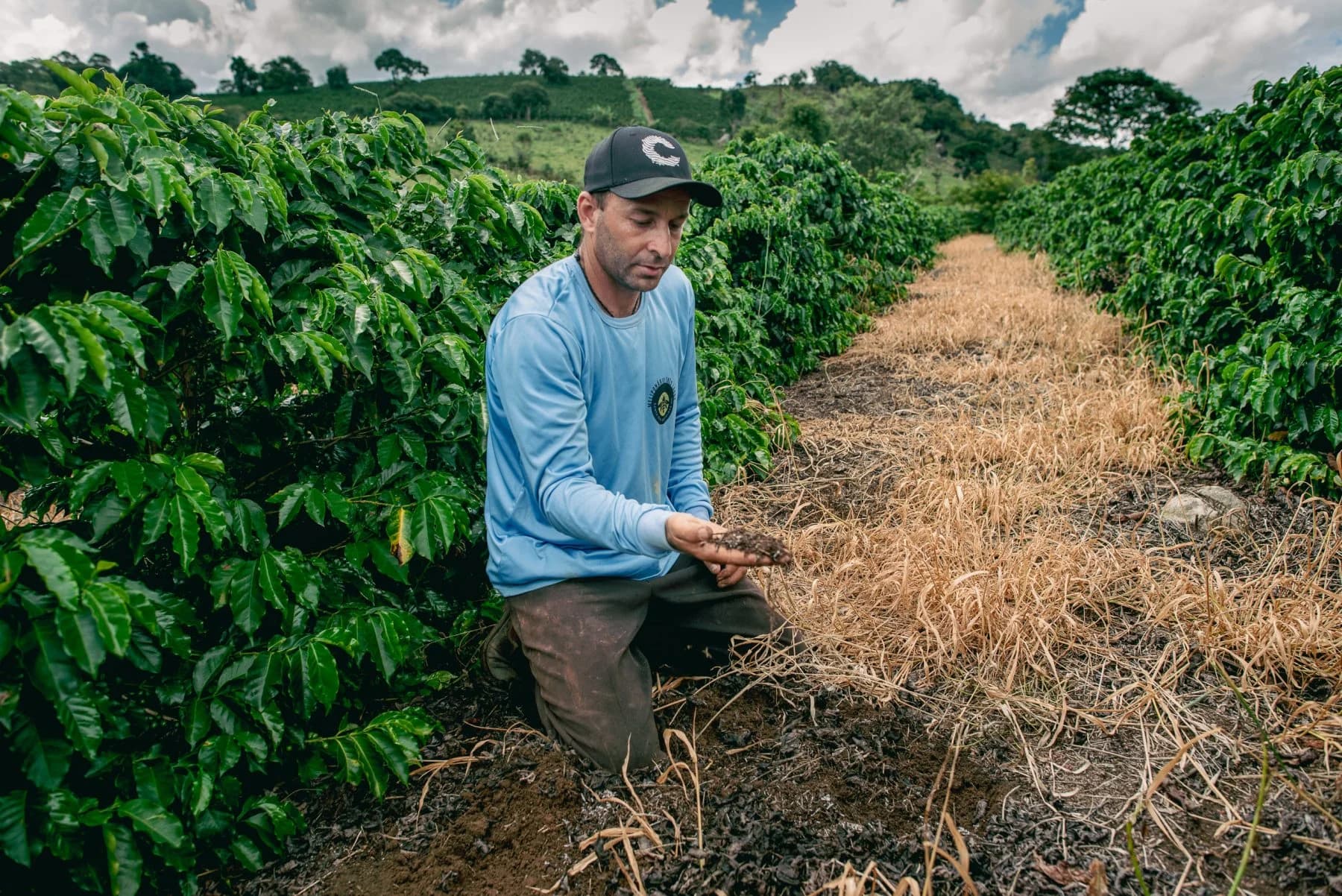
Farmers are replanting with more resilient Arabica varieties. They are improving soil cover to retain moisture. They are installing protective systems against hail and excessive sun.
Tree planting is gaining ground as a practical response. Shade reduces heat stress, stabilizes production, and creates microclimates that are more forgiving under extreme conditions.
Yet adaptation comes at a cost. Not every producer has equal access to credit, technical knowledge, or time to experiment. This creates a widening gap between those who can adjust and those who struggle to keep up.
Agroforestry and the Search for Balance
Among the emerging approaches, agroforestry stands out as both a return to coffee’s origins and a potential path forward.
By integrating trees, crops, and ecological processes, agroforestry systems aim to recreate the natural environment in which Arabica evolved. These systems can improve soil health, regulate water cycles, and reduce exposure to extreme weather.
Early results suggest strong potential in terms of resilience and quality. However, productivity gains are not always immediate, and management is more complex.
For many farmers, the question is not whether agroforestry works, but whether it is economically viable in the short term.
Without stronger institutional support, technical guidance, and market incentives, adoption is likely to remain limited.
A Changing Demand Landscape
While production faces mounting pressure, demand continues to expand.
Asia is becoming an increasingly influential force in global coffee consumption. Countries such as China, India, Indonesia, and Vietnam are reshaping how coffee is consumed, marketed, and valued.
For Brazilian producers and cooperatives, this shift offers new opportunities. It also introduces new expectations around volume, consistency, and price competitiveness.
This creates a delicate balance. Expanding into new markets may require scaling production, while climate realities are pushing toward more cautious and diversified farming systems.
The Future Is Being Rewritten in the Field
What is happening in Minas Gerais reflects a broader transformation across the global coffee sector.
Climate change is no longer a distant threat. It is actively redefining how coffee is grown. At the same time, market dynamics continue to evolve, creating both opportunity and pressure.
Farmers are responding with a mix of resilience, experimentation, and compromise. Some invest in new technologies. Others return to conventional methods. A few explore more complex ecological systems.
There is no single path forward.
What is clear is that the future of coffee will not be shaped by price alone. It will depend on how well the industry supports those at its foundation, the farmers who are adapting in real time to an increasingly uncertain environment.
For coffee, this is not just a moment of challenge. It is a moment of redefinition.