Zurich — Qahwa World
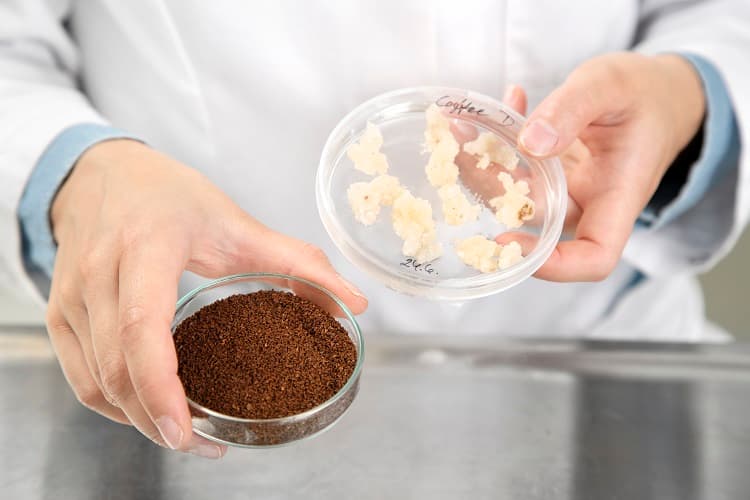
As climate change and surging global demand strain traditional coffee farming, a laboratory-grown alternative is moving from an experimental concept to a potential market contender. Cell-cultured coffee, produced by nurturing coffee plant cells in bioreactors and then harvesting, drying, roasting, and brewing the resulting biomass, has secured significant new funding and regulatory momentum over the past 18 months, according to industry developments and foundational research led by Professor Chahan Yeretzian.
Yeretzian, who retired in early 2026 as head of the Zurich University of Applied Sciences (ZHAW) Coffee Excellence Center after more than three decades of pioneering work, laid the analytical groundwork for this emerging category. His landmark 2024 study, published in ACS Food Science & Technology, provided the first rigorous, side-by-side chemical and sensory comparison of cell-cultured coffee (CC) and traditional farm-grown beans (TC). The paper’s three-step analytical platform, examining unroasted precursors, roasted volatiles, and brewed sensory profiles, demonstrated that while the two are chemically distinct, the lab-grown version can be optimized to deliver authentic coffee character.
The findings have since become a blueprint for commercial players. In February 2025, Zurich-based Food Brewer AG closed a CHF 5 million seed extension, bringing its total funding to approximately CHF 10 million. Strategic investors include Lindt & Sprüngli and Sparkalis, the venture arm of Puratos, both of which are actively testing the company’s coffee and cocoa biomass for potential integration into products. Food Brewer grows cells sourced locally in Switzerland, processes them through lyophilization and roasting, and is scaling production under controlled bioreactor conditions, precisely the approach Yeretzian’s research showed could preserve aroma precursors without relying on tropical agriculture.
You may read: A Cell-Cultured Coffee Revolution Gains Momentum
A parallel effort in Asia is also gaining traction. In April 2025, Singapore-based Another Food announced plans for large-scale commercialization, beginning in Singapore and expanding into Thailand and Malaysia. The startup positions its non-GMO, cell-derived coffee as a hedge against supply-chain volatility, price swings, and quality inconsistencies caused by climate impacts on conventional farming.
These developments echo the vision Yeretzian outlined in late 2024 interviews and earlier writings. “If we love coffee so much, can part of the supply come from sources that are less harmful to the environment and more efficient?” he asked. The 2024 paper reinforced that cell-cultured coffee need not merely imitate traditional beans but could expand the category. By adjusting precursor compounds, including sugars, amino acids, lipids, chlorogenic acids, and caffeine, scientists can explore novel flavor profiles beyond the constraints of the coffee bean’s natural matrix.
The study’s detailed results underscored both promise and challenges. Unroasted cell-cultured biomass showed dramatically higher monosaccharides (52% of dry weight, primarily glucose and fructose) but far lower levels of amino acids (0.07%), lipids (1.98%), chlorogenic acids (0.07%), caffeine (0.15%), and trigonelline (absent). After roasting in a custom nanoroaster, the aroma profile registered only about 40% of the intensity of traditional coffee, with fewer pyrazines, Strecker aldehydes, and guaiacols, but a pronounced dominance of furfurals (54% of volatiles versus 10–15% in conventional roasts). Sensory panels noted milder bitterness and acidity, lower extraction yields due to the powder-like structure, and reduced psychoactive effects resulting from lower caffeine and chlorogenic acid content.
Yeretzian and co-authors, including lead analyst Jaloliddin Khushvakov and VTT Technical Research Centre of Finland cell-culture expert Heiko Rischer, concluded that the bean’s physical structure acts as a “pressurized microreactor” essential for full flavor development. They emphasized that these differences are not insurmountable barriers; rather, they open doors to customization and hybrid products that blend cell-cultured and traditional coffee.
Regulatory pathways remain the primary hurdle. As a novel food, cell-cultured coffee requires formal approvals in major markets. Submissions are now under review in the United States, Singapore, and the European Union, with analysts projecting clearances within the next 12 to 24 months. Industry observers note that beanless surrogate coffees, which do not use coffee cellular material, have reached shelves more quickly, but cell-cultured versions benefit from a stronger scientific foundation and clearer environmental credentials.
Market forecasts reflect growing confidence. The global cell-cultured coffee sector, valued at roughly $173–362 million in 2024–2025, is projected to expand at a compound annual growth rate of 16–21%, potentially reaching hundreds of millions of dollars by the early 2030s as production scales and costs decline.
Yeretzian has consistently framed cell-cultured coffee as a complement, not a replacement, for farm-grown beans. In his emeritus role, the research he championed continues to influence the Coffee Excellence Center and the startups now translating it into products. The 2024 paper’s analytical platform has already become an industry standard for evaluating any coffee alternative.
For an industry facing deforestation, carbon emissions, and unpredictable harvests, the convergence of Yeretzian’s decades of aroma chemistry expertise with fresh capital and regulatory progress marks a pivotal moment. If approvals materialize as expected, the first commercial cell-cultured coffees could appear on shelves or in blends by late 2027 or 2028, not as a wholesale substitute for tradition, but as a scientifically validated innovation that could help secure coffee’s future while expanding its sensory possibilities.